Thallium Facts For Kids
Thallium is a soft, toxic metal used in various applications including electronics and research, known for its malleability and low melting point.
Select reading age
Thallium Facts For Kids
Videos & Quizzesincluded
About this topic
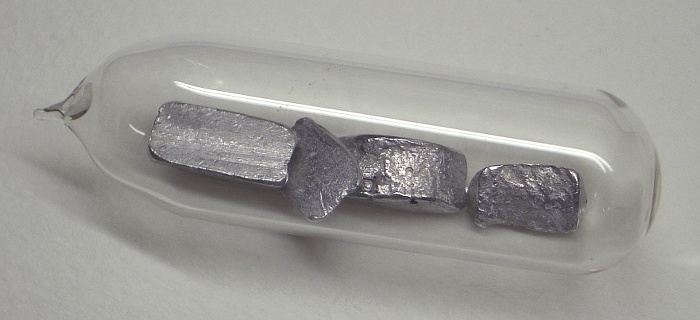
Thallium is a soft, silvery metal with the symbol "Tl" and atomic number 81! 🧪It's found in Group 13 of the periodic table and was discovered by a scientist named Sir William Crookes in 1861. Thallium is quite rare in the Earth's crust and is mainly extracted from ores like chalcopyrite and sphalerite, which are found in countries like Mexico and Peru. Thallium has some interesting properties and uses, but it's also important to be careful with it due to its toxic nature. Let's dive deeper into this special metal! 🌍
Explore with ChatDinoKey Points
Did you know that thallium is often used in some old-school thermometers?
In chemical reactions, thallium behaves like other metals 😮.
Thallium is a unique metal!
Thallium can also hurt our environment!
Thallium was discovered in 1861 by Sir William Crookes, a British scientist.
Thallium has some fascinating applications!
Thallium is not very common in nature, which makes it interesting!
Thallium can be dangerous to our health!
Photos of Thallium

Crystals of hutchinsonite ((Tl,Pb)2As5S9)

A corroded thallium rod
🌡️ Interesting Facts
Did you know that thallium is often used in some old-school thermometers? 🌡️ It's true! But these have been replaced with safer alternatives. Thallium is so rare that it can only be found in minute amounts in the Earth's crust! 🌋Interestingly, thallium was once used as a poison, but its use is now regulated due to its toxicity. Lastly, thallium's name comes from the Greek word "thallos," which means "young shoot" or "green twig." 🌱 This reflects the green color seen in its spectrum! How cool is that? 😎
Go deeper😮 Chemical Properties
In chemical reactions, thallium behaves like other metals 😮. It can combine with different elements to form compounds. Thallium commonly forms two oxidation states: +1 and +3, which means it can lose one or three electrons when reacting. Thallium compounds can be toxic, making it important to handle them carefully. 💀For example, thallium(I) sulfate is a compound that is very dangerous. It can react with acids and bases, changing its properties, and making it even more interesting to study in chemistry! ⚗️
Go deeper🔥 Physical Properties
Thallium is a unique metal! It has a melting point of around 304 °C (579 °F), which means it can melt and become a liquid when heated. 🔥It's also very dense, with a density of 11.8 grams per cubic centimeter, making it heavier than lead! Thallium looks shiny and metallic and can easily be cut with a knife. 📏When it comes to color, thallium metal has a silvery appearance but can also oxidize to a dull gray color. This metal can also be somewhat malleable, which means it can be shaped without breaking! 🛠️
Go deeper🌿 Environmental Impact
Thallium can also hurt our environment! 🌿When thallium is released into the soil, water, or air during mining and industrial activities, it can be harmful to plants and animals. 🦉Thallium doesn't break down easily, so it can stay in the environment for a long time, leading to pollution. Scientists are studying how to safely use thallium while protecting nature! 🌼Helping the environment means being responsible with materials like thallium, so we all can live in a cleaner world! 🌍
Go deeper🔬 History And Discovery
Thallium was discovered in 1861 by Sir William Crookes, a British scientist. 🔬He found it while experimenting with a special process called spectrum analysis, which helps identify elements. Sir William named the element after a green line he saw in the spectrum, which reminded him of the color of a plant called "Thallus"! 🌿Thallium was used for many years in medicine and industry, but scientists soon realized it was toxic. 🚨As a result, research continues to improve how we use and study this fascinating metal safely! 📚
Go deeper😃 Uses And Applications
Thallium has some fascinating applications! 😃One of the main uses of thallium is in the production of special glass, like that used in high-quality lenses. 👓It's also used in some electronic devices, such as infrared detectors that can sense heat! ⚡Thallium can help create special alloys for making picture tubes and other components in televisions. 📺However, due to its toxicity, thallium is being replaced by safer materials in many applications. Scientists are always looking for ways to use thallium wisely and safely! 🔍
Go deeper🌍 Occurrence And Sources
Thallium is not very common in nature, which makes it interesting! 🌍It occurs mostly in certain minerals, like pyrites and some copper ores. The largest producers of thallium are in Mexico and Peru, where it's usually a byproduct of mining other metals, such as copper and lead. 🏔️ When miners extract these metals, they can also find small amounts of thallium. Although it's rare, scientists have found thallium in certain soils and rocks, too. This special metal can be challenging to find, but when it's extracted, it can be quite useful! 🦸♂️
Go deeper😖 Health Effects And Toxicity
Thallium can be dangerous to our health! 😖If someone gets thallium in their body, it can cause poisoning, leading to symptoms like hair loss, nausea, and weakness. 🏥Because thallium compounds are toxic, they must be handled very carefully. Always remember: never touch or breathe in thallium without proper safety gear! 🚫If people accidentally poison themselves with thallium, they need to go to a doctor quickly. It’s important to learn about thallium's dangers to stay safe and healthy! 💖
Go deeper