Stephen Iii Facts For Kids
Pope Stephen III was a significant figure in the Catholic Church, serving from 768 to 772 and known for his leadership during a challenging time in Rome, where he strengthened ties with the Frankish Empire.
Select reading age

Stephen Iii Facts For Kids
Videos & Quizzesincluded
About this topic
Pope Stephen III was an important leader in the Catholic Church! 🌍He became the Bishop of Rome—the Pope—on August 7, 768. He served until he passed away in 772. He worked hard to unite people and make decisions that affected the church and society. Stephen III is known for his good deeds and support of Christian values. He played a big role in taking care of the Papal States, which was a region in Italy. His leadership helped shape the church during a time when there were many challenges!
Explore with ChatDinoKey Points
Pope Stephen III left a meaningful legacy in church history!
Pope Stephen III was born in Rome, but his exact birth year is unknown.
Stephen III became Pope during a period called the Early Middle Ages (around 500-1000 AD).
Pope Stephen III made many contributions during his papacy!
When Stephen III became Pope in 768, his papacy was filled with important events!
After his death in 772, Pope Stephen III was remembered positively by many people!
Pope Stephen III influenced future popes and church leaders through his example!
Like many leaders, Pope Stephen III faced controversies and challenges during his papacy!
Pope Stephen III is significant in church history for several reasons!
During Pope Stephen III’s time, the Byzantine Empire was a powerful nation located in Eastern Europe, especially around the city of Constantinople.
Photos of Stephen Iii
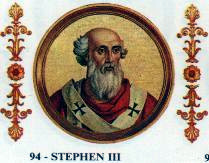
Pope Stephen III (portrait at Saint Paul Outside the Walls, c. 1850)
📜 Legacy
Pope Stephen III left a meaningful legacy in church history! 📜People remember him for his dedication to strengthening the church, especially his relationship with Charlemagne. This alliance allowed the church to grow stronger and spread Christianity across Europe. His reforms, including church governance and education, made a lasting impact. Stephen III showed that leadership meant caring for people and working toward a common good. His story inspires many, reminding us of the importance of kindness, cooperation, and following one's beliefs.
Go deeper🌅 Early Life
Pope Stephen III was born in Rome, but his exact birth year is unknown. He grew up in a time filled with exciting changes! 🌅Like many boys, he learned about Christianity and the teachings of Jesus. Stephen became a cleric, which means he was focused on helping people understand faith. He was recognized for his intelligence and kindness. As he grew older, he began helping other church leaders, which prepared him for his future role as the Pope! The community loved him for his caring nature.
Go deeper🏰 Historical Context
Stephen III became Pope during a period called the Early Middle Ages (around 500-1000 AD). This time was marked by many changes in Europe, including the rise and fall of kingdoms and cultures. 🏰The Catholic Church was becoming a powerful authority amidst these changes. The Pope was an essential figure, guiding followers and maintaining unity in faith. Stephen III's papacy played a crucial role in shaping the church during a time when it was gaining more significance in everyday life. 🕰️
Go deeper✝️ Major Contributions
Pope Stephen III made many contributions during his papacy! ✝️ One of his biggest achievements was improving the relationship between the Pope and the Frankish Kingdom. This alliance helped protect Rome from enemies. He also worked on church reforms, making sure that the clergy had proper education and training. Under his leadership, the church became a more organized and influential institution. Stephen III was dedicated to helping the poor, ensuring that everyone had access to important services. He truly cared for the people!
Go deeper🏛️ Papacy Of Stephen Iii
When Stephen III became Pope in 768, his papacy was filled with important events! 🏛️ He was the first Pope to be supported by a powerful leader called Charlemagne, even though they were not in direct contact. One of his goals was to improve relationships with other Christian countries. Stephen wanted to protect the Papal States and spread Christianity. His time as Pope also included dealing with the Lombards, a group that threatened Rome. Through his hard work, Stephen III brought stability to the church. 🌟
Go deeper🕊️ Posthumous Reputation
After his death in 772, Pope Stephen III was remembered positively by many people! 🕊️ His efforts to strengthen the church and protect the Papal States left a lasting mark. He was considered a wise and caring leader who truly cared for the people. Different sources documented his life, praising his commitment to the Christian faith. Many view him as a bridge between the early church and the later powerful papacies. His legacy continues to be celebrated in the history of the Catholic Church, with people remembering his good deeds and contributions.
Go deeper🔑 Influence On The Papacy
Pope Stephen III influenced future popes and church leaders through his example! 🔑He taught the importance of strong alliances with powerful leaders, like Charlemagne. This set a pattern for future popes to follow by building relationships with kings and rulers in various regions. His focus on reforming the church laid a foundation that later popes could build on. Because of his work, the papacy gained more respect and influence over time. He showed that a true leader listens to their community and acts in their best interest!
Go deeper💥 Controversies And Challenges
Like many leaders, Pope Stephen III faced controversies and challenges during his papacy! 💥One major controversy was dealing with the Lombards, who often invaded territories in Italy. Stephen III had to work hard to defend the Papal States from these attacks. Additionally, there were disagreements within the church itself, such as arguments about how to manage church laws. Despite these challenges, Stephen remained steadfast and committed to his mission. He faced adversity with courage and determination, proving that he truly cared about the church and its followers.
Go deeper✨ Significance In Church History
Pope Stephen III is significant in church history for several reasons! ✨He helped solidify the role of the Pope as a powerful leader and protector of Christianity. His alliance with Charlemagne marked a turning point in church-state relationships, strengthening the church’s influence. Additionally, his reforms improved church governance and taught future leaders how to approach problems. Stephen III's leadership during challenging times helped the church grow, making him an important figure in the development of Christianity in Europe. His work remains significant to this day!
Go deeper🌆 Relations With The Byzantine Empire
During Pope Stephen III’s time, the Byzantine Empire was a powerful nation located in Eastern Europe, especially around the city of Constantinople. 🌆Stephen III had to navigate tricky relationships with them! At that time, the Byzantines and the Pope did not always see eye to eye. They sometimes disagreed over religious matters and church authority. However, Stephen focused on finding common ground to strengthen both sides. He wanted to establish peace and cooperation, knowing that unity was essential for spreading Christianity.
Go deeper