South Orkney Islands Facts For Kids
The South Orkney Islands are a group of uninhabited islands in the Southern Ocean, known for their stunning landscapes and rich marine life.
Select reading age
South Orkney Islands Facts For Kids
Videos & Quizzesincluded
About this topic
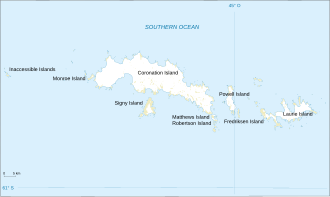
The South Orkney Islands are a group of rugged and beautiful islands located in the Southern Ocean. 🏝️ They are found approximately 604 km (about 375 miles) north-east of the Antarctic Peninsula and 844 km (about 525 miles) south-west of South Georgia Island. The islands include famous spots like Coronation Island and Laurie Island. There aren’t many people living here, but it’s a unique place full of ice and wildlife! 🐧If you love adventure and cold climates, this is a great place to learn about!
Explore with ChatDinoKey Points
The climate in the South Orkney Islands is very cold!
The South Orkney Islands were discovered in 1821 by Captain George Powell and Captain Nathaniel Palmer.
The South Orkney Islands consist of 7 main islands and many smaller ones.
Humans mainly visit the South Orkney Islands for scientific research.
The South Orkney Islands are home to a variety of unique plants and animals!
Research stations on the South Orkney Islands help scientists learn about climate, wildlife, and the ocean!
Visiting the South Orkney Islands is a unique adventure!
Thanks to many conservation groups, the South Orkney Islands are protected.
Though there are no cities or towns, the South Orkney Islands have economic importance due to fishing and research.
Photos of South Orkney Islands

South Orkney Islands — photo 1

The Argentine Base Orcadas in 1929.

The British Signy Research Station on Signy Island

A 1944 stamp of the Falkland Islands overprinted for use in the South Orkneys.

Average air temperature readings of 1901 to 2007; NASA.

🥶 Climate
The climate in the South Orkney Islands is very cold! 🥶The average temperature ranges from -2°C (28°F) in winter to 5°C (41°F) in summer. Summer lasts from November to March, while winter lasts from May to September. Snow and ice cover the islands for much of the year. 🌨️ Because of this chilly weather, many animals are well adapted to live here. Despite the cold, the islands experience rain and fog, which is normal along the coast. Many scientists study how these climate conditions affect wildlife!
Go deeper🌊 History
The South Orkney Islands were discovered in 1821 by Captain George Powell and Captain Nathaniel Palmer. 🌊They were named after the Orkney Islands in Scotland. Over the years, many explorers visited for whaling and research. The islands became a territory of Argentina, the United Kingdom, and Chile, making them an important area for scientific studies! In 1947, scientists established bases here, helping to study the surrounding nature and weather patterns. Today, they continue to play an important role in research.
Go deeper🌍 Geography
The South Orkney Islands consist of 7 main islands and many smaller ones. 🌍The largest island is Orcada Island, which is about 90 km² in area. These islands are rocky and covered in ice, making them look like a wintry wonderland! ❄️ The islands are surrounded by the Southern Ocean, where you might find seals, whales, and many different birds. It’s a remote and special location that is mostly uninhabited except for research stations! The stunning views here make it a unique place for exploration.
Go deeper🧑🔬 Human Activity
Humans mainly visit the South Orkney Islands for scientific research. 🧑🔬 There are no permanent residents, but scientists and researchers set up temporary camps to study wildlife and climate. One well-known research station is the Orcadas Station, built in 1904! It still operates today and helps scientists gather information. 🥳They study how the climate changes affect the environment and the animals living there. Tourists rarely visit, but when they do, it’s usually on special trips organized by research teams!
Go deeper🌿 Flora And Fauna
The South Orkney Islands are home to a variety of unique plants and animals! 🌿The harsh climate means only tough plants like mosses, lichens, and some flowering plants can survive. Animal life includes penguins, seals, and numerous seabirds, like the giant petrel 🐦. Many species, including the Antarctic fur seal, love to sunbathe on the rocks. The islands are important for their breeding populations of wildlife and are protected to ensure these animals can thrive in their natural habitats.
Go deeper🧑🔬 Research Stations
Research stations on the South Orkney Islands help scientists learn about climate, wildlife, and the ocean! 🧑🔬 The most famous is the Orcadas Station, run by Argentina. It is one of the oldest research bases in Antarctica and is busy year-round. Scientists from various countries, including the UK and Argentina, collaborate here to study the unique environment and its changes. This teamwork helps us understand climate change and the health of our planet. 🌎These research efforts areimportant for protecting wildlife and ecosystems in the Southern Ocean!
Go deeper🚢 Visitor Information
Visiting the South Orkney Islands is a unique adventure! 🚢Most people can only visit on organized tours by special research or expedition ships. These tours usually happen during the summer months, from November to March. Weather can be unpredictable, so always dress warmly! 🧥Visitors can see incredible landscapes, penguins, and seals. However, it’s essential to remember that preserving the environment is crucial, so visitors should follow strict guidelines to protect this amazing area. Always respect the wildlife and enjoy the beauty of nature! 🌌
Go deeper🌿 Conservation Efforts
Thanks to many conservation groups, the South Orkney Islands are protected. 🌿In 2009, they became part of the Antarctic Specially Protected Areas, meaning strict rules are in place to keep the environment safe! 🦭These efforts help ensure that the animals, like seals and penguins, can thrive without human harm. Scientists study ecosystems here to understand climate change better. They also work hard to prevent pollution and promote the conservation of Antarctic wildlife, ensuring these magical islands stay beautiful for generations to come!
Go deeper🎣 Economic Significance
Though there are no cities or towns, the South Orkney Islands have economic importance due to fishing and research. 🎣Many fish species are found in the waters surrounding the islands, especially krill, which is an important food source for whales and penguins. Scientists use the islands to study marine life and explore climate change effects. 🌊This information helps understand how to protect our oceans and preserve marine life! Economic activities focus mostly on sustainability and preserving the islands for future generations.
Go deeper