All Articles

Social Psychology

Social Psychology Facts For Kids

Social psychology is the scientific study of how thoughts, feelings, and behaviors are influenced by the actual, imagined, or implied presence of others.

🎨 Reading age for 6-8
Background blob
Social Psychology
Facts for Kids!

Do more with AI

Introduction

Social psychology is all about understanding how people think, feel, and act around others! 🤔❤️ It studies how our behavior can change based on who we are with and how we feel. For example, have you ever acted differently when you are with friends compared to when you're with family? That's social psychology at work! Researchers use fun experiments to learn about our thoughts and feelings. 📊This helps us understand things like teamwork, friendships, and even why we might feel shy. 🌟

Images of Social Psychology

Sculpture of Kurt LewinImage by Pko (photographer), licensed under Creative Commons Attribution-Share Alike 4.0

Sculpture of Kurt Lewin

The Elaboration Likelihood Model is an influential model of persuasion.Image by Joe1992w, licensed under Creative Commons Attribution-Share Alike 3.0

The Elaboration Likelihood Model is an influential model of persuasion.

Daryl BemImage by Robert Sheaffer, licensed under Creative Commons Attribution-Share Alike 3.0

Daryl Bem

Social psychologists study interactions within groups, and between both groups and individuals.Image by Lucidish at en.wikipedia, licensed under Creative Commons Attribution-Share Alike 3.0

Social psychologists study interactions within groups, and between both groups and individuals.

Factors influencing interpersonal attractionImage by UX Stalin, licensed under Creative Commons Attribution-Share Alike 4.0

Factors influencing interpersonal attraction

Which line matches the first line, A, B, or C? In the Asch conformity experiments, people frequently followed the majority judgment, even when the majority was objectively wrong.

Which line matches the first line, A, B, or C? In the Asch conformity experiments, people frequently followed the majority judgment, even when the majority was objectively wrong.

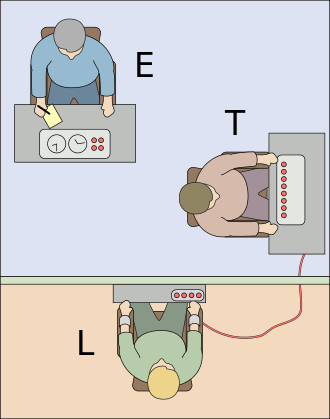
The Milgram experiment: The experimenter (E) persuades the participant (T) to give what the participant believes are painful electric shocks to another participant (L), who is actually an actor. Many participants continued to give shocks despite pleas for mercy from the actor.Image by Fred the Oyster, licensed under Creative Commons Attribution-Share Alike 4.0

The Milgram experiment: The experimenter (E) persuades the participant (T) to give what the participant believes are painful electric shocks to another participant (L), who is actually an actor. Many participants continued to give shocks despite pleas for mercy from the actor.

Sculpture of Kurt LewinImage by Pko (photographer), licensed under Creative Commons Attribution-Share Alike 4.0

Sculpture of Kurt Lewin

The Elaboration Likelihood Model is an influential model of persuasion.Image by Joe1992w, licensed under Creative Commons Attribution-Share Alike 3.0

The Elaboration Likelihood Model is an influential model of persuasion.

Daryl BemImage by Robert Sheaffer, licensed under Creative Commons Attribution-Share Alike 3.0

Daryl Bem

Social psychologists study interactions within groups, and between both groups and individuals.Image by Lucidish at en.wikipedia, licensed under Creative Commons Attribution-Share Alike 3.0

Social psychologists study interactions within groups, and between both groups and individuals.

Factors influencing interpersonal attractionImage by UX Stalin, licensed under Creative Commons Attribution-Share Alike 4.0

Factors influencing interpersonal attraction

Which line matches the first line, A, B, or C? In the Asch conformity experiments, people frequently followed the majority judgment, even when the majority was objectively wrong.
Which line matches the first line, A, B, or C? In the Asch conformity experiments, people frequently followed the majority judgment, even when the majority was objectively wrong.

The Milgram experiment: The experimenter (E) persuades the participant (T) to give what the participant believes are painful electric shocks to another participant (L), who is actually an actor. Many participants continued to give shocks despite pleas for mercy from the actor.Image by Fred the Oyster, licensed under Creative Commons Attribution-Share Alike 4.0

The Milgram experiment: The experimenter (E) persuades the participant (T) to give what the participant believes are painful electric shocks to another participant (L), who is actually an actor. Many participants continued to give shocks despite pleas for mercy from the actor.

Social Identity Theory

Social Identity Theory is about how we see ourselves and others in groups! 🤝For example, you might identify as a "student," "friend," or "family member." When we belong to a group, we often feel like we’re part of a team! 🏆This theory helps explain why we prefer our group and how to bridge differences with others. Recognizing our shared identities can lead to understanding and reduce conflict. Let's celebrate our uniqueness together! 🎉

Attitudes And Persuasion

Attitudes affect how we feel about people and things! 😃If you love dogs, your attitude is positive, and you’re likely to play with them! Sometimes, we want to change someone’s attitude, which is called persuasion. Advertisements are everywhere, trying to convince you to love a new toy! 📺Using facts or emotions can help change someone’s opinion, but it’s important to think critically about what we hear and make our own choices!

Prejudice And Discrimination

Prejudice is when we have a negative opinion about someone just because of who they are, like their skin color, gender, or beliefs. 😔This isn't fair! Discrimination happens when people treat others differently based on those opinions. It's essential to encourage kindness and understanding instead. 🌈When we learn about each other, we can break down these barriers. Remember, everyone deserves respect and friendship, no matter how different we may seem! ✌️

Social Influence And Conformity

Have you ever felt pressure to do something just because your friends were doing it? That’s called “social influence”! 😮Sometimes it’s good, like when friends encourage each other to study, but it can be tricky too. For example, if everyone in a group decides to do something silly, you might feel you should join in, even if you don’t want to! 🚫Understanding social influence can help us make better choices and be ourselves, even when it’s tough!

Applications Of Social Psychology

Social psychology helps us in many ways! 🛠️ It teaches us about working in teams, communicating with friends, and solving conflicts peacefully. Schools and businesses use these ideas to promote teamwork and kindness. For instance, programs that teach empathy help us understand others' feelings and encourage friendship! 😊Even in sports, understanding motivation can help athletes perform better. By applying social psychology, we can create happier and healthier communities for everyone! 🌍❤️

Key Concepts In Social Psychology

In social psychology, we learn about some really cool ideas! One key concept is "conformity." This means changing our behavior to fit in. For example, if all your friends like a certain game, you might like it too, even if you didn’t before! 😄Another important idea is "attitude," which is how we feel about things, like ice cream—yummy! 🍦These concepts help us explore how individuals behave in groups and why.

Research Methods In Social Psychology

How do scientists study social psychology? They use different research methods! 🧪One way is by conducting surveys, where they ask people questions about their thoughts and feelings. Another way is experiments, where researchers create situations to see how people react. For example, they might see how people help each other! 💬Scientists also observe people in real life to learn from their natural behavior. All this helps us gather valuable information about ourselves!

Group Dynamics And Intergroup Relations

Group dynamics is all about how people interact in groups. 😄Sometimes groups work well together, and sometimes they don’t! Think about your class; you might pair up for a project and share ideas. But be careful! Sometimes groups can cause problems, like when members argue. 🌪Intergroup relations look at how different groups, like classmates or teams, behave toward each other. Understanding these dynamics helps us work better together and appreciate everyone’s feelings!

Historical Foundations Of Social Psychology

Social psychology started in the late 1800s! 🌍One of the first researchers was Norman Triplett, who studied how kids rode bikes faster when others were around. 🚴‍♂️ In 1908, books were published on the topic, and famous psychologists like Kurt Lewin explored how groups affect behavior. By studying these ideas, we learned more about our interactions. Today, social psychology is a big part of understanding people and improves how we live together!

The Role Of Emotions In Social Interactions

Emotions play a big role in how we interact with others! 😊When we feel happy, we’re more likely to share and be friendly. But if we’re upset, we may not want to talk. 🤫Social psychology studies how emotions influence our behavior. For example, when we see someone sad, we often want to help. Recognizing and expressing our emotions helps build strong relationships and a supportive environment. 💞By understanding feelings, we can connect better and be there for each other!

Social Psychology Quiz

Q1
Question 1 of 10

Learn more about Social Psychology

Ready to create?

Drop Files here
Make

To create a safe space for kid creators worldwide!

Create

Vibe Coding

Kids GPT

All Tools

Kibu

Resources

Worksheets

SafeTube

Blog

FAQ

Account

Pricing

Log-in

Sign-up

Data Deletion

Company

About

Community Guidelines

Privacy Policy

Terms of Service

2025, URSOR LIMITED. All rights reserved. DIY is in no way affiliated with Minecraft™, Mojang, Microsoft, Roblox™ or YouTube. LEGO® is a trademark of the LEGO® Group which does not sponsor, endorse or authorize this website or event. Made with love in San Francisco.