Snow Goose Facts For Kids
Snow geese are medium-sized waterfowl known for their distinct white plumage and migratory behavior.
Select reading age

Snow Goose Facts For Kids
Videos & Quizzesincluded
About this topic
The snow goose is a beautiful bird found in North America, recognized by its snow-white feathers and black wing tips. 🌨️ These medium-sized birds have a wingspan of about 3.5 feet! They are known for their loud honking calls, which can be heard when they fly in large flocks. Snow geese are common in areas like Canada and the northern United States during the breeding season. In winter, they often migrate south to places like California and Texas to find food. These wonderful birds play an important role in nature! 🥰
Explore with ChatDinoKey Points
Did you know that snow geese are strong flyers?
Snow geese are known for their incredible long-distance migration.
The snow goose is currently not endangered, which is great news!
When it's time to raise new baby geese, snow geese look for a safe spot on the ground to build their nests.
Snow geese have significant meaning in many cultures, especially for Indigenous peoples in North America.
Snow geese love to make their homes in wetlands and grasslands.
Snow geese are easily identifiable by their striking appearance.
Snow geese are herbivores, which means they eat plants!
Photos of Snow Goose

Snow Goose — photo 1

Lesser Snow Goose ( Anser caerulescens ) in “blue” phase plumage, at Slimbridge Wildfowl and Wetlands Centre, Gloucestershire, England

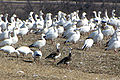
Snow goose at the Gray Lodge Wildlife Area in Northern California
Snow Goose — photo 4
Snow Goose — photo 5
Snow Goose — photo 6

Snow Goose — photo 7

Snow Goose — photo 8

Snow Goose — photo 9
🛩️ Interesting Facts
Did you know that snow geese are strong flyers? They can fly at altitudes of up to 29,000 feet! 🛩️ Many of them can live for over 10 years in the wild, while some can even reach 20 years! Snow geese can also adapt their behavior quickly, which helps them survive in changing environments. And here’s a fun twist: in the blue phase, some geese look just like a bluebird because of their gray feathers! Isn’t that fascinating? 💙
Go deeper🗺️ Migration Patterns
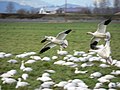
Snow geese are known for their incredible long-distance migration. 🗺️ Each year, they travel thousands of miles, leaving their homes in the Arctic in September and October to escape the icy cold. During their journey, they can fly in large "V" formations, which helps them conserve energy! 🦢They return in the spring, around late March or April, to the same breeding grounds. What a journey! These patterns help them find food, stay warm, and raise their young!
Go deeper🌍 Conservation Status
The snow goose is currently not endangered, which is great news! 🌍Their population is stable and even growing in some areas. However, they face challenges, like habitat loss due to human activities. It’s important to protect their breeding and feeding grounds so future generations can enjoy these amazing birds. Organizations are working hard to keep their environments safe and promote awareness about the importance of snow geese and other wildlife! 🐦
Go deeper🏰 Breeding And Nesting
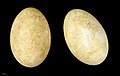
When it's time to raise new baby geese, snow geese look for a safe spot on the ground to build their nests. 🏰They usually lay around 4 to 6 eggs in nests made of grass, moss, and feathers, carefully hidden to protect them from predators. The female snow goose takes care of the eggs for about 24-30 days until they hatch, while the male stands guard! 🥚Once the goslings (baby geese) hatch, they learn to walk and swim quickly, and the parents lead them to food and safety!
Go deeper🌽 Cultural Significance
Snow geese have significant meaning in many cultures, especially for Indigenous peoples in North America. 🌽They are often celebrated in art, stories, and songs, representing the changing seasons. Some tribes hold festivals in honor of these birds during migration. Additionally, snow geese are important for hunting and wildlife tourism, as many people enjoy watching them during their migrations. It’s a beautiful way to connect with nature! 🎶
Go deeper🏞️ Habitat And Distribution
Snow geese love to make their homes in wetlands and grasslands. 🏞️ During the breeding season, they mostly live in the Arctic regions of Canada and Alaska. They nest near lakes and rivers, where they can find plenty of food. When winter arrives, these geese migrate to the southern United States and Mexico, often gathering in places like the Central Valley in California. 🌅It’s like a big family reunion where they find warm places to rest and eat!
Go deeper🦢 Physical Characteristics
Snow geese are easily identifiable by their striking appearance. Most adult snow geese have pure white feathers, while some have a grayish-brown color, called the "blue phase." Their heads are often black, and their beaks are pink or orange. 🦢An adult snow goose weighs between 4 to 7 pounds. They have strong, long wings that help them fly long distances during migration. Their legs are short but sturdy, which allows them to walk on land and swim in water! What a cool combination! 🌊
Go deeper🌾 Diet And Feeding Behavior
Snow geese are herbivores, which means they eat plants! 🌾They love to munch on grasses, grains, and other tasty vegetation found in wetlands and agricultural fields. During the winter, they often feast on leftover crops, like corn, from farmers' fields. 🍂They use their strong beaks to dig into the ground and find delicious roots, making them experts in finding food! Watching them search for their meals can be quite a treat!
Go deeper