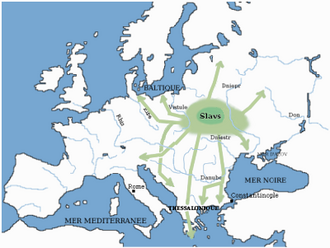
The Slavs or Slavic people are groups of people who speak Slavic languages and share rich cultural traditions, primarily found in Eastern Europe.
Set reading age
View for Kids
Easy to read and understand
View for Students
Clear, detailed explanations
View for Scholars
Deep dives and big ideas
The Slavs are a group of people who speak languages called Slavic languages! 🌍These languages are part of a big family called Indo-European languages. Slavs are found mainly in Eastern Europe, and there are over 300 million people who speak these languages today! Some well-known Slavic languages are Russian, Polish, and Czech. The Slavs have a rich history, colorful cultures, and many fun traditions. They live in countries like Poland, Ukraine, and Serbia. With exciting stories and interesting foods, the Slavic world offers many things to learn about and explore! 🥟🌺
Slavic languages are many but can be grouped into three main families! 🔤West Slavic languages include Polish and Czech, North Slavic includes Russian, and South Slavic languages consist of Serbian and Croatian. Interestingly, these languages share some words and grammar, making it easier for speakers to understand each other! For example, the word for “hello” in Russian is "Zdravstvuyte," and in Polish, it is "Cześć." Each Slavic language has its unique sounds and letters. There is even a special alphabet called Cyrillic used by many Slavic people like the Russians and Bulgarians! 📖✨
There are many countries with Slavic people! ✈️ Some of the major nations include Russia, Ukraine, Poland, Czech Republic, and Serbia. Russia is the largest, covering almost 1/9 of the Earth’s land! 🌏These nations have unique customs, languages, and food. For instance, Polish pierogi are delicious dumplings, while Serbian sarma are stuffed cabbage rolls. Each country has special holidays and traditions, like Russia’s New Year celebrations and Poland's Wigilia, a festive Christmas Eve dinner. 🌲These countries honor their heritage, allowing their cultures to thrive!
The Slavs first appeared in history around the 6th century! 📜They lived near the rivers of Eastern Europe, like the Vistula in Poland and the Dniester in Ukraine. Historians believe the Slavs came from a place called the Pripyat Marshes, which is in modern-day Belarus. They were farmers and enjoyed fishing, hunting, and gathering. By the 8th century, the Slavs started to spread all over Europe! They moved to different areas, forming different groups. Today, we have West Slavs like the Poles, East Slavs like the Russians, and South Slavs like the Serbians. 🌳🏞️
Religious beliefs play an important role in Slavic cultures! ⛪Many Slavic people practice Christianity, and there are two main branches: Eastern Orthodox and Roman Catholic. In Russia, the Eastern Orthodox Church is very significant, while in Poland, many are Roman Catholic. Along with this, some Slavs also maintain older spiritual traditions, honoring nature and ancestral spirits. 🌌Celebrations like Easter and Christmas often blend religious customs with local folklore, creating unique traditions that everyone cherishes. Through these beliefs, Slavic people connect deeply to their heritage and each other, celebrating life in special ways! 🌼✨
The Slavs migrated a lot throughout history! 🧳In the early days, they spread from their homeland in Eastern Europe to other areas. During the 8th to 10th centuries, large groups of Slavs moved into the Balkans, which is now southern Europe. This movement created many nations and mixed cultures. 🌏In the 12th century, some Slavs moved north towards the Baltic Sea, leading to the connection between different Slavic communities. Even today, some migrate to new countries to share their rich traditions in places like America and Canada! This ongoing movement continues to shape the Slavic world. 🚀
Slavic folklore is full of exciting stories about mythical creatures! 🦸♂️ They have fairytale characters like Baba Yaga, a witch with a magical hut that walks on chicken legs. Baby dragons called Zmei often appear in folk tales, representing both danger and heroism. Many Slavic myths also describe nature spirits, known as Leshy, who protect forests. 🌲Children often enjoy listening to these stories, and they teach valuable lessons about bravery, kindness, and friendship. Festivals sometimes celebrate these myths with fun activities like storytelling, allowing everyone to enjoy the wonders of Slavic mythology! 📚✨
The Byzantine Empire had a huge influence on the Slavs! 🏛️ From about the 9th century, Byzantine missionaries like Saints Cyril and Methodius traveled to Slavic lands to spread Christianity and teach about their culture. They even created the Cyrillic alphabet, which many Slavic languages use today! 📖This connection to the Byzantine Empire helped shape the churches, art, and literature of Slavic nations. The adoption of Christianity had an important impact on their societies, affecting their laws and traditions. As a result, the Slavic people began sharing woven stories and culture, deepening their bond with one another. 🌟
Slavic cultures are full of colorful traditions! 🎉One such tradition is celebrating winter festivals, like Maslenitsa in Russia, where people eat delicious pancakes. Slavs also love folk music and dance! They often wear bright, traditional costumes during celebrations. For example, Ukrainian Vyshyvanka shirts are embroidered with beautiful patterns. In some cultures, Slavs create Easter eggs known as Pysankas, decorated with intricate designs! 🍳🌸 Family and community play vital roles in Slavic life, and people enjoy gathering together for special meals and storytelling. Each country has unique ways to share their culture, making it all very interesting!
Today, Slavic communities can be found all over the world! 🌍Many people moved to different countries like the United States, Canada, and Germany in search of new opportunities. Often they bring their cultures with them, sharing traditional foods, music, and festivals. 🎶For instance, you can find Polish festivals in Chicago, and Ukrainian parades in New York! Slavic communities maintain strong ties, celebrating their heritage together while also blending with local customs. 🌈This creates a multicultural experience where everyone can learn about and appreciate the beautiful traditions of Slavic people, no matter where they are! ❤️


DIY is a creative community where kids draw, build, explore ideas, and share.
No credit card required