Skipjack Tuna Facts For Kids
Skipjack tuna, scientifically known as *Katsuwonus pelamis*, is a fast, camouflaged fish found in warm oceans and is vital both ecologically and economically.
Select reading age
Skipjack Tuna Facts For Kids
Videos & Quizzesincluded
About this topic
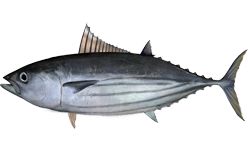
The skipjack tuna is a super speedy fish that swims in warm oceans around the world! 🌊This fish is part of the tuna family, called Scombridae, and its scientific name is Katsuwonus pelamis. Skipjack tuna are important because they are fast swimmers, reaching speeds of 50 miles per hour! 🏃♂️💨 They are recognizable by their dark blue tops and silver sides. They can grow to about 3.5 feet long and weigh around 40 pounds. Skipjack tuna are often used in sushi and canned tuna. Let's dive deeper into learning about this amazing fish!
Explore with ChatDinoKey Points
Did you know that skipjack tuna can hold their breath longer than you might think?
Fishing for skipjack tuna can be lots of fun!
Skipjack tuna are currently not endangered, but they still need our help!
Skipjack tuna are vital to both local and global economies!
Skipjack tuna holds a special place in many cultures!
Skipjack tuna live in warm waters all around the globe!
Skipjack tuna are shiny with a unique look!
Skipjack tuna are strong hunters.
Skipjack tuna are born in warm waters, and they have fascinating life cycles!
The skipjack tuna belongs to the fish order Perciformes and the family Scombridae.
Photos of Skipjack Tuna

Skipjack Tuna — photo 1

Shoaling skipjack tuna
![Global capture of Skipjack tuna (Katsuwonus pelamis) in million tonnes from 1950 to 2022, as reported by the FAO[6]](https://upload.wikimedia.org/wikipedia/commons/thumb/f/f2/Skipjack_tuna%2C_capture_production%2C_million_tonnes%2C_1950-2022.svg/960px-Skipjack_tuna%2C_capture_production%2C_million_tonnes%2C_1950-2022.svg.png)
Global capture of Skipjack tuna (Katsuwonus pelamis) in million tonnes from 1950 to 2022, as reported by the FAO[6]

Bell M. Shimada and Fred Cleaver examining skipjack tuna

Katsuo Fish with Cherry Buds, print by Utagawa Hiroshige, 1830s

Katsuo Tataki (Japanese: かつおのたたき ) Roasted Bonito (skipjack tuna). かつおのたたき

Skipjack Tuna — photo 7

Skipjack Tuna — photo 8

Skipjack Tuna — photo 9
🤯 Interesting Facts
Did you know that skipjack tuna can hold their breath longer than you might think? 🤯They can dive down to about 300 feet deep to escape from predators or search for food! They're also very social fish, often swimming in large schools of up to 100! 🌐These fish have been around for more than 200 million years, making them ancient ocean travelers! Skipjack tuna can even change colors – when they are excited or scared, they can darken their skin! With all these amazing abilities, skipjack tuna are truly impressive creatures of the sea! 🐠💙
Go deeper🎣 Fishing Techniques
Fishing for skipjack tuna can be lots of fun! 🎣Fishermen use different techniques to catch these speedy fish. One popular method is called "pole and line fishing." This means using a long rod with a baited hook to catch fish one-by-one. 🎯Another method is called purse seining, where large nets encircle schools of skipjack. This method helps catch many fish quickly but must be done carefully to protect other ocean animals. Fishermen work hard to implement sustainable fishing practices – that's essential for keeping the ocean healthy and managing the skipjack population responsibly! 🌟
Go deeper🌍 Conservation Status
Skipjack tuna are currently not endangered, but they still need our help! 🌍The International Union for Conservation of Nature (IUCN) lists them as "Least Concern." However, overfishing and climate changes can threaten their population. Some fishing methods can catch too many skipjack at once, which can lead to fewer fish in the ocean. 🐟It's essential to practice sustainable fishing, which means taking care of our oceans and letting fish grow and reproduce. By choosing responsibly sourced seafood, we can help protect these beautiful fish for generations to come!
Go deeper💰 Economic Importance
Skipjack tuna are vital to both local and global economies! 💰They are one of the most commercially important fish in the world, making up a significant portion of the tuna catch every year. Countries like Thailand 🇹🇭 and Japan 🇯🇵 rely on skipjack tuna fishing for jobs and food. They are often canned or made into sushi, which are tasty treats enjoyed by many people. By fishing responsibly, we can ensure that skipjack tuna will be around for future fishermen and families. Remember, every can of tuna has a story about the skipjack's journey in the ocean!
Go deeper🌸 Cultural Significance
Skipjack tuna holds a special place in many cultures! 🌸In Japan, skipjack is used to make a popular ingredient called “katsuobushi,” which is dried and fermented fish flakes used for soups and seasonings. In Pacific Island cultures, skipjack tuna is an essential part of their diet and traditions. 🌊Fishermen hold special ceremonies to pay respect to the fish before a big catch! Furthermore, skipjack tuna are featured in folk stories and songs, showing their importance to people's lives. By knowing about their culture, we can appreciate the fish and the people who catch them!
Go deeper🌏 Habitat And Distribution
Skipjack tuna live in warm waters all around the globe! 🌏You can find them in the Atlantic, Indian, and Pacific Oceans. They enjoy the open sea, where they can swim freely and hunt for food. Skipjack tuna are often found near the surface of the water or around schools of smaller fish. They stick to tropical and subtropical regions where the water is warm and inviting. Some popular fishing spots for these tuna include the coasts of Hawaii 🌺 and the Caribbean islands. They are true ocean wanderers, moving hundreds of miles in search of food and friends!
Go deeper✨ Physical Characteristics
Skipjack tuna are shiny with a unique look! ✨The top of their bodies is dark blue or gray, while their sides are silver-white. They have long, streamlined bodies that help them swim fast. 🏊Their fins are also long and pointy, which helps them glide through the water. Skipjack tuna have a pointed head and large eyes, perfect for spotting food! They have several bars or stripes on their back, which helps them blend into the ocean. These beautiful fish can grow up to 3.5 feet long, but some are even smaller! 🌈
Go deeper🦈 Diet And Feeding Behavior
Skipjack tuna are strong hunters. 🦈They love to eat other fish, such as sardines, anchovies, and schools of small fish! 🍽️ They are also known to munch on squids and crustaceans. Skipjack tuna use their speed to chase after their prey, darting and weaving like expert swimmers! They often feed in groups, making it easier to catch their meals. 💥Their strong jaws and sharp teeth help them grab fish quickly. Being part of the ocean's food web, they help control fish populations while providing food for bigger ocean animals, like sharks and dolphins! 🦈🐬
Go deeper🥚 Reproduction And Life Cycle
Skipjack tuna are born in warm waters, and they have fascinating life cycles! 🥚💧 They can spawn (lay eggs) when the water temperature is just right, usually between 24-29 degrees Celsius (75-84 degrees Fahrenheit). A female skipjack can lay around 2 million eggs! Wow! 🐣The eggs float to the surface of the water, where tiny fish called larvae hatch. They grow quickly and become juvenile skipjack in just a few months! 🎉After about 1-3 years, they become adults and can live for up to 4 years. Their life cycle is full of excitement and adventure!
Go deeper🐟 Taxonomy And Classification
The skipjack tuna belongs to the fish order Perciformes and the family Scombridae. 🐟This fish is the only member of its genus, Katsuwonus. The category hierarchy looks like this: Domain: Eukarya, Kingdom: Animalia, Phylum: Chordata, Class: Actinopterygii, Order: Perciformes, Family: Scombridae, Genus: Katsuwonus, and Species: pelamis. They are closely related to other types of tuna, like yellowfin and albacore. Wondering why they are important? They are not only fun to learn about; they play crucial roles in marine ecosystems!
Go deeper