Singer Facts For Kids
A singer uses their voice to make music, tell stories, have fun, and learn, showing why practicing and listening can make singing strong and beautiful.

About this topic
Singing is used for lots of reasons: to tell stories, to pray, to have fun, to learn, or as a job. Getting good at singing takes time, practice, and sometimes lessons. Little steps, like breathing and listening carefully, help a voice grow stronger and more beautiful.
Quick Facts
Key Points
Photos of Singer
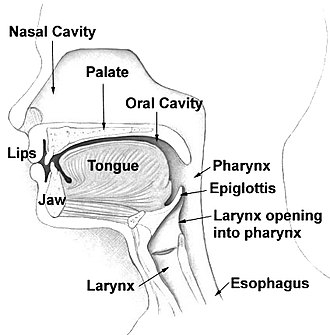
Cross-section of the head and neck
📘 Voices — How Singers Are Grouped
Choirs sometimes keep it simple by splitting parts into high and low, called S-A-T-B (soprano, alto, tenor, bass). But many voices fall in the middle, so a singer might try different parts to find where their voice feels best. Modern music can use these old names, but singers today mix styles freely.
🔎 Voices — Vocal Registers (chest, Head, And More)
There are other registers too, like falsetto (a light, airy sound), vocal fry (a very low, creaky sound), and whistle (very high pitches that only some people reach). These differences come from how the vocal folds vibrate in the larynx. Singers learn to move smoothly between registers so their singing sounds connected.
🧭 Voices — How The Voice Echoes Inside You
Singers learn to use these resonating spaces to make their voice bright, warm, or clear. For example, humming can help you feel vibrations in your chest and face. By adjusting the shape of the mouth and throat, singers can make the same note sound different and more beautiful.
💡 Chest Voice And Head Voice — A Little History
People first wrote about these ideas a long time ago, about 700–800 years back. Early writers compared them to other kinds of singing, like the falsetto. Later teachers of singing, especially in a style called bel canto, taught that singers move through different registers and a middle area called the passaggio between chest and head voice.
🌟 Posture: Standing And Sitting To Help Your Voice
A teacher will give warm-up exercises and short songs to stretch your range and teach ways to sing smoothly (legato), sing short notes (staccato), sing softly and loudly (dynamics), and make pretty ornaments. Teachers also help you notice how singing feels inside so you can connect what you hear with what you feel.
🧩 Breathing And Breath Support: How Air Helps Singing
Good posture lets your breathing start easily and helps the voice ring in the mouth and nose without extra tightness. It can also make you feel more confident and less tired. A simple helpful posture is: feet a little apart, knees soft, hips level, spine tall, belly gently held, chest relaxed forward, shoulders down and back, and head balanced over the spine.
🗺️ Popular And Traditional Singing: Lead And Backing Voices
In some traditional styles, like five-part gospel a cappella, the highest singer may sing a special line called a descant instead of the main melody. Today, recording artists can also sing both lead and backing parts by recording their voice more than once and putting the tracks together.
🔬 Jobs For Singers
Technology also changed singing. Tools like Auto-Tune can smooth a voice, but some people argue about using it. Sometimes performers have pretended to sing with recorded tracks, and that has caused worry about being honest on stage.
📘 Singing Contests And Auditions
Singing jobs come in many forms. Backup singers may also play small instruments, shake percussion, or dance while singing with a headset mic. Singers make demo CDs or videos, post performances on places like YouTube, and use agents or managers to find work. Pay and schedules vary a lot, so singers often learn other music skills like songwriting or producing to find more chances to perform.
🧠 Take the Quiz about Singer
Frequently asked questions
What is singing?
Singing is making music with your voice. When people sing, they shape sounds and often words in a pattern that feels like music. Singers can perform alone or with instruments, and songs can be simple or very trained.
How are singers grouped by voice?
Voice classification sorts singing voices into types. For women, the names are soprano, mezzo-soprano, and contralto, and for men, countertenor, tenor, baritone, and bass. These labels help teachers and choirs choose music that fits each singer.
What are chest voice and head voice?
Chest voice is the low, fuller part of the sound, and head voice is the high, lighter part. These terms come from how your vocal folds vibrate and feel when you sing.
What is vocal resonation?
Vocal resonation is how the sound from your throat is made fuller and louder by spaces in your body. Places like the chest, throat, mouth, nose, and sinuses act like echo chambers that change the tone and volume. Singers learn to use these spaces to make their voice bright, warm, or clear.
Where did the ideas of chest voice and head voice come from?
People wrote about these ideas about 700–800 years ago. Early writers compared them to other kinds of singing, like the falsetto, and later teachers in bel canto taught that singers move through different registers with a middle area called the passaggio.
Why is good posture important when singing?
Good posture helps your muscles work together so your voice sounds steady and free. Singing needs careful muscle coordination more than big strength, so practice and gentle exercises help the voice get stronger.