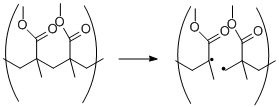
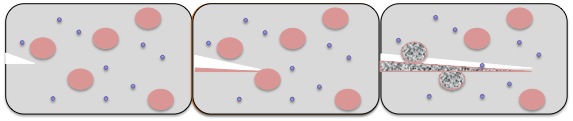
Self-healing polymers are advanced materials designed to autonomously repair themselves after damage, enhancing their durability and lifespan.


Set reading age
View for Kids
Easy to read and understand
View for Students
Clear, detailed explanations
View for Scholars
Deep dives and big ideas
Self-healing polymers are special materials that can fix themselves when they get damaged! 🌟Imagine if your toy could heal scratches or breaks without needing glue. These polymers are made of long chains of tiny molecules called monomers. When something cuts or cracks them, they can reconnect by using heat, light, or chemicals. This means they can last longer! Some self-healing polymers can even heal themselves multiple times, making them super cool and useful! ⚡Scientists study these materials to create new products that are smart and durable. Who knows? One day, we might all have self-healing gadgets! 📱
Nature is filled with amazing examples of self-healing! 🌿For instance, when a tree gets a cut, it can seal off the wounds with a substance called resin. This helps protect it from insects and diseases! Some animals, like certain lizards, can regrow their tails if they lose them. 🦎Scientists study these natural healing processes to inspire new self-healing polymers. By mimicking nature, they hope to create materials that can heal themselves just like living things do! Isn’t nature simply wonderful? 🦋
Self-healing polymers are already making waves in different industries! ⚓️ In the automotive industry, they can help car parts last longer by repairing scratches and dings. This saves money and resources! They are also used in electronics, where screens can heal tiny cracks, preventing breaks! 📺In medicine, self-healing polymers are used in bandages that can adapt to wounds, helping them heal better. Research is ongoing to explore how these materials can be used in sports equipment, furniture, and even construction! The possibilities are endless! 🌟
Even though self-healing polymers are exciting, they do come with challenges. 😟One big issue is that they can be expensive to produce. Not everyone can afford them yet! 💰Another challenge is how well they heal. Some materials may heal quickly but not very completely. Others might take a long time to fix themselves. Scientists are working hard to solve these problems. They want to create self-healing polymers that are affordable and heal perfectly every time! It’s a tough job, but they’re dedicated to finding solutions! 🔬
How do self-healing polymers actually fix themselves? 🤔It depends on their design! Some use heat to reunite broken parts. When you heat the material, its molecules move around, sliding back into place! Others use chemistry, where special bonds form again after a break. Some can respond to light, changing shape and reconnecting! 🌞Scientists study these mechanisms carefully so they can make better materials that can heal faster and work more efficiently. Imagine if buildings could fix their cracks after earthquakes! 🌍
What’s next for self-healing polymers? 🚀Scientists are exploring ways to make them smarter! They want these materials to know when they are damaged. How cool would it be if your shirt could sense a tear and fix it automatically? 🧥Researchers are also trying to make these materials be even tougher and more flexible. More studies will happen to better understand how to make self-healing polymers that can work in all situations! One day, we might live in a world where everything can heal itself. Just imagine the possibilities! 🌟
There are many types of self-healing polymers! 🌈One type is called "microcapsule-based," which means it has tiny capsules filled with healing liquid. When a crack happens, the capsules break open, releasing the liquid to fix the damage! Another type is "polymer networks," which can reform their bonds just like magic. 🎩There are also "dynamic covalent polymers" that can form new links when heated. Each type has its own special ability, helping scientists choose the best one for different projects! You might find these types in everyday things like phones, cars, or even medical supplies! 🚑
The idea of self-healing materials started in the early 2000s! 🕰️ In 2001, a scientist named Dr. Scott White from the University of Illinois created the first self-healing polymer. He was inspired by how our skin heals after we get a cut! People were excited because this type of material could change many things, from cars to clothing. Over the years, many researchers joined in, making bigger and better self-healing polymers! In 2018, a group of students even created a self-healing material that could work in colder temperatures! ❄️ It shows how far we've come in just a few years! 🎉
Self-healing polymers could help the environment! 🌍If things can repair themselves, we might not need to throw them away as often. This can lead to less waste and pollution! 🌱Additionally, scientists are investigating how to create them from safer, more sustainable materials. They aim to make self-healing polymers that are biodegradable, which means they can break down naturally instead of harming the planet. 💚By thinking about sustainability, researchers want to ensure that our future products are not only strange and cool but also kind to Earth!


DIY is a creative community where kids draw, build, explore ideas, and share.
No credit card required