Scaphopoda Facts For Kids
Scaphopoda, also known as tusk shells, are marine mollusks with long, tapered shells that live buried in the sand and are found worldwide.
Select reading age

Scaphopoda Facts For Kids
Videos & Quizzesincluded
About this topic
Scaphopoda, also called tusk shells or tooth shells, are unique sea creatures! 🐚They belong to a bigger family known as Mollusca, which includes snails, clams, and octopuses. Unlike most mollusks, scaphopods live buried in sand or mud at the bottom of the ocean. Their shells are long and look like little tusks! 🌊You can find them all over the world, from the warm waters of the Caribbean 🌴 to the icy seas around Antarctica. These animals are interesting because they spend their whole lives under the sea floor!
Explore with ChatDinoKey Points
Scaphopods are not currently endangered, but they do face some threats!
Scaphopods have a long evolutionary history that dates back to around 500 million years ago!
Scaphopods play a key role in the ocean's ecosystem!
Scaphopods are filter feeders and eat tiny particles in the water!
Scaphopods have a fascinating way of reproducing!
You can find scaphopods all over the world's oceans!
Scaphopoda have long, tubular shells that can be up to 10 centimeters (about 4 inches) long!
Scaphopods are different from other mollusks, like snails and clams!
The fossil record of scaphopods is full of interesting discoveries!
Photos of Scaphopoda

Scaphopoda — photo 1

Scaphopoda — photo 2

Shell of Calliodentalium semitracheatum (Boissevain, 1906) (specimen at MNHN, Paris)

Internal mold of a fossil scaphopod, Kaibab Formation (Grand Canyon)

Scaphopoda — photo 5

Scaphopoda — photo 6

Anatomical diagram of Rhabdus rectius
Scaphopoda — photo 8
⚠️ Conservation Status
Scaphopods are not currently endangered, but they do face some threats! ⚠️ Issues like pollution, climate change, and ocean acidification can harm their habitats. Overfishing can also impact their food sources or disrupt their environment. 🌍Scientists monitor their populations to ensure these fascinating creatures are safe. If we keep our oceans healthy and clean, scaphopods will continue to thrive! Protecting the ocean is crucial for their future and the health of all marine life! 🌊
Go deeper⏳ Evolutionary History
Scaphopods have a long evolutionary history that dates back to around 500 million years ago! ⏳They are part of the phylum Mollusca, which has been evolving for a very long time. Fossils found in ancient sea beds show that their ancestors lived in different environments. Today's scaphopods still share some characteristics with their ancient relatives. Researchers study these fossils to understand how they adapted to various ocean conditions through time! 🌍
Go deeper🌊 Ecological Importance
Scaphopods play a key role in the ocean's ecosystem! 🌊They help keep the waters clean by filtering out tiny particles, which improves water quality. Many fish and other marine animals depend on scaphopods as a food source. This means that tusk shells contribute to the food web in ocean environments. By burrowing into the sand, scaphopods also help mix the ocean floor, allowing nutrients to circulate. They are essential for maintaining the health of marine habitats!
Go deeper🍽️ Feeding And Nutrition
Scaphopods are filter feeders and eat tiny particles in the water! 🍽️ They use their tentacle-like structures to catch food, which includes microscopic algae and small organic matter. When water flows in through one end of their shell, food particles are trapped on mucous-covered tentacles called captacula. Once the food sticks to them, scaphopods move it to their mouth to eat! 🤤They help clean the ocean by filtering out small bits of debris, playing an important role in the underwater ecosystem.
Go deeper🌱 Reproductive Strategies
Scaphopods have a fascinating way of reproducing! 🌱They are usually separate genders, with males and females. During mating, the male releases sperm into the water, and the female takes it in to fertilize her eggs. After a few weeks, tiny larvae hatch from the eggs and drift in the ocean currents. These larvae have a free-swimming stage, allowing them to move to new areas before settling down and growing into adult tusk shells! This process helps spread scaphopods across different ocean regions.
Go deeper🌊 Habitat And Distribution
You can find scaphopods all over the world's oceans! 🌊They prefer to live in soft sediments, like sand and mud, where they can bury themselves. Scientists have found them at different depths, from shallow waters of about 10 meters (33 feet) to deep areas of up to 1,000 meters (3,280 feet)! 🦑Some common places where scaphopods live include the Atlantic Ocean, Pacific Ocean, and Indian Ocean. They like staying hidden so they can avoid predators like fish and crabs. 🦀
Go deeper🐢 Physical Characteristics
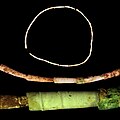
Scaphopoda have long, tubular shells that can be up to 10 centimeters (about 4 inches) long! 🐢Their shells are open at both ends and allow them to breathe and eat. Unlike other mollusks with rounded shells, tusk shells resemble elephant tusks. 🐘Inside their shells, scaphopods have a soft body with a foot they use for digging into the sand. They also have tentacle-like structures called siphons to help them take in water oxygen! Their color can vary from white to brown, helping them blend in with their sandy homes.
Go deeper🐌 Comparison With Other Molluscs
Scaphopods are different from other mollusks, like snails and clams! 🐌While snails have spiral shells and clams have two shells, scaphopods have long, slender, tusk-shaped shells. They are also unique because they live buried in the sand instead of on solid surfaces or swimming in the water. Unlike octopuses that have soft bodies with tentacles, scaphopods use their foot to dig into the sand and don't have arms. Their lifestyle makes them special members of the mollusk family! 🐙
Go deeper🦴 Fossil Record And Paleontology
The fossil record of scaphopods is full of interesting discoveries! 🦴Fossils have been found in many places around the world, showing how these creatures lived millions of years ago. Some fossils look very much like modern tusk shells, which helps scientists learn about their history! By examining these fossils, researchers understand how the climate and oceans changed over time. Some of the oldest known scaphopod fossils date back to the Cambrian Period, around 500 million years ago, making them one of the oldest marine animals!
Go deeper