Robert Hofstadter Facts For Kids
Robert Hofstadter was a groundbreaking American physicist who made significant contributions to our understanding of atomic structure and particle physics.
Select reading age
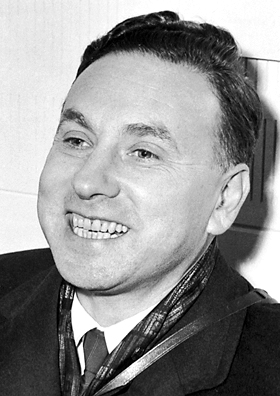
Robert Hofstadter Facts For Kids
Videos & Quizzesincluded
About this topic
Robert Hofstadter was a brilliant American physicist born on February 5, 1915, in New York City 🏙️. He became famous for his work studying tiny particles that make up atoms! Atoms are the building blocks of everything around us — from trees to toys 🌳🧸. Hofstadter helped scientists understand how these particles have unique shapes and behaviors. He loved learning and sharing his knowledge, which made him a really important person in science. Hofstadter’s discoveries continue to help researchers today! 🧪
Explore with ChatDinoKey Points
Hofstadter wrote many articles and books to share his findings with others 📖.
Outside of science, Robert Hofstadter enjoyed spending time with his family 👨👩👦.
Robert Hofstadter received many awards during his lifetime.
Hofstadter’s Diagrams are special drawings that show how electron scattering experiments work 🖼️.
In 1961, Robert Hofstadter received the Nobel Prize in Physics 🌟!
After winning the Nobel Prize, Hofstadter continued his research and teaching at Stanford University for many years 👨🏫.
Hofstadter was the son of Jewish immigrants, which shaped his desire to learn 📚.
Robert Hofstadter made groundbreaking contributions to the field of physics.
Robert Hofstadter had a massive influence on nuclear physics, which is the study of atomic nuclei.
Hofstadter's research on electron scattering was super cool!
📖 Publications
Hofstadter wrote many articles and books to share his findings with others 📖. His most famous work includes "Electron Scattering and the Structure of the Nucleon," where he discusses electron scattering experiments in-depth. By publishing his research, Hofstadter helped spread knowledge about atomic particles and their behaviors. Many students and scientists still read his work today, learning from Hofstadter's investigations! His commitment to sharing knowledge and inspiring future generations remains an essential part of his legacy. ✍️
Go deeper👨👩👦 Personal Life
Outside of science, Robert Hofstadter enjoyed spending time with his family 👨👩👦. He was married to his wife, Charlotte Hofstadter, and they had two children. He loved music and playing the piano 🎹. Hofstadter believed that creativity is essential in science, and he enjoyed sharing his passions with his family. His love for learning and discovery continued throughout his life, showing that curiosity and hard work can lead to exciting adventures in science.
Go deeper🏅 Awards And Honors
Robert Hofstadter received many awards during his lifetime. Besides the Nobel Prize in Physics, he won the National Medal of Science, which recognizes extraordinary achievements in scientific research 🏅. Hofstadter was also elected to the National Academy of Sciences, a prestigious group of the world's best scientists. He received honorary degrees from multiple universities, honoring his contributions to physics and education 🌟. These awards remind us of the importance of hard work, curiosity, and the pursuit of knowledge!
Go deeper🖼️ Hofstadter's Diagrams
Hofstadter’s Diagrams are special drawings that show how electron scattering experiments work 🖼️. These diagrams help scientists visualize the interactions between tiny particles! By simplifying complex data, Hofstadter made it easier for others to understand his research findings. These diagrams are often used in textbooks and papers so that students and scientists can see the relationships between particles better. Thanks to Hofstadter, learning about particles became more fun and engaging! 🎉
Go deeper🌟 Nobel Prize In Physics
In 1961, Robert Hofstadter received the Nobel Prize in Physics 🌟! This was because of his amazing research on electron scattering. The prize is one of the highest honors a scientist can receive, and it recognizes their hard work and discoveries. Hofstadter's research changed how we understand atomic particles, which is essential for many scientific fields, including chemistry and engineering! He accepted the award at a grand ceremony in Stockholm, Sweden 🇸🇪, where many scientists gather to celebrate their achievements.
Go deeper👨🏫 Later Career And Legacy
After winning the Nobel Prize, Hofstadter continued his research and teaching at Stanford University for many years 👨🏫. He worked on various projects and mentored lots of students, passing on his wisdom! Hofstadter’s influence continued even after he retired. His work laid a foundation for future research in nuclear physics and particle physics. He passed away on November 17, 1990, but his discoveries and teachings continue to inspire scientists worldwide 🌍!
Go deeper📚 Early Life And Education
Hofstadter was the son of Jewish immigrants, which shaped his desire to learn 📚. He attended City College of New York, where he studied physics and earned his bachelor's degree in 1937. Later, he went to Stanford University, where he completed his Ph.D. in 1943. During school, he worked hard and loved asking questions! Instead of only accepting knowledge, he wanted to dig deeper and learn more about how things work 🔍. His passion for science started at a young age and grew throughout his education!
Go deeper💡 Scientific Contributions
Robert Hofstadter made groundbreaking contributions to the field of physics. One of his main areas of study was electron scattering. This involves sending electrons (super tiny particles!) at particles inside atoms to learn about their structure 💡. His work helped scientists understand the shape of protons and neutrons, which are found in the nucleus of an atom. This was important for discovering how matter forms and behaves. Hofstadter's work opened new doors in particle physics and inspired many future scientists to explore the tiny wonders of nature! 🌌
Go deeper🌌 Influence On Nuclear Physics
Robert Hofstadter had a massive influence on nuclear physics, which is the study of atomic nuclei. His work changed how scientists view the structure of protons and neutrons, making them see these particles as more complex than just examples of matter 🌌. Hofstadter's discoveries helped researchers investigate the forces within atomic nuclei, leading to important advancements in particle physics and nuclear energy. His dedication inspired many young scientists, showing that asking questions and exploring can lead to incredible discoveries! 🌟
Go deeper🚀 Research On Electron Scattering
Hofstadter's research on electron scattering was super cool! It involved firing electrons at protons and neutrons to see how these particles interact 🚀. By studying how the electrons bounce back, Hofstadter could learn about the shape and size of these atomic particles. This research helped scientists understand that protons and neutrons are not solid balls; instead, they are made up of even tinier particles called quarks! 🦠This was a significant discovery that changed the way physicists view the universe.
Go deeper