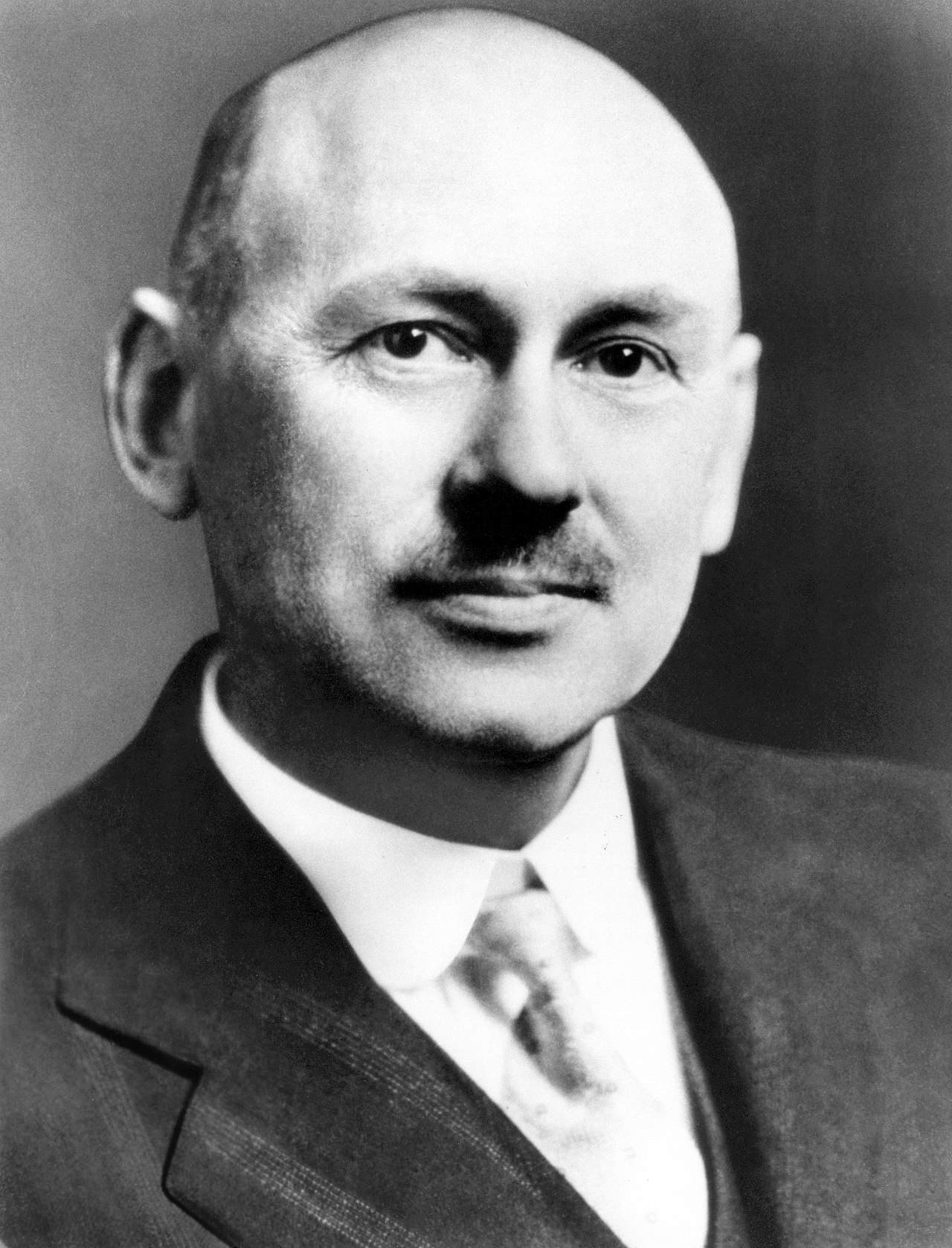
Robert H. Goddard was a visionary American engineer and physicist who is celebrated for inventing the world's first liquid-fueled rocket, which launched successfully on March 16, 1926.
Set reading age
View for Kids
Easy to read and understand
View for Students
Clear, detailed explanations
View for Scholars
Deep dives and big ideas
Robert H. Goddard 🚀 was a brilliant American engineer, inventor, and physicist born on October 5, 1882, in Worcester, Massachusetts. He's known as the father of modern rocketry because he invented the first liquid-fueled rocket! His successful launch on March 16, 1926, marked a big step in space exploration. Goddard's work paved the way for space travel 🚀 and satellite technology we know today. At a young age, he loved reading about science and dreaming of flying to Mars 🌌. His lifelong passion for rockets changed how we think about space and exploration!
After finishing school, Goddard started working on his rocket ideas in the early 1900s. He faced many challenges 🚀, as most people didn’t believe that rockets could be used for flying in space. In 1914, Goddard applied for his first patent for a liquid-fuel rocket, which changed everything! He built a small rocket in a field in Auburn, Massachusetts 🌳, and launched it successfully. This ignited his passion further, and he began working on making rockets safer and more efficient for space travel. His idea was daring, but he continued to dream big!
Goddard's experiments were exciting! In 1926, he launched the world's first liquid-fueled rocket called "Nell," which soared to 41 feet high! 🚀Goddard conducted more than 200 launches between 1914 and 1941, experimenting with different designs and fuels. He tested rockets from a launch site in New Mexico known as "Goddard's Happy Landing" 🎉. These tests helped him collect valuable data that improved rocket design. Each experiment taught him something new, helping future scientists understand how to explore outer space better. He believed that rocketry could someday help humans travel beyond Earth!
Goddard received many honors for his revolutionary work in rocketry. In 1929, he became the first American to receive the Royal Aeronautical Society's Silver Medal. 🏅Later, he was inducted into the National Inventors Hall of Fame for his outstanding inventions in rocketry! Many organizations and schools now award scholarships and prizes named after him to encourage future engineers and astronauts. In 1965, NASA, in honor of Goddard's contributions, named the Goddard Space Flight Center after him in Greenbelt, Maryland 🌌. Even today, people remember and celebrate his incredible achievements.
Goddard was an inventor at heart 💡! He created many new ideas that changed how rockets work. One of his biggest innovations was using liquid fuel 🚀 instead of solid fuel. This made rockets much more powerful and easier to control. He also developed the first rocket that could fly high into the atmosphere. His inventions included the gyroscope for stability 🌌 and the use of pumps to feed fuel into the rocket engine. Goddard's work laid the foundation for future rocket scientists and space programs that would follow, turning dreams of space travel into reality!
Robert grew up in a loving family in Worcester. As a child, he was fascinated by science 🌟 and enjoyed building things. He often read books and wrote his own ideas about rockets. Goddard attended Worcester Polytechnic Institute, where he learned about engineering and physics 🔬. He later went to Clark University to earn his doctorate, making him one of the youngest Ph.D. graduates in the United States at that time! His education helped him turn his dreams into reality by inventing and testing rockets that would eventually take humans into space.
Goddard didn't just build rockets; he also had great ideas about how space travel would work 🚀! He wrote important papers explaining how rockets could move in space without needing air. He theorized about "vacuum propulsion," which means rockets can push off against nothing instead of air. His work in physics explained why rockets burn fuel to create thrust. He also discussed challenging concepts like escape velocity—what it takes for a rocket to leave Earth’s atmosphere! 🌌These ideas inspired other scientists and engineers, giving them a better understanding of space travel and helping them build on his work.
During World War II, Goddard helped the U.S. military improve their rocket technology. 🌍🌋 He worked on developing weapons using his rocket knowledge. Although his projects were secret, they contributed to advancements in missile technology. After the war, Goddard continued his research, receiving funding to develop space-related projects. Although he faced many challenges and had limited resources, his determination never faded! Sadly, Goddard passed away on August 10, 1945, but his inventions continued to inspire future space exploration for years to come.
Robert H. Goddard's influence is essential for modern space programs today! 🚀Many teams, including NASA, SpaceX, and international agencies, use his ideas to explore the universe 💫. His principles of rocketry help design satellites, space probes, and crewed spacecraft. Even missions to Mars and beyond continue to build on Goddard’s legacy. Young scientists today might follow in his footsteps, dreaming of seeing humans on Mars or the Moon again! Goddard's vision and determination remind us that anything is possible when we believe in our dreams and work hard! 🌠
Robert H. Goddard's impact on space exploration is enormous! 🌠He is often called the "father of modern rocketry" because his ideas and inventions helped people get to the Moon, Mars, and beyond! NASA 🎉, the United States government’s space agency, often credits Goddard’s inventions as the starting point for their missions. His work inspired astronauts and scientists all over the world to explore space. Rockets that travel to the International Space Station or send satellites into orbit are built on Goddard’s ideas! His legacy is out of this world!