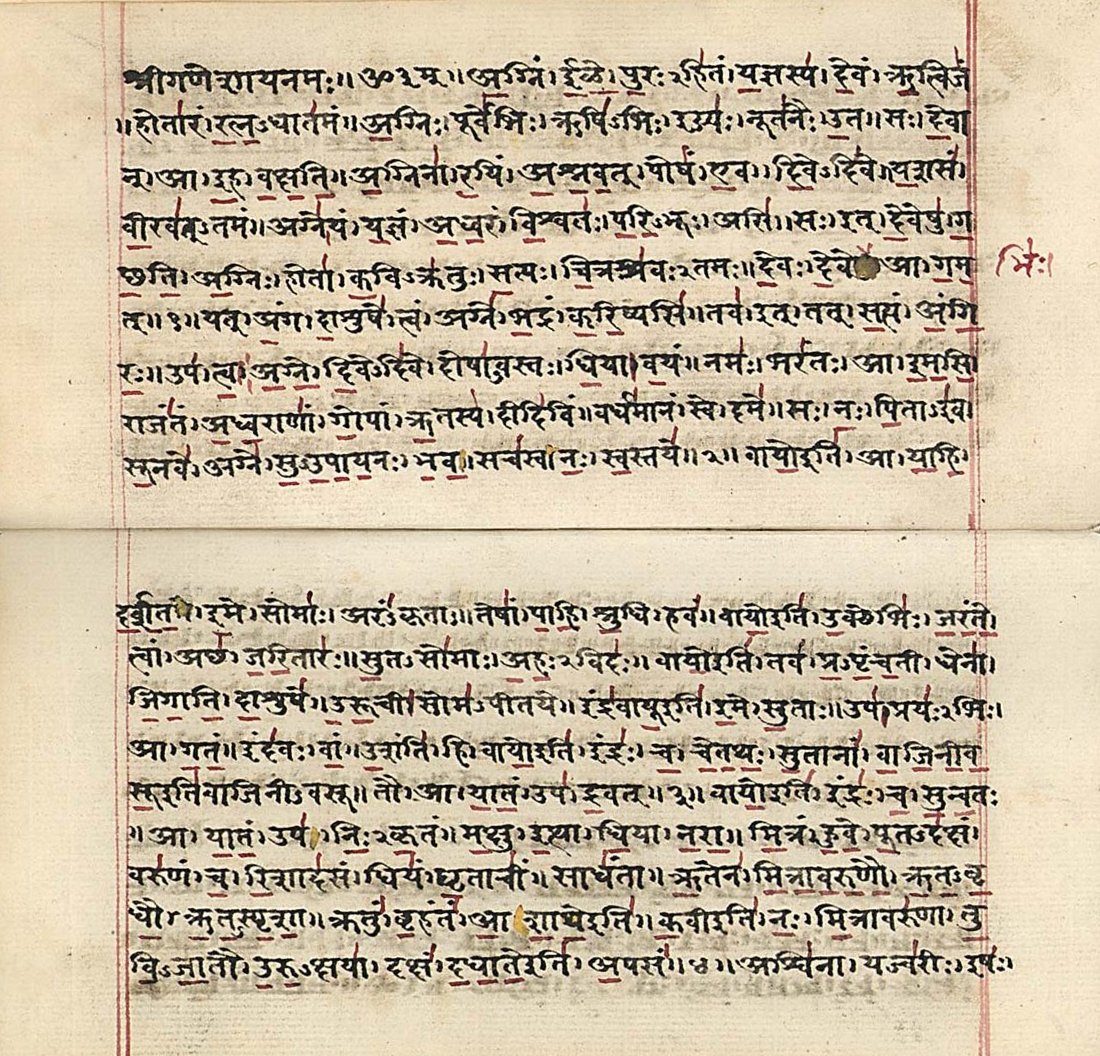
The Rigveda is an ancient Indian collection of hymns written in Vedic Sanskrit, showcasing the spiritual beliefs and cultural practices of early Indo-Aryan civilization.

Set reading age
View for Kids
Easy to read and understand
View for Students
Clear, detailed explanations
View for Scholars
Deep dives and big ideas
The Rigveda is one of the oldest religious texts in the world! 📜This ancient collection comes from India, written in a language called Vedic Sanskrit about 3,500 years ago. It has 1,028 hymns (or songs) that praise various Hindu gods. These hymns help us understand ancient Indian culture and spirituality. The Rigveda is divided into ten books called Mandalas, each containing different hymns. People still read and study it today, making it very important for Hindus and scholars alike! 🌟
The Rigveda was composed during the Vedic period in India, around 1500-500 BCE. 📅This was a time when people lived in small communities called tribes. The hymns are believed to have been passed down orally before being written down. The early Indians, known as the Aryans, used the Rigveda to explain how the world worked and to connect with the divine. It's one of four Vedas, with the others being the Samaveda, Yajurveda, and Atharvaveda. 🕉️
The Rigveda has immense cultural importance in India and beyond! 🕌It provides a window into the beliefs, practices, and values of ancient Indian society. The hymns are often chanted during festivals, rituals, and spiritual gatherings, connecting people to their heritage. Schools and universities study the Rigveda to understand ancient philosophies, languages, and cultures. It's not just a religious text; it’s a vital part of India's identity, shaping art, music, and literature throughout history! 🎨
The Rigveda describes many rituals that ancient Indians performed to honor the gods. 🕯️ For example, one popular ceremony was the Yajna, a fire sacrifice where offerings were made to the gods. These rituals often involved chanting hymns, making prayers, and performing symbolic acts to seek blessings. The Rigveda suggests a close relationship between humans and gods, with rituals helping maintain this connection. Many of these practices continue in various forms in modern Hinduism, emphasizing their importance in spiritual life! 🙌
The Rigveda has greatly influenced later texts in Hinduism and other Indian philosophies. 📜Many ideas from the Rigveda can be found in the Upanishads and other Hindu scriptures. Concepts such as karma (the law of cause and effect) and dharma (duty) evolved from these ancient hymns. The Rigveda's rich mythology also contributed to the development of the Mahabharata and Ramayana, two important epics in Indian culture. It demonstrates how ancient wisdom continues to shape modern literature and beliefs! 📖
The Rigveda explores big ideas, such as creation, nature, and the importance of rituals. 🌍One of the main focuses is on the gods, like Agni (the fire god) and Indra (the rain god). It also talks about the forces of nature and cosmic order, called Rta. This word means that everything happens for a reason! The hymns often ask gods for blessings, help in battles, and good harvests. These themes show the ancient Indian people’s deep connection to nature and spirituality. 🌾
The Rigveda is made up of ten books called Mandalas. 📖Each Mandala has different hymns that focus on various themes and gods. The hymns are written in a special meter, which makes them musical and easy to recite! 🎶The Rigveda consists of over 10,000 verses in total, making it a large and diverse text. The structure helps readers understand the main ideas and organize their thoughts. When chanting these hymns, people often feel connected to something greater than themselves. 🙏
The Rigveda is not just about hymns and rituals; it also explores deep questions about life and existence! 🤔It asks questions like, "Where did we come from?" and "What is the meaning of life?" This makes it significant for philosophy, as it encourages people to think about their purpose and the nature of reality. The concepts of truth (satya) and cosmic order (Rta) found in the Rigveda still influence many philosophical discussions today. It shows how ancient wisdom can shape our thinking! 🌌
The Rigveda is one of four Vedas, each with unique features. 📚The Samaveda focuses on melodies and chants, while the Yajurveda is all about rituals and offerings. Lastly, the Atharvaveda contains spells and practical knowledge for daily life. While all four Vedas share some common ideas, the Rigveda is the oldest and most famous for its hymns. Each Veda contributes to a fuller understanding of Vedic culture and religion, highlighting the richness of ancient Indian knowledge! 🕉️
The Rigveda features many gods and goddesses, making it rich in divine characters! 🌟Some of the most important ones are Agni, the god of fire; Indra, the king of gods who controls storms; and Varuna, the god of cosmic order. Each deity has unique powers and stories, often linked to natural elements like fire and water. People would chant the Rigveda to honor these gods, hoping for their favor in daily life. These deities still play a significant role in Hindu beliefs today! 🕉️
The Rigveda has been preserved for centuries through careful oral tradition. 📚Before it was written down, priests called Brahmins would memorize the hymns and pass them on to others. This helped keep the text alive even when India experienced many changes. Later, around 300 BCE, the hymns were written in manuscripts, making them easier to read and study. Today, people around the world continue to study the Rigveda, ensuring that its teachings and stories remain part of our shared history. 🌍