Rhamnus Facts For Kids
Rhamnus, or buckthorns, is a genus of about 140 species of resilient shrubs and small trees in the Rhamnaceae family that thrive in diverse environments.
Select reading age

Rhamnus Facts For Kids
Videos & Quizzesincluded
About this topic
Rhamnus, often called buckthorns 🌳, is a group of about 140 species that belong to the family Rhamnaceae. You can find these shrubs and small trees in many places around the world! Rhamnus plants are super important for many animals and help our environment. They have shiny leaves and can produce berries 🍇. Some types can grow up to 30 feet tall! Buckthorns are usually found in disturbed areas, like the edges of forests or gardens. Learning about Rhamnus can help you understand the beautiful plants that share our planet! 🌎
Explore with ChatDinoKey Points
Rhamnus plays a crucial role in nature!
Did you know Rhamnus can grow wild and in gardens?
Like all plants, Rhamnus can face some pests and diseases.
Many Rhamnus species are common and not endangered, but some are at risk.
Rhamnus has been part of human culture for centuries!
Growing Rhamnus can be fun!
Rhamnus plants have unique features!
Rhamnus plants are useful to both nature and humans!
You can find Rhamnus or buckthorn plants in many places around the world!
Rhamnus belongs to the Rhamnaceae family, which has some interesting relatives.
Photos of Rhamnus

Rhamnus pumila, dwarf buckthorn
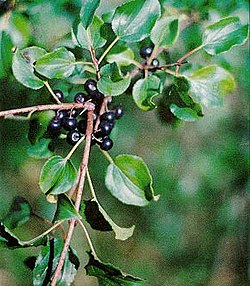
Rhamnus cathartica
🌿 Ecological Role
Rhamnus plays a crucial role in nature! 🌿These plants provide food and shelter for various animals. 🎶Birds, like American robins, love to eat the berries, while insects find homes among the leaves. 🐞When Rhamnus plants die, they return nutrients to the soil. This helps other plants grow, creating a healthy ecosystem! 🌱Some species can stabilize soil, preventing erosion and supporting habitats. So, when you see a buckthorn, remember it's not just a plant but a home for many living things! 🌍
Go deeper🌳 Interesting Facts
Did you know Rhamnus can grow wild and in gardens? 🌳Some species can even survive in poor soils! Common buckthorn has also been considered "bad" in some places because it can spread too quickly! 😲The berries are not usually eaten by humans but play an essential role in the diet of many birds! 🐦Rhamnus species can also live for many years, some even over 100! 🌱Lastly, the name "buckthorn" comes from the sharp thorns some plants have, almost like little guardian spikes! 🏰How cool is that?
Go deeper🦠 Pests And Diseases
Like all plants, Rhamnus can face some pests and diseases. 🦠Aphids, small insects that suck plant sap, can be a problem! If you see sticky leaves or tiny insects, you might have an aphid infestation. 🍃Also, some species can get diseases like powdery mildew, which makes leaves look dusty. 🌫️ To protect your Rhamnus, keep a lookout for signs of trouble! Regularly check the plants and use natural methods, like introducing ladybugs, to help keep pests away! 🐞They love to eat aphids!
Go deeper🌱 Conservation Status
Many Rhamnus species are common and not endangered, but some are at risk. 🌱For example, Rhamnus frangula (glossy buckthorn) is considered invasive in some areas, taking over habitats! 🌿Conservationists focus on protecting native buckthorn species to help maintain the ecosystem. 🌍It's important to plant native species in gardens to support local wildlife! Every little effort counts! Learning about and caring for these plants can help keep our environment healthy and vibrant! 🌻
Go deeper🌿 Cultural References
Rhamnus has been part of human culture for centuries! 🌿People have used buckthorn for different purposes, like medicine and crafts. In ancient times, the bark was used for dyes! 🎨Some cultures even believed the berries had magical properties. Rhamnus plants can be found in artworks and stories, showing their importance in nature's fabric! 🌍Today, they are also explored by scientists studying ecosystems and environmental health. 🌳Buckthorns remind us how plants shape our world and our history! 🌼
Go deeper🌱 Cultivation And Care
Growing Rhamnus can be fun! 🌱These plants are easy to care for! They prefer well-drained soil and lots of sunlight, which helps them thrive. 🌞Buckthorns can be planted in spring or autumn. After planting, water them regularly! 💧Rhamnus can grow in many soil types, but they do best in slightly acidic soil. Occasionally, you might need to prune the branches to keep them healthy and bushy. 🪴They’re great for wildlife gardens because they attract birds and butterflies! 🐦🌼
Go deeper🌱 Physical Description
Rhamnus plants have unique features! 🌱They usually have shiny, dark green leaves that grow in pairs along the branches. The leaves can be oval or rounded. 🎋Some species develop small, yellow-green flowers in spring, which later turn into berries. These berries are often black or red and are enjoyed by many birds! 🐦The bark is usually grey-brown, and the growth can be bushy or upright. Some buckthorns can even have spiny branches, making them look a bit like a tiny fortress! 🏰Remember, each species of Rhamnus can have different traits!
Go deeper🌿 Uses And Significance
Rhamnus plants are useful to both nature and humans! 🌿Some species, like cascara (Rhamnus purshiana), have been used for medicine. People made tea from the bark to help with digestion! ☕The berries can sometimes be made into jams, too! 🍇Also, Rhamnus trees are often planted to prevent soil erosion. Plus, the leaves provide food for many insects! 🐜In gardens, buckthorns help attract birds, making them perfect additions to landscapes! 🌺These plants remind us how nature connects with our lives!
Go deeper🌍 Habitat And Distribution
You can find Rhamnus or buckthorn plants in many places around the world! 🌍They grow in Europe, Asia, and North America. Common buckthorn (Rhamnus cathartica) is often seen in gardens and forests in the United States and Canada. 🏞️ Rhamnus can adapt to different habitats, including woodlands, scrublands, and even along roadsides! 🚧These plants enjoy sunny spots but can also grow in shaded areas. Their ability to thrive in disturbed environments helps them spread and grow in new places! 🌳
Go deeper🌿 Taxonomy And Classification
Rhamnus belongs to the Rhamnaceae family, which has some interesting relatives. The genus has species like Rhamnus cathartica, known as common buckthorn, and Rhamnus purshiana, called cascara. 🌿The plants in this group are shrubs or small trees and can often be confused with others! They are classified into different types based on their characteristics, like leaf shape and berry color. 🟩Did you know? The scientific name often comes from Latin or Greek words! This helps scientists communicate about plants all over the world. 🌍
Go deeper