Pulmonary Alveolus Facts For Kids
Pulmonary alveolus, or air sac, are millions of tiny, hollow structures in the lungs where gas exchange of oxygen and carbon dioxide occurs.
Select reading age

Pulmonary Alveolus Facts For Kids
Videos & Quizzesincluded
About this topic
The pulmonary alveolus, also known as an air sac, is a tiny, balloon-like structure in our lungs. 🫁Humans have about 300 million of these little sacs! They are very important for breathing, as they help us take in oxygen and get rid of carbon dioxide. Alveoli are found at the end of branches called bronchioles in the lungs, which are located in our chest. When we breathe in, these sacs fill up with air, allowing our bodies to get the oxygen they need to live and play! 🎈
Explore with ChatDinoKey Points
There are two main types of alveoli: Type I and Type II.
Gas exchange is like a magical delivery service!
Surfactant is a special liquid made by Type II alveoli!
Scientists and doctors are always looking for ways to understand and improve lung health!
Taking care of our lungs and alveoli is important!
Smoking is very harmful to our alveoli!
The pulmonary alveoli play a major part in our respiratory system!
Babies begin developing alveoli while they are still in the womb!
The main job of the pulmonary alveolus is to help us breathe!
Each pulmonary alveolus looks like a small balloon!
Photos of Pulmonary Alveolus

An annotated diagram of the alveolus

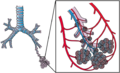
The cross section of an alveolus with capillaries is shown. Part of the cross section is magnified to show diffusion of oxygen gas and carbon dioxide through type I cells and capillary cells.

Gas exchange in the alveolus

Cryptococcosis of lung in patient with AIDS. Mucicarmine stain. Histopathology of lung shows widened alveolar septum containing a few inflammatory cells and numerous yeasts of Cryptococcus neoformans. The inner layer of the yeast capsule stain red.
Pulmonary Alveolus — photo 5
😌 Types Of Alveoli
There are two main types of alveoli: Type I and Type II. Type I alveoli are flat and cover most of the surface area in the lungs. They are used for gas exchange. 😌Type II alveoli are rounder and produce a special substance called surfactant, helping to keep the alveoli open. Without surfactant, the alveoli could collapse! Think of Type II cells as tiny helpers that keep things running smoothly in our lungs! ✨This teamwork is essential for breathing properly.
Go deeper📦 Gas Exchange Process
Gas exchange is like a magical delivery service! 📦When we breathe in, oxygen enters the pulmonary alveoli. Tiny blood vessels called capillaries surround these sacs. The oxygen passes from the alveoli into the blood, while carbon dioxide, a waste gas, moves from the blood into the alveoli to be breathed out. This process happens quickly and continuously! 🌡️ Oxygen is then transported to cells throughout our body, giving us energy to do everything we love—like playing, eating, and being active!
Go deeper🛢️ Surfactant And Its Role
Surfactant is a special liquid made by Type II alveoli! 🛢️ Its main job is to reduce surface tension, which helps keep the alveoli open and prevents them from collapsing. Surfactant is like a friendly hug for the alveoli! 🤗Without surfactant, breathing would be harder, and our lungs would have to work much harder to inflate. Babies especially need surfactant to breathe easily; that’s why doctors make sure they have enough when they are born!
Go deeper🔬 Research And Future Studies
Scientists and doctors are always looking for ways to understand and improve lung health! 🔬They study pulmonary alveoli to learn more about diseases like asthma, COPD, and lung infections. This research can help create new medicines and treatments to keep lungs healthy. Emerging studies are also exploring how climate change impacts air quality and our respiratory systems. 🚀Protecting our lungs and the environment is a growing focus for everyone—so let’s breathe easy while learning about our amazing bodies! 🫁✨
Go deeper🌬️ Alveolar Health And Diseases
Taking care of our lungs and alveoli is important! 🌬️ If the alveoli get damaged from smoking, pollution, or infections, it can lead to diseases like asthma or pneumonia. When alveoli are unhealthy, breathing becomes difficult, and our bodies may not get enough oxygen. Regular check-ups with a doctor, exercising, and staying away from smoke can keep our lungs happy and healthy! 😊Always remember to breathe deeply and take care of those little air sacs!
Go deeper🚭 Impact Of Smoking On Alveoli
Smoking is very harmful to our alveoli! 🚭When someone smokes, harmful chemicals can damage the walls of the alveoli, making them less effective. Over time, this can lead to diseases like Chronic Obstructive Pulmonary Disease (COPD) and emphysema, which cause breathing problems. Quitting smoking can help protect the alveoli, allowing them to heal and work better. 😊It’s never too late to stop smoking and help your lungs feel great again!
Go deeper🌬️ Role In Respiratory Function
The pulmonary alveoli play a major part in our respiratory system! 🌬️ They are located at the end of the airways and are essential for taking in oxygen from the air and pushing out carbon dioxide. When we breathe, our diaphragm and chest muscles help the lungs expand, filling the alveoli with air. The process of inhalation and exhalation keeps our bodies functioning properly, allowing us to play, learn, and laugh! 🎉Every breath counts!
Go deeper👶 Alveolar Development In Infants
Babies begin developing alveoli while they are still in the womb! 👶By the time they are born, they have about 20 million alveoli. As infants grow, more alveoli continue to form, eventually reaching around 300 million by early childhood. This development is important for healthy breathing; infants need to have plenty of alveoli to get enough oxygen! 💨That’s why ensuring they have good air quality is essential for their growth and health!
Go deeper🧘♀️ Function Of The Pulmonary Alveolus
The main job of the pulmonary alveolus is to help us breathe! 🧘♀️ When you take a deep breath, air fills these tiny sacs, and your lungs expand. While you breathe out, carbon dioxide is pushed back out into the air. Oxygen moves from the air in the alveoli into the blood, while carbon dioxide moves from the blood into the alveoli to be exhaled. This process is called gas exchange! 🌬️ It helps our bodies get the energy they need to run, jump, and learn!
Go deeper🎈 Structure Of The Pulmonary Alveolus
Each pulmonary alveolus looks like a small balloon! 🎈They have thin walls made of cells, which are less than one cell thick. This structure allows oxygen to pass through easily. The alveoli clusters can be compared to grapes growing on a vine! Each cluster helps maximize the surface area, making the breathing process super efficient. 🌿They are surrounded by tiny blood vessels called capillaries, which helps with gas exchange. The shape is crucial: a larger surface area means more oxygen can move into the blood!
Go deeper