Psalms Facts For Kids
Psalms are a collection of short poems and songs from the Bible that people use to pray, sing, and share many different feelings.

About this topic
These poems cover many feelings: joy, thanks, worry, and trust. That is why they are like a songbook of different prayers people used in worship and daily life.
Quick Facts
Key Points
Photos of Psalms
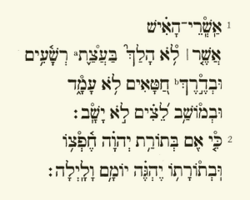
Hebrew text of Psalm 1:1–2
📘 How The Book Is Organized
The five divisions are often shown by the chapter ranges: Book 1 (Psalms 1–41), Book 2 (42–72), Book 3 (73–89), Book 4 (90–106), and Book 5 (107–150). Scholars think the final editors put the five-part shape in on purpose, perhaps to match other important five-part writings.
🔎 Songs Of Praise (hymns)
Some hymns celebrate God as king; these are called enthronement psalms, and they speak about God ruling over all. Others praise a special place, like Mount Zion, because it was important for worship and community life.
🧭 Community Prayers Of Sadness (communal Laments)
These community prayers are different from personal laments because they use “we” and speak about shared pain. They help a group say its feelings together and remind people that they are not alone when they ask for help.
💡 Royal Psalms
Some royal psalms also speak of God as the true king. Long ago, people may have sung these in special ceremonies that reminded everyone that God rules over the country. A few psalms appear to belong to an annual event that celebrated God’s kingship again and again.
🌟 Individual Laments
These psalms often follow a simple pattern: the person calls to God, describes the trouble, asks for help, and then shows trust that God will listen. Many end with hope or thanks because the singer believes things will get better. This shape makes laments both honest and comforting.
🧩 Individual Thanksgiving Psalms
These thankful psalms often include promises, like the singer saying they will tell others about God’s help or give an offering. They help people remember that hard times can end and that saying thanks is important in the life of the community.
🗺️ How The Psalms Began
Many psalms were meant to be sung or spoken in the Temple in Jerusalem. Some hints inside the words—like mentions of festivals, processions, or incense—show they were used in worship. In that way, the psalms helped people remember their history and join together in prayer and song.
🔬 The Ancient Music Of The Psalms
Today we cannot be sure exactly how those old tunes sounded. Scholars study the Dead Sea Scrolls and the Masoretic text and look at tiny marks called cantillation signs, which are a bit like musical directions on a sheet. Some people have tried to rebuild the music, and some pieces—like the tune in Psalm 114—sound familiar to listeners, but most experts say the full music is still a mystery. This shows how the Psalms are both ancient poems and living songs that invite imagination.
🧠 Take the Quiz about Psalms
Frequently asked questions
What are Psalms, and what does Tehillim mean?
Psalms are a collection of short poems and songs in the Bible. In Hebrew they are called Tehillim, which means 'praises.' Many people use these poems for prayer and singing.
How is the Book of Psalms organized?
The Book of Psalms is arranged in five main parts, Book 1 through Book 5. Each part ends with a short hymn of praise called a doxology. The parts cover Psalms 1–41, 42–72, 73–89, 90–106, and 107–150.
What is a hymn in the Psalms, and what might its headings tell you?
Hymns are psalms that are mainly songs of praise. Some hymns include short notes in their headings that tell which instrument to use or what tune to sing.
What are communal laments?
Communal laments are psalms where a whole group—like a city or nation—cries out to God when something bad has happened. They use 'we' and describe the trouble, ask for help, and often end with praise or thanks.
What are royal psalms about?
Royal psalms are songs that talk about a king. They celebrate big moments like a king’s crowning, marriage, or going into battle, and some also speak of God as the true king.
How were the Psalms sung in ancient times?
The Psalms were written to be sung. In the Temple, the Levites led the music, and some psalms name a Director of Music who decided how to sing.