Protectionism Facts For Kids
Protectionism is the economic policy of restricting imports from other countries through methods such as tariffs, quotas, and government regulations to protect local industries and jobs.
Select reading age
Protectionism Facts For Kids
Videos & Quizzesincluded
About this topic
Protectionism is a way for a country to protect its businesses and workers by making it harder for goods from other countries to come in. 🌍For example, if a country wants to support its farmers, it might add a tax (called a tariff) on fruits imported from other countries. This tax makes foreign fruits more expensive, so people might buy local fruits instead! 🍏Protectionism is like building a fence around your garden to keep out pesky birds. However, this can affect how countries trade with each other, which can be both good and bad! ⚖️
Explore with ChatDinoKey Points
Supporters of protectionism believe it helps local businesses grow!
Critics argue that protectionism can do more harm than good.
Countries use various methods to protect their businesses!
Countries around the world use different levels of protectionism!
Let's look at some examples!
Protectionism has been around for a long time!
Looking ahead, protectionism might change as countries adapt to new challenges!
Protectionism can have a big impact on global trade!
International organizations, like the World Trade Organization (WTO), help manage trade rules across countries!
Protectionism can influence local economies in different ways!
Photos of Protectionism

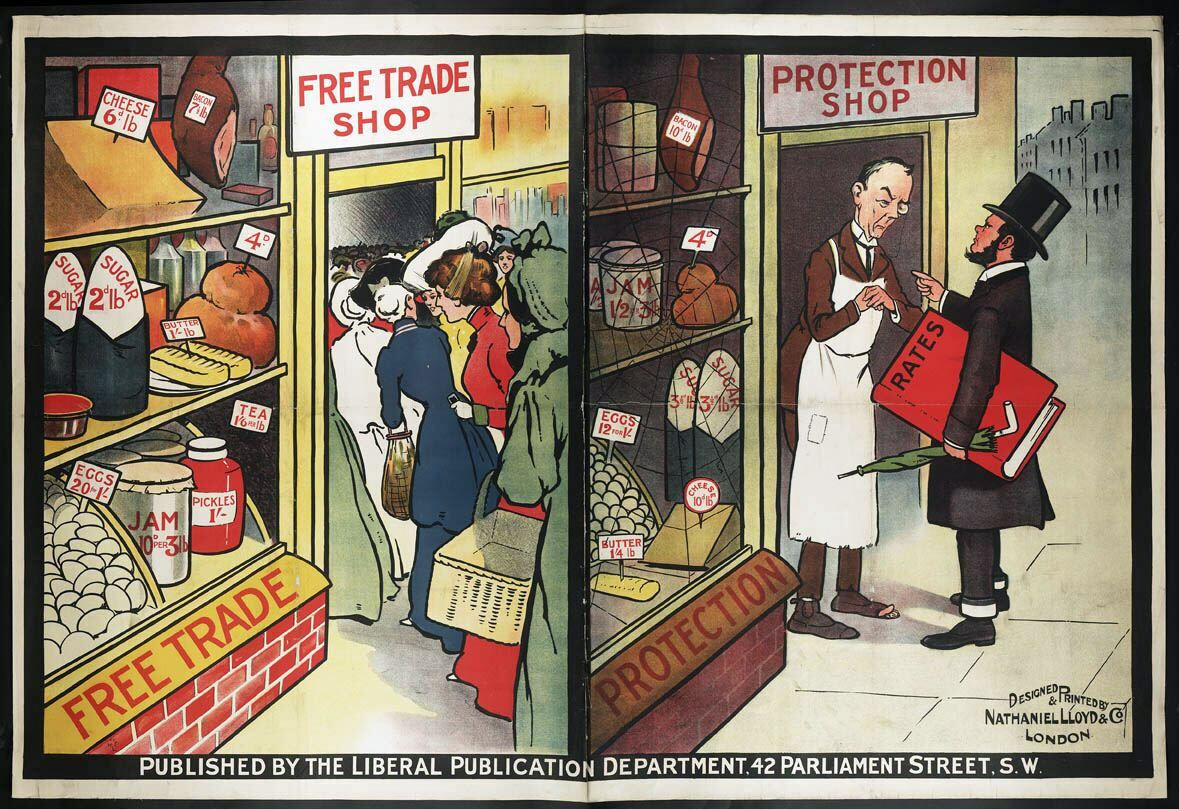
Anti-free trade postcard from 1910

Protectionism — photo 2

Logo of Belgium's National League for the Franc's Defense, 1924

Graph showing the increase in Chinese opium imports by year

Tariff Rates in Japan (1870–1960)

Tariff Rates in Spain and Italy (1860–1910)

Protectionism — photo 7

Tariff rates (France, UK, and US)

Average tariff rates in US (1821–2016)
🎉 Arguments For Protectionism
Supporters of protectionism believe it helps local businesses grow! 🎉For instance, when foreign goods are limited, people often buy from local stores, helping keep jobs in the community. 🚜Additionally, it can lead to better products, as businesses may strive to improve their goods without foreign competition. Some believe it helps national security by supporting industries vital for the country’s safety, like food and defense. 🛡️ So, think of it as a superhero cape for local businesses, but it may cause frowns from other countries that want to sell their goods!
Go deeper🚫 Arguments Against Protectionism
Critics argue that protectionism can do more harm than good. 🚫Limiting imports can lead to higher prices for consumers, meaning families must pay more for everyday items. Additionally, it might cause other countries to retaliate and impose their restrictions, leading to trade wars. 🤔This can lead to fewer jobs in export-focused businesses. It’s like when kids only play with their own toys; they miss out on fun from sharing! 🌈Critics say it’s better for countries to trade freely, allowing everyone to benefit from each other’s strengths.
Go deeper🏷️ Types Of Protectionist Policies
Countries use various methods to protect their businesses! One common method is tariffs, which are taxes on imported goods. 🏷️ For instance, if a car from another country costs $20,000 and there's a $2,000 tariff, that car now costs $22,000. Countries also use quotas, limiting how much of something can be imported. 📉There are even rules about safety and quality that imported goods must meet. These policies help local businesses compete and keep jobs in the country. However, they can lead to higher prices for consumers, so it's a tricky balance! ⚖️
Go deeper🌏 Protectionism In Different Countries
Countries around the world use different levels of protectionism! 🇺🇸 The United States has used protectionist measures like tariffs on steel and aluminum to protect local industries. In contrast, countries like Singapore have very little protectionism and embrace free trade, welcoming imports from everywhere! 🌏In India, the government has enforcement programs for safety and quality that affect imports. It’s interesting to see how countries balance their own needs while connecting with the rest of the world. Each approach reflects a country's values and economic goals! 🌟
Go deeper🕵️♂️ Case Studies Of Protectionist Measures
Let's look at some examples! 🕵️♂️ In 2002, the U.S. government imposed tariffs on imported steel, aiming to help struggling American companies. 🏭Although it briefly supported local jobs, it caused higher steel prices, which made cars and appliances more expensive for everyone. Another example is the European Union’s Common Agricultural Policy, which protects local farmers from competition while providing subsidies. 🌾These case studies show that protectionism can have immediate benefits but also cause tricky long-term effects that need to be carefully managed! ⚡
Go deeper📜 Historical Background Of Protectionism
Protectionism has been around for a long time! 📜In the 18th century, countries like England and France put up trade barriers to protect their own businesses. During the Great Depression in the 1930s, the U.S. raised tariffs through the Smoot-Hawley Act to protect jobs. However, this caused other countries to do the same, leading to less trade and more economic trouble. 🌪️ Think of it like if everyone in a group decided to only play with their own toys. It could be fun for a while, but everyone misses out on sharing and playing together!
Go deeper🌈 Future Trends In Protectionist Policies
Looking ahead, protectionism might change as countries adapt to new challenges! 🌈Some leaders believe in supporting local businesses while still participating in global trade. Technology can help countries create smarter policies that address local needs without closing off entirely. 🌐Climate change and events like pandemics can also influence trade discussions, as self-sufficiency becomes important. It’s possible we’ll see more partnerships and collaborative efforts to help everyone thrive! 🌳As countries evolve, the conversation about protectionism will continue to shape the world’s economic story! 📖
Go deeper🌐 Impact Of Protectionism On Global Trade
Protectionism can have a big impact on global trade! 🌐When a country raises tariffs or limits imports, it can make trade between countries harder. This means fewer products available for consumers, which can make prices go up. 📈For example, if the U.S. puts tariffs on steel, countries that export steel may sell less. This can also hurt countries exporting goods to the U.S., which might lead to economic problems elsewhere. It’s a connected world, and what happens in one place can ripple through to many others, making cooperation important for a thriving global market! 🤝
Go deeper🌍 The Role Of International Organizations
International organizations, like the World Trade Organization (WTO), help manage trade rules across countries! 🌍They encourage countries to reduce tariffs and cooperate to keep trade flowing smoothly. The WTO aims to make trading fair and fun for everyone, protecting all countries' interests! 🤝Sometimes, they step in when countries have trade disputes, helping to settle arguments without fighting. It's like a referee in a game, making sure everyone plays fair and has fun! ⚽By advocating for open markets, international organizations hope to promote peace and prosperity around the globe.
Go deeper💰 Effects Of Protectionism On Domestic Economies
Protectionism can influence local economies in different ways! 💰On one hand, it can create jobs in sectors protected by tariffs and quotas. 🏭If a country supports its local farmers, more people might work on farms, boosting the community. However, it can also lead to higher prices and fewer choices for consumers since they are limited to local goods. 🛒Additionally, other countries might react by imposing their own tariffs, hurting exports. It's like a double-edged sword; it can either help or hurt people at home. Finding a balance is essential for a healthy economy! ⚖️
Go deeper