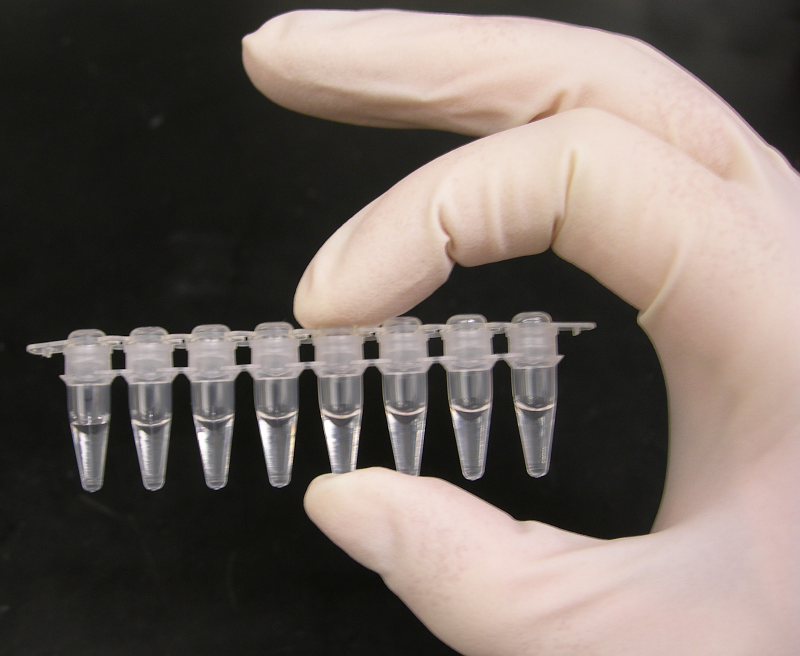
Polymerase Chain Reaction (PCR) is a technique that rapidly makes millions to billions of copies of a specific DNA sample, enabling detailed study.

Set reading age
View for Kids
Easy to read and understand
View for Students
Clear, detailed explanations
View for Scholars
Deep dives and big ideas
Have you ever tried to tell a secret to a friend, only to find your voice isn't loud enough? 🤫Scientists face a similar problem with tiny pieces of DNA. That's where Polymerase Chain Reaction (PCR) comes in! PCR is like a magical copier that takes a tiny bit of DNA and makes millions or even billions of copies! 📄This helps scientists study DNA closely, understand diseases, and even catch bad guys! It was invented in 1983 by a scientist named Kary Mullis. Now, it’s an important tool in labs all over the world! 🌍
Making lots of DNA copies sounds easy, but it can be tricky! 🤔Sometimes, things can go wrong, or scientists don't get as many copies as they want. To fix this, they optimize the PCR process! This means carefully adjusting the temperature and the timing for each step. 🕒They also have to choose the right amount of enzymes and primers. By making these changes, scientists can get the best results and lots of DNA copies! 🧙♂️ With optimization, PCR becomes even more powerful! 💪
To perform PCR, scientists need a few important ingredients. 🧪The first is the DNA sample they want to copy. Next, they need primers, which are short pieces of DNA that help start the copying process. They also need Taq polymerase, a special enzyme that can work in hot temperatures. 🥵Another key component is nucleotides, the building blocks of DNA. Finally, scientists use a PCR machine called a thermal cycler. This machine heats and cools the mixture to let PCR do its magic! ✨
PCR works by mimicking a natural process called DNA replication, where cells make copies of their DNA. 🔄First, the DNA sample is heated up to separate its two strands like a zipper. Then, special short pieces called primers attach to the target DNA. These primers are like starting points for the copying! 🔍Next, an enzyme called Taq polymerase, which loves heat, jumps in to build new DNA strands! This cycle repeats many times, doubling the DNA each round. By the end, there are millions of copies of the original DNA! 🎉
PCR is super useful! 🦸♂️ It helps doctors diagnose diseases like COVID-19 by finding the virus's DNA. Scientists use PCR to study genetics and find out why some people get sick while others don’t. 🧬It’s also important in forensics, helping police catch criminals by comparing DNA found at crime scenes. ⚖️ Additionally, PCR is used in agriculture to develop strong crops and in conservation to study endangered species! Protecting our planet and ourselves is easier with PCR! 🌏💚
PCR comes in many exciting versions! One common type is Real-Time PCR, which lets scientists see how much DNA is made as it happens! 📈Then, there's Reverse Transcription PCR, which turns RNA into DNA and helps study viruses! 🦠Another type is Multiplex PCR, which can copy several DNA strands at once, making it super efficient! 🎯Also, there’s Digital PCR, which counts how many DNA copies are made in tiny droplets! Each type of PCR has its special purpose, helping scientists in different ways! 🌈
While PCR is amazing, it can have some challenges! 😟One common problem is contamination, where unwanted DNA sneaks into the sample. This can lead to wrong results. Another challenge is when the DNA doesn’t copy well, which might happen if there’s a mistake in the primers. 🔬Also, sometimes the temperature isn't just right, and the DNA doesn't unwind correctly for copying. To overcome these challenges, scientists use clean techniques and test their methods carefully! 🔍
In medicine, PCR is a superhero! 🦸♀️ Doctors use it to diagnose infections, such as HIV and COVID-19, by finding the virus's DNA in a patient’s sample. PCR is also used to test for genetic disorders. For example, it can find problems in genes that cause conditions like cystic fibrosis. 🧬By knowing more about a patient’s DNA, doctors can provide better treatments. PCR helps save lives by making sure people get the right medical attention just in time! 💉
The future of PCR looks bright! 🌟Scientists are developing faster and more efficient PCR methods! For example, new machines can perform PCR in just a few minutes instead of hours. ⏱️ Innovations in
materials and enzymes are helping scientists explore more complex DNA samples! Moreover, researchers are working on making PCR even more precise, so it can detect tiny amounts of DNA quickly. As technology advances, PCR will continue to play a vital role in science and health! 🚀
PCR is essential for scientists researching living things! 🔬It helps them study genes and understand how organisms work, whether it's plants, animals, or even tiny bacteria! 🦠In biotechnology, PCR is used to create modified crops that can grow in tough conditions. 🌱Scientists also use PCR to produce proteins for medicines. For example, insulin for diabetes comes from bacteria programmed using PCR techniques! As researchers discover new things every day, PCR remains a key tool in unlocking the mysteries of life! 🔍
In 1983, Kary Mullis, an American biochemist, had a brilliant idea! 💡He wanted to find a way to copy DNA quickly and easily. Using his knowledge, he invented PCR, which stands for Polymerase Chain Reaction. At first, many people didn’t understand how important this method was. But soon, scientists realized it could help with diagnosing diseases and studying genes! 🧬In 1993, Mullis won the Nobel Prize in Chemistry for his incredible invention. PCR has since changed how scientists work and has led to amazing discoveries! 🏆


DIY is a creative community where kids draw, build, explore ideas, and share.
No credit card required