Polacanthus Facts For Kids
Polacanthus was a herbivorous dinosaur from the Early Cretaceous, known for its body armor and distinctive spines along its back.
Select reading age
Polacanthus Facts For Kids
Videos & Quizzesincluded
About this topic
Polacanthus was a fascinating dinosaur that lived during the Early Cretaceous period, about 140 million years ago! 🦖This dinosaur was discovered in England, specifically on the Isle of Wight, where many other exciting fossils have also been found. Polacanthus was a type of herbivorous dinosaur, which means it only ate plants. It belonged to a group called " ankylosaurs," known for their armored bodies! It was about 6 to 8 meters long (20-26 feet) and weighed around 2 tons! That's as heavy as a small car! 🚗
Explore with ChatDinoKey Points
Comparing Polacanthus to modern reptiles reveals fascinating similarities and differences!
The first Polacanthus fossil was found in 1865 by a famous fossil hunter named Richard Owen.
Polacanthus was a quadrupedal dinosaur, which means it walked on four legs.
Although Polacanthus is long gone, its legacy continues today!
Polacanthus was a herbivore, which means it loved to eat plants!
Polacanthus roamed the warm, green lands of Europe during the Early Cretaceous period.
Polacanthus was a robust dinosaur with a unique body structure.
Polacanthus is crucial to the study of dinosaurs because it helps scientists understand how armored species evolved!
Photos of Polacanthus

Estimated size based on the holotype compared to a human

Speculative life restoration of Polacanthus based on Gastonia

Type specimen of Polacanthus foxii

Tibia, vertebra and scutes

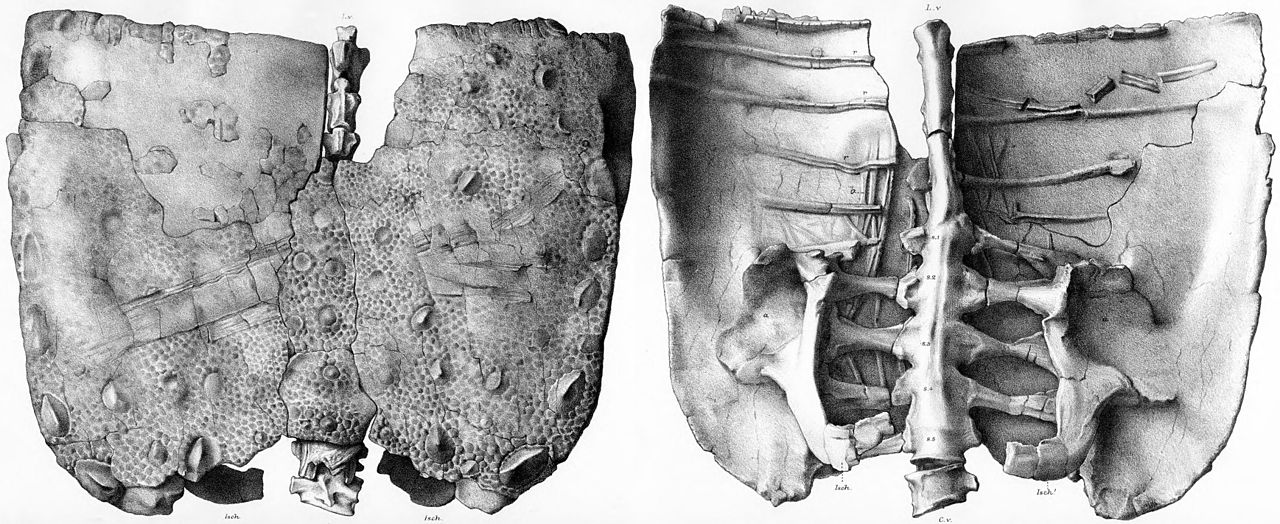
Pelvis of Polacanthus foxii (original illustration (top), modern photograph (middle), computer-generated image of the pelvis without the shield (bottom)

Historical P. foxii skeletal restoration by Franz Nopcsa von Felső-Szilvás

Fossils figured in Hulke, 1881

Material at the Natural History Museum, London

Tail, centrum, and scute fragments
🐍 Comparative Anatomy
Comparing Polacanthus to modern reptiles reveals fascinating similarities and differences! 🐍Like crocodiles, it had bony armor to protect itself from predators. However, unlike crocodiles, Polacanthus walked on land rather than swimming. 🏞️ Its body shape was different from other dinosaurs too. While some dinosaurs had long necks and tails, Polacanthus was shorter and stockier, making it sturdy and robust. By studying these features, scientists can learn how evolution shaped the traits of dinosaurs over millions of years! 🌱
Go deeper🏺 Discovery And Naming
The first Polacanthus fossil was found in 1865 by a famous fossil hunter named Richard Owen. Finder's luck brought the fossil to life! 🏺The name "Polacanthus" means "many spines." Interesting, right? This name comes from its unique feature—lots of bony spikes on its back! 🌟Polacanthus was officially described in 1881. Since then, paleontologists have worked hard to learn more about this amazing dinosaur using the fossils found in England and other places. It's incredible how fossils help us unlock secrets of the past! 📚
Go deeper🦵 Movement And Behavior
Polacanthus was a quadrupedal dinosaur, which means it walked on four legs. 🦵🦵 These strong legs helped it move carefully through its leafy environment. Although not very fast compared to some predators, Polacanthus used its armor for defense. 🛡️ It likely lived in herds, providing safety in numbers—safer to munch on plants together! It also used its spikes to fend off hungry dinosaurs. Furthermore, Polacanthus may have been a social dinosaur, communicating with its friends through sounds or movements, just like elephants do today! 🐘
Go deeper🏺 Conservation And Legacy
Although Polacanthus is long gone, its legacy continues today! 🏺Fossils remind us of Earth’s incredible past and how dinosaurs lived many millions of years ago. Discoveries about Polacanthus inspire scientists to protect other species and their habitats. 🌍By studying these ancient creatures, we learn more about biodiversity and conserving living animals. Protecting our planet is essential to ensure future generations can learn about dinosaurs like Polacanthus! 🦖We should cherish our natural world just as we cherish the amazing discoveries of the past! 🌟
Go deeper🌿 Diet And Feeding Habits
Polacanthus was a herbivore, which means it loved to eat plants! 🌿🍃 With its beak-like mouth, it could chew on tough leaves, shrubs, and ferns that grew in its environment! Polacanthus likely grazed slowly, moving through forests and using its strong legs to get around. Some fossils suggest that it may have eaten low-growing plants close to the ground, where it could find many tasty bites. 😋Since it was quite large, Polacanthus had to consume a lot of food daily to keep its energy up! Eating was a full-time job for this dino! 🦙
Go deeper🌍 Habitat And Distribution
Polacanthus roamed the warm, green lands of Europe during the Early Cretaceous period. 🌍These dinosaurs preferred rich forests and open plains where they could easily find plenty of plants to eat. The significant fossil discoveries on the Isle of Wight show that this area was once a vibrant paradise with various flora and fauna. 🌳While most Polacanthus remains have been found in England, it's possible they lived in other parts of Europe too! Exploring their habitat helps us understand where dinosaurs thrived millions of years ago!
Go deeper🛡️ Physical Characteristics
Polacanthus was a robust dinosaur with a unique body structure. 🛡️ It had a wide, flat body covered in bony plates and spikes that acted like armor! Its most special feature was a large, bony spike on its hips, which may have helped protect it from predators. The bones were quite thick and strong, similar to modern-day crocodiles. 🐊Polacanthus had a beak-like mouth that allowed it to munch on tough plants. Its back legs were much stronger than its front legs, helping it walk and defend itself. This dinosaur was an impressive sight in its lush, prehistoric environment! 🌿
Go deeper🦖 Paleontological Significance
Polacanthus is crucial to the study of dinosaurs because it helps scientists understand how armored species evolved! 🦖Fossils of Polacanthus provide clues about the lifestyle and behaviors of many other dinosaurs. Its unique traits—like the bony spikes—help researchers learn about prehistoric environments and how dinosaurs adapted to them. Polacanthus also helps fill in the dino family tree, revealing connections between different species. 🗺️ By studying Polacanthus and its relatives, paleontologists can discover how dinosaurs defended themselves and interacted with their world millions of years ago!
Go deeper