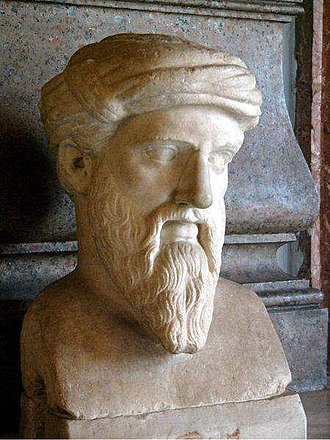
Plato was an ancient Greek philosopher whose ideas laid the groundwork for Western philosophy and science through his influential dialogues and establishment of the Academy.

Set reading age
View for Kids
Easy to read and understand
View for Students
Clear, detailed explanations
View for Scholars
Deep dives and big ideas
Plato was a famous philosopher from ancient Greece! 🇬🇷 He was born around 427 BCE in a city called Athens. Plato is known for his big thoughts about life, knowledge, and how we understand the world! 🌍He had a teacher named Socrates, who taught him many ideas. Plato also started a school called The Academy, where he taught his own students. Even today, people still study his work and ideas! Plato’s writings have influenced the way we think about philosophy and science for over 2,000 years. Isn’t that amazing? ✨
Plato founded a school called The Academy in Athens around 387 BCE! 🎓It was one of the first higher education institutions in the Western world! In The Academy, students learned about philosophy, mathematics, and astronomy. 🌌It remained open for about 900 years! Some of Plato’s famous students included Aristotle, who became a great philosopher himself. Students at The Academy participated in discussions and learned to think critically about big questions. The Academy showed how important education is for understanding ourselves and the world! 🏫
Plato wrote many important books that are still read today! 📖His famous works include "The Republic," which talks about justice and how to create a fair society. He also wrote "Phaedrus," where he shares beautiful ideas about love and beauty. Another well-known book is "The Apology," where he shares the story of Socrates' trial. All of his writings are in the form of dialogues, making them like plays that showcase his thoughts and philosophies. These works have influenced art, education, and many other fields throughout history. 🎨
The Socratic Method is a special way of asking questions to help people figure things out for themselves. 📏Plato learned this method from his teacher, Socrates, and he used it in his dialogues. Instead of just giving answers, Socrates would ask tricky questions that made people think. 🤔For example, if someone said they knew what courage was, Socrates would ask, "What is courage exactly?" This way, people would think deeply and examine their own beliefs. The Socratic Method teaches us that it’s good to ask questions and discover answers together! 🧐
Plato was born into a wealthy family in Athens and lived during a time when Greek culture was blooming! 🌼His full name is Plato Aristocles, but he got the nickname "Plato," which means "broad," possibly because of his broad shoulders! 💪He became a student of Socrates, who was known for his questions that made people think. Unfortunately, Socrates was sentenced to death when Plato was young. This made Plato question everything around him! After Socrates died, Plato traveled to places like Egypt and Italy, learning new ideas before returning to Athens to teach. 🎓
Plato had a lot to say about politics, too! 🚦In his most famous work, "The Republic," he imagined a perfect society ruled by wise philosopher-kings, who would be very knowledgeable leaders. 👑He believed that only those who truly understand justice and goodness should rule! Plato was not impressed by the democracy of Athens because he thought too many people made wrong choices without understanding the bigger picture. He wanted a government where philosophers, who think deeply about life, could lead and make good decisions for everyone. Sounds interesting, right? 👥
Plato's Theory of Forms is one of his coolest ideas! 🌟He said that everything we see around us, like trees and animals, is just a copy of a perfect "form" that exists in a different world. For example, even though every chair looks different, they all share the "form" of a chair! 🪑This perfect form is not something we can touch or see, but it helps us understand what being a "chair" really means. Plato believed that by thinking about these forms, we can get closer to understanding real knowledge. Isn’t that a neat thought? 🤯
Plato loved to ask big questions! 🤔He explored the ideas of justice, beauty, and knowledge. One of his famous thoughts was that we live in a world of shadows, trying to understand what is real. 🌑He created the idea of an "ideal world" where everything is perfect, unlike our own world with mistakes. Plato wrote many dialogues, which are conversations between people discussing important questions. Through these dialogues, he made complex ideas easier to understand. He believed everyone should think deeply about life, not just accept what they see! 📚
Plato's ideas changed how people think about the world! 🌍Many philosophers after him, like Aristotle, built their thoughts on what Plato wrote. His influence can be seen in science, religion, and politics. 🤝He taught that thinking and questioning were very important for learning. Even today, in schools and universities, teachers encourage students to share their thoughts and ask questions, continuing Plato's tradition. His ideas remind us that understanding the world isn't just about facts but also about exploring our thoughts and feelings! 💡
🧠 Plato was a student of Socrates and the teacher of Aristotle.
📚 He founded the Academy in Athens, one of the earliest institutions of higher learning in the Western world.
🗨️ Plato wrote dialogues, often featuring Socratic questioning to explore philosophical topics.
🌌 He proposed the Theory of Forms, which suggests that non-material abstract forms represent the most accurate reality.
⚖️ Plato believed in the ideal state ruled by philosopher-kings as outlined in his work, 'The Republic.'
🔍 He made significant contributions to metaphysics, epistemology, ethics, and political theory.
✏️ Plato's works have been preserved and studied for over two millennia, influencing Western philosophy.
🌿 He often used allegories, such as the Allegory of the Cave, to illustrate his philosophical ideas.
⚡ Plato's influence extends beyond philosophy into fields such as mathematics, science, and theology.
👨🏫 He believed that education is essential for justice and the improvement of society.