Planthopper Facts For Kids
Planthoppers are small, plant-feeding insects known for their jumping ability and significant role as sap-suckers in various ecosystems.
Select reading age

Planthopper Facts For Kids
Videos & Quizzesincluded
About this topic
Planthoppers are tiny, jumping insects found in many parts of the world! 🌍They belong to the order Hemiptera, which means “half-wing” in Greek, and are known for their strong hind legs that let them hop around like little grasshoppers. Planthoppers can be found on every continent except Antarctica! ❄️ These insects are often green or brown, which helps them blend in with plants. Some even have colorful patterns! 🌿They play an essential role in nature, helping to pollinate plants and serving as food for other animals, such as birds.
Explore with ChatDinoKey Points
Planthoppers play a vital role in our ecosystem!
Planthoppers are sap-sucking insects!
Planthoppers love warm places and are mostly found in tropical and subtropical regions!
Planthoppers are small, measuring about 5 to 20 millimeters long!
Planthoppers face various threats due to habitat loss, pesticides, and climate change.
Planthoppers are shy little creatures!
Planthoppers start their lives as eggs!
Planthoppers belong to the family Fulgoridae, and there are about 3,000 different species!
Photos of Planthopper

Planthopper — photo 1
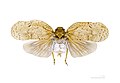
Planthopper — photo 2

Planthopper — photo 3

Planthopper — photo 4

Planthopper — photo 5

Planthopper — photo 6

Planthopper — photo 7
🌱 Ecological Importance
Planthoppers play a vital role in our ecosystem! 🌱By feeding on plant sap, they help to control plant populations and stimulate growth. They also serve as food for many animals like birds and frogs! 🐸Their presence in great numbers can indicate a healthy environment. Furthermore, planthoppers help pollinate flowers while moving from plant to plant, which encourages plant growth and reproduction. 🐝This makes them important in keeping our plants and nature balanced!
Go deeper🌿 Diet And Feeding Habits
Planthoppers are sap-sucking insects! 🌿They use their specialized mouthparts, called stylets, to extract plant sap from leaves, stems, and sometimes roots. Yum! They need to feed on sap to gain energy and nutrients, which help them grow and thrive. Some planthoppers even form relationships with fungi and bacteria to aid in digestion. This helps them break down the plant sap more effectively! 🦠Because they feed on plants, they can sometimes be affected by the health of their environment.
Go deeper🌞 Habitat And Distribution
Planthoppers love warm places and are mostly found in tropical and subtropical regions! 🌞They live in grasses, shrubs, and trees, which provide food and good hiding spots. While they can be found in forests in Asia, such as the rainforests of Indonesia, they also thrive in the fields and gardens of North America and Europe. 🌷They are excellent jumpers, helping them move between plants quickly! Some planthopper species are even discovered in deserts, showcasing their adaptability! 🌵
Go deeper🌈 Physical Characteristics
Planthoppers are small, measuring about 5 to 20 millimeters long! 🌈They have unique body shapes with flat, wide wings that can look like leaves or flowers. This camouflage helps them hide from predators. 🦉Often, their wings are transparent, making it easy for them to blend in with their surroundings. Some planthoppers even have special patterns on their bodies that mimic the appearance of bark or grass. This clever disguise protects them from hungry animals! 🐍
Go deeper🌍 Threats And Conservation
Planthoppers face various threats due to habitat loss, pesticides, and climate change. 🌍Deforestation and pollution worsen their homes, making it harder for them to survive. Conservation efforts include protecting natural habitats and promoting eco-friendly farming practices. 🛠️ It's important to reduce pesticide use since it can harm planthoppers and other insects. By planting native plants and creating safer habitats, everyone can play a part in helping planthoppers! 🌸Let’s work together to protect our buzzing buddies for future generations! 🎉
Go deeper😳 Behavior And Communication
Planthoppers are shy little creatures! 😳They like to blend in with their surroundings, but when threatened, they can jump away quickly! Some species communicate through vibrations, using their bodies to send signals to other planthoppers. 🌪️ Others may use pheromones, which are special scents, to attract mates. 🥰When they want to impress a partner, they perform dances or display their colors. Isn’t that fascinating?
Go deeper🥚 Life Cycle And Development
Planthoppers start their lives as eggs! 🥚After a few weeks, the eggs hatch into nymphs. Nymphs are baby planthoppers that look like tiny adults but without wings. They go through several molts, shedding their exoskeletons as they grow. A remarkable fact is that some nymphs can change color as they develop! The nymph stage can last from weeks to months, depending on the species. Eventually, they become adults, ready to hop and fly away! 🐠
Go deeper🦗 Classification And Taxonomy
Planthoppers belong to the family Fulgoridae, and there are about 3,000 different species! 🦗Some well-known planthoppers include the lanternflies, who can be found in East Asia and the Americas. 🗺️ Scientists classify animals using a naming system called taxonomy. For planthoppers, the scientific name starts with the kingdom Animalia, then goes through phylum Arthropoda, class Insecta, and order Hemiptera. This classification helps scientists understand how planthoppers are related to other insects like cicadas and aphids. 🐞
Go deeper