Planetesimal Facts For Kids
Planetesimals are solid objects in space that form from dust in protoplanetary disks and help create planets.
Select reading age
Planetesimal Facts For Kids
Videos & Quizzesincluded
About this topic
Planetesimals are tiny building blocks found in space! 🌌These little objects are believed to play a vital role in forming planets. They formed a long time ago in big, swirling disks of dust and gas around young stars. Scientists think these disks started forming about 4.6 billion years ago! 📅Planetesimals can be made of metals, rocks, and ice, and can be as small as a few meters to hundreds of kilometers across! If you imagine the solar system like a big construction site for planets, planetesimals are the materials that help build them! 🏗️
Explore with ChatDinoKey Points
Scientists have different ideas about how planetesimals form and evolve!
Scientists use various tools to study planetesimals!
Planetesimals are the building blocks of planets!
Planetesimals form in what we call protoplanetary disks!
The study of planetesimals is just beginning!
One famous case study involves the asteroid belt in our solar system!
Planetesimals come in many different shapes and sizes!
Planetesimal disks can be found all over the universe!
Planetesimals are different from larger celestial objects like planets and stars!
Photos of Planetesimal

486958 Arrokoth, the first pristine planetesimal visited by a spacecraft.
🔍 Planetesimal Theories
Scientists have different ideas about how planetesimals form and evolve! 🔍One popular theory is called the "Streaming Instability." This theory suggests that small dust particles come together in the protoplanetary disk, forming larger clumps. Another idea is called "Gravitational Instability," which says that the disk gets so dense that it collapses into larger objects. 🌌Researchers conduct experiments and use computer models to test these theories. They want to understand how planetesimals interact and evolve. By studying these tiny objects, scientists learn about the history of our solar system! 🌏
Go deeper🔭 Observation Techniques
Scientists use various tools to study planetesimals! 🔭They often use telescopes that can observe the disks around young stars. One famous telescope is the Hubble Space Telescope, which orbits Earth! Scientists analyze images to find patterns and learn about planetesimals. Sometimes, they send spacecraft missions like New Horizons to explore celestial objects up close! 🛰️ With advanced computer models, researchers can simulate the formation of planetesimals and observe how they grow over time. All these techniques help scientists understand the mysteries of the universe! 🌌
Go deeper🌍 Role In Planet Formation
Planetesimals are the building blocks of planets! 🌍When they collide and stick together, they form larger bodies called protoplanets. Over millions of years, these protoplanets can gather more planetesimals and grow into full-sized planets! 🚀For example, Earth, Mars, and even the big gas giants, like Jupiter, all started as small planetesimals. Without these little scraps of material, we wouldn’t have the beautiful planets we see today. 🤩So, the next time you look up at the stars, remember that planetesimals helped create our world!
Go deeper🌠 Formation Of Planetesimals
Planetesimals form in what we call protoplanetary disks! 🌠These disks are like large, spinning pancakes of gas and dust around a new star. Over time, small particles collide and stick together, creating bigger objects. This process is guided by gravity, which is the force that pulls things towards each other. Scientists believe that around 1 million years after a star is born, these planetesimals start coming together. 🌪️ In total, it takes millions of years for these tiny pieces to grow into bigger objects that can eventually become planets! 🪐
Go deeper🔮 Future Research Directions
The study of planetesimals is just beginning! 🔮Scientists hope to learn even more about these tiny building blocks. They want to discover how they could have potential resources like water and metals, which could help in future space exploration! 🚀New space missions, like the James Webb Space Telescope, will have the ability to take clearer pictures of planetesimals. Researchers are also looking at how planetesimals could impact Earth. Understanding planetesimals might help us find new ways to protect our planet! 🌍Exciting discoveries are ahead! 🎉
Go deeper🌠 Case Studies Of Planetesimals
One famous case study involves the asteroid belt in our solar system! 🌠This region is located between Mars and Jupiter and contains thousands of planetesimals. Some of them, like Ceres, are even classified as dwarf planets! Researchers also study comets, like Halley's Comet, which are thought to originate from planetesimals far from the sun. 🌌In other star systems, scientists have observed disks around young stars like HD 163296, revealing the potential for planetesimal formation there, too! Every study helps uncover the wonders of planet building! 🚀
Go deeper🌈 Characteristics Of Planetesimals
Planetesimals come in many different shapes and sizes! 🌈Some are round, while others look more like potatoes. They can be made from various materials, such as metal, rock, or ice. Scientists estimate that the most massive planetesimals could be over 1,000 kilometers wide! ⚖️ They orbit around stars and collect dust and gas from their surroundings. Some planetesimals are very icy, which might make them similar to comets! When they get heated by the sun, they can release gas and dust, creating beautiful tails. ☄️
Go deeper🌌 Planetesimal Disks In The Universe
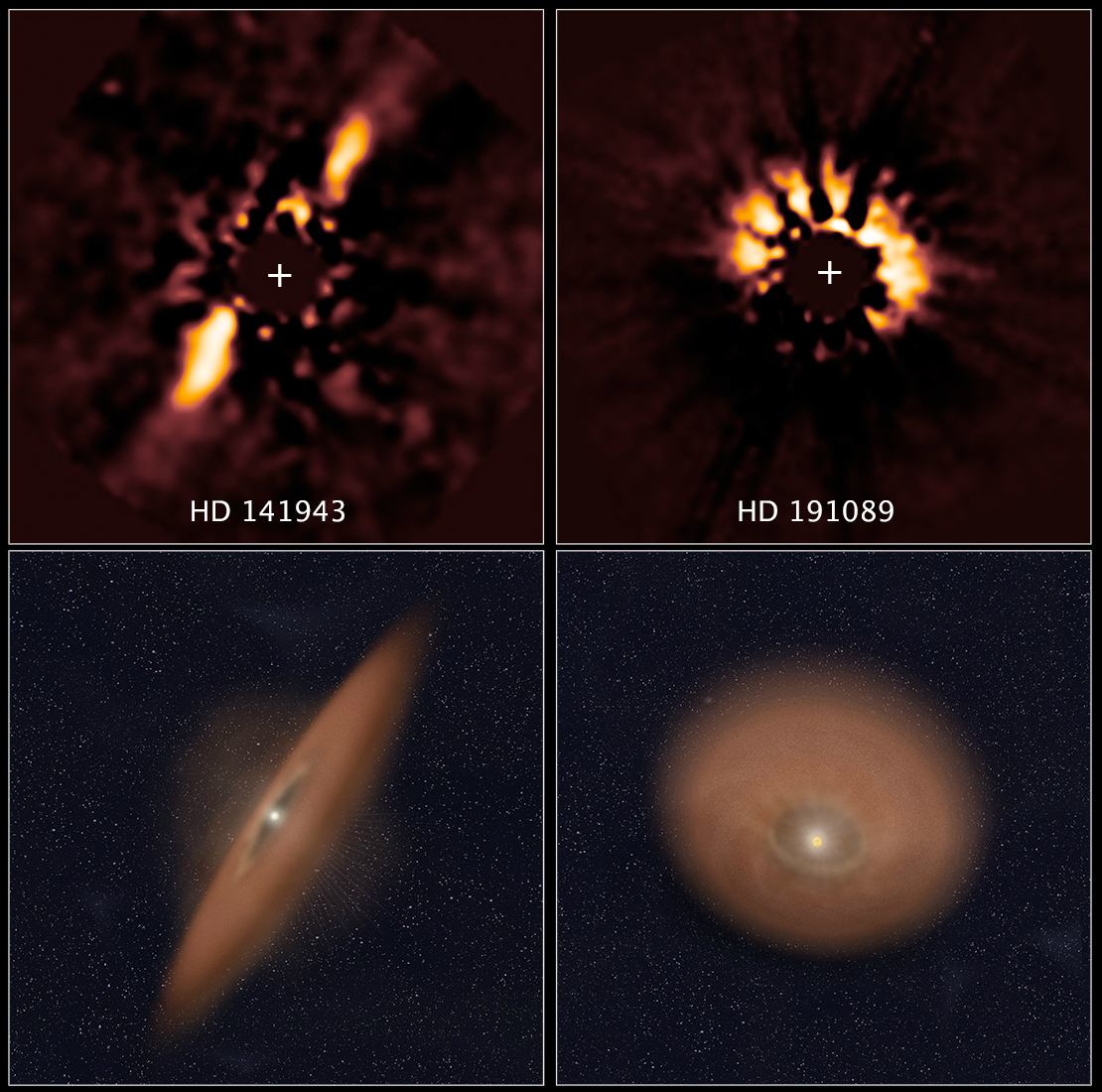
Planetesimal disks can be found all over the universe! 🌌These disks usually surround young stars in the early stages of development. For instance, scientists have discovered protoplanetary disks around stars like TW Hydrae and HL Tau. 💫The disks contain many planetesimals waiting to combine and form planets! Each disk can look different, depending on the materials present and how dense it is. By studying these disks, scientists learn how star systems are formed and how life on planets could develop! 🌱
Go deeper🌟 Comparison With Other Celestial Objects
Planetesimals are different from larger celestial objects like planets and stars! 🌟While planets can be very big, planetesimals are usually much smaller. For example, the asteroid belt lies between Mars and Jupiter and is filled with thousands of planetesimals! ⭐Unlike stars, which create light and heat, planetesimals are cooler and don’t shine on their own. Comets are also related to planetesimals but are mostly made of ice and dust. So, while they all share space, planetesimals are special because they help form the planets we know! 🌒
Go deeper