Pileated Woodpecker Facts For Kids
The pileated woodpecker is a large, distinctive bird known for its striking appearance and powerful drumming, primarily residing in North American forests.
Select reading age

Pileated Woodpecker Facts For Kids
Videos & Quizzesincluded
About this topic
The pileated woodpecker is a large bird known for its striking red crest and impressive size! 🐦This bird can be found in the forests of North America, from southern Canada to the southeastern United States. The pileated woodpecker is about 16 to 19 inches long, making it one of the biggest woodpeckers! These birds are famous for their loud drumming sounds as they peck on trees in search of food. Their scientific name is *Dryocopus pileatus*, and they are easily identified by their black body and bold red cap. Let’s learn more about this amazing bird! 🌳
Explore with ChatDinoKey Points
Did you know pileated woodpeckers can make holes that are 2 inches wide?
The pileated woodpecker is currently not considered endangered or threatened!
Pileated woodpeckers are not only amazing birds but also hold cultural importance!
You can find pileated woodpeckers living in various types of forests!
Pileated woodpeckers are remarkable for their size and colorful features!
When it comes time to mate, pileated woodpeckers perform an exciting courtship dance that includes drumming and calling!
What do pileated woodpeckers eat?
Pileated woodpeckers are known for their loud calls and social nature!
Photos of Pileated Woodpecker

Pileated Woodpecker — photo 1

Southern Pileated Woodpecker after John White, 1585.

Plate 111 of the Birds of America by John James Audubon, depicting pileated woodpeckers (1 ♀, 3 ♂♂)

Male drilling

An audio speaker emitting sound waves, in the Gnome style
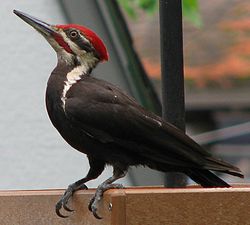
Grand pic mâle ( Dryocopus pileatus )

Female Pileated Woodpecker ( Dryocopus pileatus ) looking for ants on a felled tree

Mated pair of Pileated Woodpeckers.

Pileated Woodpecker chicks in a nest
🔍 Interesting Facts
Did you know pileated woodpeckers can make holes that are 2 inches wide? 🔍That’s big enough for a squirrel to fit through! These birds can also rotate their heads nearly 180 degrees, which helps them see better while pecking! They have a special structure in their skulls that protects their brains from the impact of pecking. Pileated woodpeckers can live up to 12 years in the wild! Their impressive size, loud calls, and colorful feathers make them a favorite among bird watchers. So, next time you're in the forest, keep an eye out for these incredible woodpeckers! 🦉✨
Go deeper📈 Conservation Status
The pileated woodpecker is currently not considered endangered or threatened! 📈In fact, their populations are stable due to their ability to adapt to changing environments. However, they do face challenges, like loss of habitat due to logging and deforestation. Conservation efforts are important to protect their habitats, so many organizations work to preserve forests for woodpeckers and other wildlife. You can help too by spreading awareness about protecting trees and forests in your community! 🌳💚
Go deeper🎨 Cultural Significance
Pileated woodpeckers are not only amazing birds but also hold cultural importance! 🎨Native American cultures viewed them as symbols of determination and resilience. Their loud calls are sometimes thought to bring messages from the spirit world. In popular culture, you might have seen a cartoon character named Woody Woodpecker, who was inspired by real-life woodpeckers! The pileated woodpecker's unique appearance and behavior continue to inspire artists and storytellers around the world. They remind us of the beauty of nature and the importance of preserving our forest ecosystems! 🌍🌈
Go deeper🌲 Habitat And Distribution
You can find pileated woodpeckers living in various types of forests! 🌲They prefer large, mature woodlands with lots of dead trees, where they can find insects to eat. They also enjoy mixed forests filled with oak, pine, and hickory trees. While they are primarily found in the eastern parts of the United States and southern Canada, these birds can also be spotted in the Pacific Northwest. During the winter months, they remain in these areas, as they are not migratory birds. Pileated woodpeckers are very adaptable and can thrive in both rural and urban environments! 🌆
Go deeper🌈 Physical Characteristics
Pileated woodpeckers are remarkable for their size and colorful features! They have a black body with white stripes on their face, and the males have a bright red crest on their heads while females have a shorter crest. 🌈They can weigh about 10 to 12 ounces, which is about as heavy as a can of soup! Pileated woodpeckers also have long, pointed beaks that help them drill into trees. Their strong legs and sharp claws are perfect for climbing and hanging onto tree trunks. Overall, their striking appearance makes them one of the most recognizable woodpeckers in North America! 🦩
Go deeper❤️ Reproduction And Life Cycle
When it comes time to mate, pileated woodpeckers perform an exciting courtship dance that includes drumming and calling! ❤️ In spring, they build nests in tree cavities about 15 to 60 feet high. The female lays 3 to 5 white eggs, and both parents take turns incubating them for about 15 to 18 days. After hatching, the chicks are fed by their parents and stay in the nest for about 24 days before they fledge! Once they leave the nest, the young woodpeckers learn to find food and climb trees with help from their parents. The cycle continues every spring, keeping the population strong! 🐣
Go deeper🦋 Diet And Foraging Techniques
What do pileated woodpeckers eat? 🦋They primarily feast on ants, termites, and beetle larvae that they find inside dead and decaying trees! To find their food, they use their powerful beaks to chisel out large rectangular holes, which can be quite loud! They also enjoy berries and nuts when insects are less available. These woodpeckers are very clever foragers and can often be seen hanging upside down or climbing around trees to find food. By foraging in the forest, they also help the environment by cleaning up decaying trees! 🌍
Go deeper🎶 Behavior And Social Structure
Pileated woodpeckers are known for their loud calls and social nature! 🎶They often communicate through a series of rhythmic drumming sounds, which helps them find mates and establish territory. These woodpeckers are usually seen alone or in pairs, but sometimes they join small family groups, especially when raising chicks. The male is the main driller, while the female helps with building their nesting cavity in trees. Pileated woodpeckers are very protective of their homes and will defend their territory from other woodpeckers. Their teamwork makes them a strong family unit! 👨👩👧
Go deeper