Partition Of India Facts For Kids
The Partition of India was the division of British India into two independent dominions, India and Pakistan, resulting in significant migration, violence, and long-lasting ramifications for the region.
Select reading age
Partition Of India Facts For Kids
Videos & Quizzesincluded
About this topic
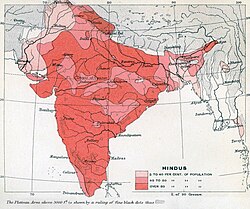
The Partition of India occurred in 1947 when British India split into two countries: India and Pakistan. 🌏This happened because people had different religious beliefs. India became a country mainly for Hindus, while Pakistan was formed for Muslims. 📅This significant change affected millions and still impacts lives today. The new countries were born on August 15, 1947, and became independent from British rule. 🎉The Partition was a time of hope for some but brought pain for many others due to the loss of homes and family separations.
Explore with ChatDinoKey Points
After Partition, India and Pakistan faced many challenges.
Three important figures played a huge role in the Partition: Mahatma Gandhi, Muhammad Ali Jinnah, and Jawaharlal Nehru.
In the 1800s, India was ruled by the British Empire.
The Partition of India teaches lessons about unity, tolerance, and the importance of peaceful coexistence.
The Partition had deep cultural effects on both countries.
The road to Partition wasn't easy!
The Partition changed everything!
Partitions aren’t exclusive to India!
Photos of Partition Of India

Partition Of India — photo 1

Partition Of India — photo 2

British Indian Empire in The Imperial Gazetteer of India, 1909. British India is shaded pink, the princely states yellow.

Muhammad Ali Jinnah, seated, third from the left, was a supporter of the Lucknow Pact, which, in 1916, ended the three-way rift between the Extremists, the Moderates and the League.
😡 Political Aftermath
After Partition, India and Pakistan faced many challenges. 🇮🇳🇵🇰 Both countries had to set up their governments and make new laws. Tensions continued, especially over the area of Kashmir, which both countries claimed. 😡The first war over Kashmir happened in 1947. This conflict didn’t end, leading to more clashes and a tense relationship. Both countries focused on defense and diplomacy. Even today, they are still working to improve relations while navigating their complex history.
Go deeper🦸♂️ Key Figures Involved
Three important figures played a huge role in the Partition: Mahatma Gandhi, Muhammad Ali Jinnah, and Jawaharlal Nehru. 🦸♂️ Mahatma Gandhi was known for his peaceful protests and wanted a united India for everyone. 🔔Muhammad Ali Jinnah was the leader of the Muslim League and believed Muslims needed a separate country. Jawaharlal Nehru, a friend of Gandhi's, became India's first Prime Minister. 🌟They had different visions but all wanted to lead India towards a brighter future, despite their conflicting ideas about how to do it!
Go deeper🏴☠️ Historical Background
In the 1800s, India was ruled by the British Empire. Many people wanted freedom! 🏴☠️ By the 1930s, there were different groups wanting independence. The Indian National Congress, led by Mahatma Gandhi, fought for a united India. However, the Muslim League, led by Muhammad Ali Jinnah, wanted a separate place for Muslims. This created tension and disagreements between the groups. 🤔By 1947, as the British planned to leave, the idea of Partition grew stronger. Many people were excited, while others feared what would happen next.
Go deeper🕊️ Legacy And Remembrance
The Partition of India teaches lessons about unity, tolerance, and the importance of peaceful coexistence. 🕊️ Many memorials and museums help remember the sacrifices and stories of those affected by Partition. 📚Schools include this event in their history lessons to ensure it is not forgotten. Through these narratives, younger generations learn about love, empathy, and create peaceful societies. ✌️ It reminds us that, while differences can divide, understanding can unite!
Go deeper🏦 Cultural And Social Consequences
The Partition had deep cultural effects on both countries. 🏦In India, diverse cultures blended together, creating vibrant festivals, food, and traditions. However, the separation also meant that many families lost cultural ties with friends and relatives. 🎭In Pakistan, people worked to create a new national identity, leading to new traditions and celebrations centered around Islamic values. 🌙Even today, this cultural exchange continues as both countries have much to offer and share with the world!
Go deeper🔄 Major Events Leading To Partition
The road to Partition wasn't easy! In March 1947, British officials proposed a plan for the division. 🔄The plan faced many challenges and disagreements. One major event was the "Direct Action Day" in August 1946, when violence broke out between Hindus and Muslims in Kolkata. ⚔️ This led to widespread riots, making communities very tense. After several discussions and negotiations, British India finally split on August 15, 1947. 🗓️ It became a critical moment when people celebrated freedom but also faced great uncertainty and fear of what the future held.
Go deeper🚶♀️ Impact On Population And Migration
The Partition changed everything! When India split, about 15 million people were forced to move to their newly assigned countries. 🚶♀️🚶♂️ It was one of the largest migrations in history! Many Hindus moved to India, and many Muslims went to Pakistan. 🗺️ Sadly, violence broke out, and countless lives were lost. Families were torn apart, and people had to leave their homes behind. 💔This chaotic time drastically changed how people lived, loved, and rebuilt their lives in new places.
Go deeper🌍 Comparative Analysis With Other Global Partition Events
Partitions aren’t exclusive to India! 🌍Other countries have also experienced similar divisions. For example, after World War II, the country of Korea split into North Korea and South Korea in 1948. ⚔️ Another example is the break-up of Yugoslavia in the 1990s, which resulted in several new countries. These partitions, like India's, often involved significant cultural, social, and political challenges. Each event highlights the importance of understanding and respecting differences among people. 🤝
Go deeper