Pacific Hagfish Facts For Kids
The Pacific hagfish is a jawless fish known for its slimy defense mechanism and scavenging diet, inhabiting deep-sea environments along the Pacific coast of North America.
Select reading age
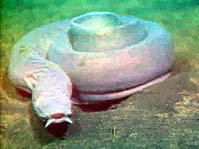
Pacific Hagfish Facts For Kids
Videos & Quizzesincluded
About this topic
The Pacific hagfish is a fascinating creature that lives in the ocean! 🌊It can be found along the Pacific coast of North America, from Alaska down to California. Unlike most fish, hagfish don’t have jaws! They’re known for their slimy bodies and are often called “slime eels.” Hagfish are important scavengers in the ocean, helping clean up the sea bed by eating dead animals. 🐟They are part of a group known as jawless fish, which also includes lampreys. These ancient creatures have been swimming in the oceans for over 300 million years!
Explore with ChatDinoKey Points
Here are some fun facts about the Pacific hagfish!
The Pacific hagfish plays a vital role in ocean ecosystems.
Pacific hagfish are scavengers, which means they eat dead or decaying animals.
The Pacific hagfish has a long, eel-like body that can grow up to 1 meter (3.3 feet) in length.
Currently, Pacific hagfish are not considered endangered, but they are affected by fishing practices and habitat loss.
People in some cultures use Pacific hagfish for their slime, which has unique properties.
Pacific hagfish prefer to live in deep, cold waters, usually at depths of around 20 to 1,500 meters (66 to 4,921 feet).
Hagfish reproduce by laying eggs, but not much is known about their reproduction habits!
Photos of Pacific Hagfish

Pacific hagfish heads.

Pacific hagfish at 150 metres' depth, Cordell Bank National Marine Sanctuary, California

A hagfish completing a body knot.

A Pacific hagfish in a rock crevice.
![Figure depicting the loose skin of hagfishes compared to other fishes.[23]](https://upload.wikimedia.org/wikipedia/commons/thumb/4/48/Pacific_Hagfish_skin.jpg/960px-Pacific_Hagfish_skin.jpg)
Figure depicting the loose skin of hagfishes compared to other fishes.[23]
🐍 Fun Facts
Here are some fun facts about the Pacific hagfish! 🐍Did you know they can produce slime so quickly that it's like turning a small bucket of water into jelly? 🤩Another cool fact is that hagfish can tie themselves in knots to scrape off slime and escape from predators! They have no bones, but they can still move gracefully through the water. Hagfish are also known to eat the insides of dead animals while leaving the skin behind. 🐠Isn’t that amazing? These strange fish are much more important than they might first seem!
Go deeper🌊 Ecological Role
The Pacific hagfish plays a vital role in ocean ecosystems. 🌊As scavengers, they help clean up dead animals on the ocean floor, making them valuable for the health of marine environments! When hagfish eat, they break down organic material into smaller pieces, which decomposes and releases nutrients back into the water. This process helps maintain a balance in the ocean ecosystem and supports the growth of other marine life. 🐟Without hagfish, the ocean would have more dead animals, which could harm other creatures.
Go deeper🐠 Feeding And Diet
Pacific hagfish are scavengers, which means they eat dead or decaying animals. 🐠They especially love fish that have died and sunk to the bottom of the sea! Their bodies are designed for this way of eating. They use their tooth-like structures to create holes in the carcass and then slurp up the insides. 💦Hagfish have a great sense of smell, helping them locate food in dark ocean waters. Their diet is important for the underwater ecosystem because they help break down and recycle nutrients from dead animals back into the ocean.
Go deeper🌊 Biology And Anatomy
The Pacific hagfish has a long, eel-like body that can grow up to 1 meter (3.3 feet) in length. 🌊They have a slimy, soft skin covered in mucus, which helps protect them from predators. Hagfish don’t have bones; instead, their bodies are made up of cartilage, just like sharks! They have multiple pairs of gills that allow them to breathe underwater. 😮Interestingly, hagfish have six rows of slime glands along their bodies, which they use to create a thick, slippery slime when threatened. This slime can fill the mouth of an attacker, helping hagfish escape!
Go deeper⚠️ Conservation Status
Currently, Pacific hagfish are not considered endangered, but they are affected by fishing practices and habitat loss. ⚠️ Overfishing can disrupt their populations, especially since they are caught for food in some areas. It’s important to protect their habitats and monitor fishing practices to ensure the hagfish can continue to thrive in the ocean. 🌊By keeping our oceans clean and balanced, we can help conserve the beautiful variety of marine life, including the intriguing Pacific hagfish!
Go deeper🌟 Cultural Significance
People in some cultures use Pacific hagfish for their slime, which has unique properties. 🌟In Korea, hagfish are considered a delicacy called "eel soup." The thick mucus they produce is also studied by scientists for its potential uses in medicine and industry. Researchers are looking at how hagfish can inspire new technologies! The hagfish's ability to create slime quickly helps scientists understand how to make stronger materials. 🌈It shows us how important this strange animal is, not only in the environment but also in our daily lives!
Go deeper🌍 Habitat And Distribution
Pacific hagfish prefer to live in deep, cold waters, usually at depths of around 20 to 1,500 meters (66 to 4,921 feet). They can be found in muddy or sandy areas along the coast from Alaska down to central California. 🌍Hagfish can survive in low-oxygen environments, which makes them unique! They often burrow into the sea floor to keep themselves safe from predators. 🌊These habitats are important for the hagfish to thrive, as they provide plenty of food and places to hide.
Go deeper🥚 Reproduction And Lifecycle
Hagfish reproduce by laying eggs, but not much is known about their reproduction habits! 🥚It's believed that hagfish may lay their eggs in a gelatinous mass, possibly attached to underwater structures. When the eggs hatch, the baby hagfish are tiny versions of their adult selves and begin their life in the deep ocean. 🌊It’s thought that hagfish reach maturity in about 3 to 5 years. Because they live a long time—up to 20 years—they play an essential role in the marine ecosystem throughout their lifetime.
Go deeper