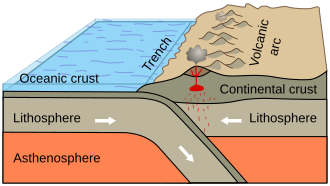
Orogeny is a mountain-building process that occurs at convergent plate boundaries when tectonic plates collide and compress the Earth's crust.

Set reading age
View for Kids
Easy to read and understand
View for Students
Clear, detailed explanations
View for Scholars
Deep dives and big ideas
Orogeny is a fancy word that means "mountain building"! 🏔️ It happens when Earth's plates collide at their edges. These plates make up the crust of our planet. When they push against each other, they fold, bend, and sometimes even lift up to create mountains. This exciting process can take millions of years! For example, the Himalayas, the tallest mountains in the world, were formed from orogeny when the Indian plate crashed into the Eurasian plate. 🗻Orogeny helps shape the landscapes we see and is important for understanding our planet! 🌍
There are two main types of orogeny: fold orogeny and fault orogeny! In fold orogeny, the Earth's crust bends and forms large folds, creating beautiful mountain ranges like the Rockies. 🌄In fault orogeny, big cracks form in the Earth because of pressure, causing land to be pushed up or down. This can create steep cliffs! 😲Examples include fault block mountains found in places like the Sierra Nevada in California. Both types show how powerful Earth's forces can be in making our world interesting and diverse! 🌎
Orogeny plays a huge role in biodiversity! 🐾Mountains create different habitats, where plants and animals can thrive. 🌿For instance, as you go higher in the mountains, the climate gets cooler. This means different types of plants grow at various elevations! 🌲Animals also adapt; for example, mountain goats climb steep areas while some birds, like the snow leopard, can live in high altitudes! 🦙Biodiversity in mountain areas is essential, providing homes for countless species and helping to keep ecosystems balanced, which is crucial for life on Earth! 💚
Convergent plate boundaries are special places where two tectonic plates move towards each other. 🔄These plates can be oceanic (under the ocean) or continental (land). When they meet, they can push upward, creating mountains! For example, the Andes mountains in South America were made when the Nazca Plate collided with the South American Plate. 🌊For every action, there's a reaction, so when one plate slides under the other, it can cause earthquakes! ⚡These boundaries are very active, making them important for scientists to study.
Several exciting processes happen during orogeny! First, compression occurs, where pressure builds up as plates push together. 💥Then, the crust can fold into waves or faults might form, breaking it apart. These processes create different landforms, including mountains and valleys! 🌊Erosion also plays a role, where wind and rain wear away the rocks and soil, revealing the beauty of the mountains over time. 💨This combination of forces makes orogeny a dynamic and continuous process, showing how nature dances to its own rhythm!
People have studied orogeny for a long time! 📚In the 20th century, scientists like Alfred Wegener helped us understand tectonic plates and how they move. 🌍This knowledge laid the groundwork for studying orogeny more closely. Many famous mountains tell stories of our planet's past and how it has transformed! Mountains have even influenced human history, often shaping trade routes and settlements like the ancient Silk Road through the Himalayas. 🚶♂️✨ Learning about orogeny helps us understand how Earth and its landscapes have changed over time, affecting cultures, economies, and life!
Many famous mountain ranges were created by orogeny! 🌄The Himalayas, for example, rose up about 50 million years ago when the Indian Plate hit the Eurasian Plate! 😮The Andes, stretching along South America, were formed from the meeting of the Nazca and South American plates. 🗻In North America, the Rocky Mountains were created through similar processes! 🏔️ Finally, the Alps, located in Europe, are famous for their beautiful peaks and were formed from tectonic collisions too! Each range tells a story about the Earth’s history and its ever-changing landscape. 🌍
Today, scientists continue to learn more about orogeny! 🧑🔬 They use advanced tools like GPS and satellite images to study how mountains rise or change shape over time. 🛰️ Researchers have also discovered that climate change can influence orogeny, sometimes causing erosion to speed up! 🌪️ They explore how mountains affect weather and habitats around them, which is vital for understanding our world. New discoveries about orogeny can lead to better predictions about earthquakes and other natural events, helping us stay safe and protect our planet! 🌎🔬
Orogeny creates fascinating geological features! 🏞️ Besides mountains, orogeny can form plateaus, which are flat areas that lie high above sea level, often surrounded by steep cliffs. 🌄It can also lead to the creation of valleys, which are low areas between ranges. Rivers often cut through these valleys over time, leaving beautiful landscapes. 🌊Additionally, many mountain ranges have fault lines, which are cracks in the Earth's surface! 🥵These features remind us of the power of nature and how it shapes the world around us!
Orogeny affects the climate in many ways! 🌀Mountain ranges often block wind and rain, creating different weather patterns on each side. This means one side of a mountain can be very wet, while the other side is dry and desert-like! ☔🌵 For example, the Sierra Nevada mountains create wet conditions in California, while the eastern side is much drier. Mountains also create habitats for various plants and animals, making them biodiversity hotspots! 🌼🐦 Understanding orogeny helps scientists grasp how these natural forces impact ecosystems and weather worldwide.


DIY is a creative community where kids draw, build, explore ideas, and share.
No credit card required