Orca Facts For Kids
Orcas, or killer whales, are highly intelligent marine mammals known for their striking black and white coloration and complex social behaviors.
Select reading age
Orca Facts For Kids
Videos & Quizzesincluded
About this topic
Orcas, also known as killer whales, are fascinating mammals! 🐋They belong to the dolphin family and are the largest members of it. Orcas can grow up to 32 feet long and weigh as much as a small car, around 6 tons! They are easily recognized by their distinctive black-and-white coloring. Their scientific name is Orcinus orca. Orcas live in oceans all around the world, from the icy Arctic to warm tropical waters. These intelligent animals are known for their playful nature and complex social bonds. They often travel in groups called pods, which can have anywhere from 2 to 40 or more members!
Explore with ChatDinoKey Points
Did you know that orcas are highly intelligent animals?
Orcas face various threats that impact their survival.
Orcas hold special significance in many cultures around the world.
Orcas are found in all the world's oceans, from the cold waters of the Arctic to the warm waters of the tropics.
Orcas have a strong, streamlined body that helps them swim fast.
Orcas are known as apex predators, meaning they are at the top of the food chain.
Orcas are very social animals, living in close-knit family groups called pods.
Orcas are known for their advanced communication skills!
Photos of Orca

Orca — photo 1


Orca — photo 3

Different angle views of a typical female orca's appearance

Adult males' pectoral fins, dorsal fin, and flukes are larger than females'. Image shows sexual dimorphism between them.

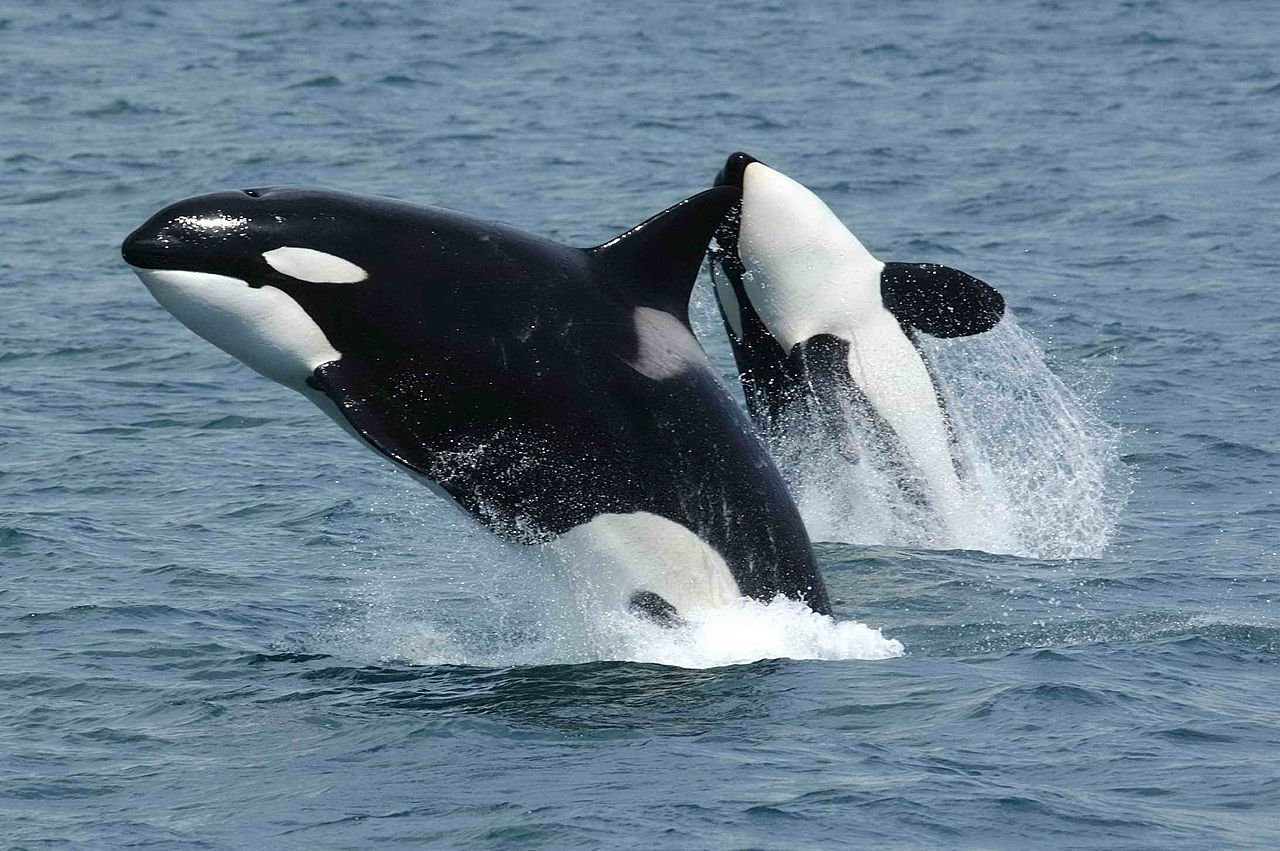
An orca leaps out of the water when swimming—a behaviour known as porpoising—in Hood Canal

Variations in Antarctic orcas

Orca — photo 8

🧠 Interesting Facts
Did you know that orcas are highly intelligent animals? 🧠They can learn new behaviors and even teach each other. Some orcas have unique hunting styles and share them within their pods. Orcas are also known to "whistle" a lot! Each group has its unique sounds, which helps them identify each other. These animals can dive deep, reaching depths of over 1,000 feet! And here's another fun fact: orcas can swim up to 34 miles per hour! That's faster than a typical race car! Orcas are truly amazing creatures that captivate everyone who learns about them!
Go deeper🌊 Conservation Status
Orcas face various threats that impact their survival. 🌊They are not endangered as a whole, but some populations are at risk due to pollution, loss of prey, and boat traffic. For example, the Southern Resident orcas in the Pacific Northwest are critically endangered. Conservation efforts are in place to protect these amazing creatures. Organizations work to educate the public, reduce pollutants in oceans, and conserve their prey like salmon. By taking actions to protect their habitats, we can help ensure that future generations can enjoy and learn about orcas.
Go deeper🐳 Cultural Significance
Orcas hold special significance in many cultures around the world. 🐳Indigenous peoples of the Pacific Northwest, such as the Coast Salish and Kwakwaka'wakw, view orcas as important spiritual symbols. They are often featured in art, stories, and legends. In these cultures, orcas represent strength, wisdom, and family bonds. Today, orcas are also popular in marine parks and documentaries, helping raise awareness about ocean conservation. By learning about orcas and their habitats, we can appreciate their role in our environment and the stories they inspire in various cultures!
Go deeper🌍 Habitat And Distribution
Orcas are found in all the world's oceans, from the cold waters of the Arctic to the warm waters of the tropics. 🌍They prefer coastal areas and deep ocean waters where they can hunt. Some orca populations, known as resident orcas, stay in one area, like the Pacific Northwest near the coasts of Washington and British Columbia. Others, called transient orcas, travel longer distances in search of food. They are social animals that often gather in pods, so they can be found swimming together in groups. No matter where they go, they enjoy living in the ocean!
Go deeper🚀 Physical Characteristics
Orcas have a strong, streamlined body that helps them swim fast. 🚀Adult males have tall dorsal fins that can reach up to 6 feet high, while females have smaller fins. Their skin is smooth and glossy, usually black on top and white underneath. This color pattern helps them camouflage when hunting. Orcas have sharp teeth that can be over 4 inches long! These teeth help them catch and eat their prey. Baby orcas, called calves, are born measuring about 6 feet long and weigh around 400 pounds. As they grow, they develop their unique markings and personality traits.
Go deeper🦈 Diet And Hunting Techniques
Orcas are known as apex predators, meaning they are at the top of the food chain. 🦈They have a varied diet, eating fish, seals, sea lions, and even whales! Orcas use teamwork to catch their prey. For example, they can create waves to wash seals off ice floes. They also use echolocation, sending out clicks and listening for the echoes to find food in dark waters. Group hunting is effective, as they can surround and trap their prey quickly. Some pods even have specific hunting techniques that they pass down through generations!
Go deeper👪 Social Structure And Behavior
Orcas are very social animals, living in close-knit family groups called pods. 👪Each pod consists of related females and their offspring, sometimes including males. These family ties are important, and pods often work together to hunt and protect each other. Female orcas can live to be 90 years old, while males typically live around 50-60 years. Orcas celebrate together when they catch food and show affection by rubbing against each other. They are playful and often leap out of the water, breaching and tail-slapping for fun! Their social bonds are strong, and they communicate in various ways.
Go deeper🎶 Communication And Echolocation
Orcas are known for their advanced communication skills! 🎶They use sounds like clicks, whistles, and calls to talk to each other. Each pod has its unique vocalizations, sort of like a family language. They also use echolocation, a technique where they send out sound waves and listen for them to bounce back. This helps them find food and navigate in dark waters. Scientists study orca sounds to learn about their behaviors and social structures. Their complex communication is an essential part of their lives, allowing them to stay connected with family members in the vast ocean!
Go deeper