Oilbird Facts For Kids
The oilbird, or guácharo, is a unique bird found in northern South America and Trinidad, known for its nocturnal lifestyle and echolocation ability.
Select reading age
Oilbird Facts For Kids
Videos & Quizzesincluded
About this topic
The oilbird, also called the guácharo, is a fascinating bird found mostly in the northern parts of South America and on the Caribbean island of Trinidad. 🦅These nocturnal birds are unique because they are the only members of their family, Steatornithidae. They are known for their unusual diet, which includes fruit and nuts, especially oil palms. Their name comes from the oil they produce from their diet. Oilbirds have the amazing ability to navigate in the dark using echolocation, like bats! 🌙
Explore with ChatDinoKey Points
Here are some awesome facts about oilbirds!
Right now, the oilbird is considered "Near Threatened" by the International Union for Conservation of Nature (IUCN).
In some South American cultures, the oilbird is seen as a symbol of the wilderness.
Oilbirds play an essential role in their ecosystem!
Oilbirds are fruit eaters!
Oilbirds are mostly found in the humid rainforests of northern South America, including countries like Venezuela, Colombia, and Ecuador.
Oilbirds have unique features that make them stand out!
Oilbirds are very interesting when it comes to raising their young!
The oilbird belongs to its own family, Steatornithidae, and its scientific name is Steatornis caripensis.
Oilbirds are social creatures!
Photos of Oilbird

Steatornis caripensis – MHNT


Oilbird — photo 4

🏃♂️ Fun Facts
Here are some awesome facts about oilbirds! Did you know that oilbirds can fly at speeds of up to 40 miles per hour? 🏃♂️ They also have a remarkable sense of hearing, which helps them navigate dark caves. Just like dolphins or bats, oilbirds use echolocation to find their way around! Finally, the oilbird can live up to 20 years in the wild. That’s a long time for such a special bird! 🕊️
Go deeper🔍 Conservation Status
Right now, the oilbird is considered "Near Threatened" by the International Union for Conservation of Nature (IUCN). 🔍Their main threats are habitat loss and hunting in some areas. Conservation efforts are in place to protect these amazing birds and their habitats. In Venezuela, national parks help safeguard the oilbird's nesting sites. By raising awareness about their importance and protecting their homes, we can help ensure that oilbirds continue to thrive! 🌿
Go deeper🌌 Cultural Significance
In some South American cultures, the oilbird is seen as a symbol of the wilderness. In Venezuela, locals have stories that connect oilbirds to the night and darkness. 🌌People also admire their unique characteristics, like their echolocation abilities, making them special in local folklore. Oilbirds are sometimes featured in art and stories, showcasing the beauty and importance of nature. By learning more about oilbirds, we can appreciate the wonder of wildlife! 🎨
Go deeper🌳 Ecological Importance
Oilbirds play an essential role in their ecosystem! By eating fruit and nuts, they help to spread seeds throughout the rainforests. 🌳When they digest the fruit, they pass the seeds in their droppings, allowing new plants to grow in different areas. This helps keep the rainforest healthy and vibrant! Additionally, oilbirds are important food sources for other predators like snakes and birds of prey. Their presence shows that the ecosystem is thriving. 🌺
Go deeper🍈 Diet And Feeding Habits
Oilbirds are fruit eaters! 🍈They mostly feed on fruits, especially those from the oil palm tree, such as palm nuts. Their strong beaks help them crack these hard fruits open. Luckily, oilbirds have an excellent memory; they remember where to find their favorite food sources. At night, they fly through the forest searching for ripe fruits to eat. They use echolocation to navigate and find their way around. This means they can locate fruits even in total darkness! 🌜
Go deeper🏝️ Habitat And Distribution
Oilbirds are mostly found in the humid rainforests of northern South America, including countries like Venezuela, Colombia, and Ecuador. They also live in the Caribbean, especially on the island of Trinidad. 🏝️ These birds enjoy roosting in dark caves during the day, like the famous Cueva de la Guácharo in Venezuela. This cave is home to thousands of oilbirds! When the sun goes down, the oilbirds leave their caves to hunt for food in the dim light of the evening. 🌙
Go deeper🐦 Physical Characteristics
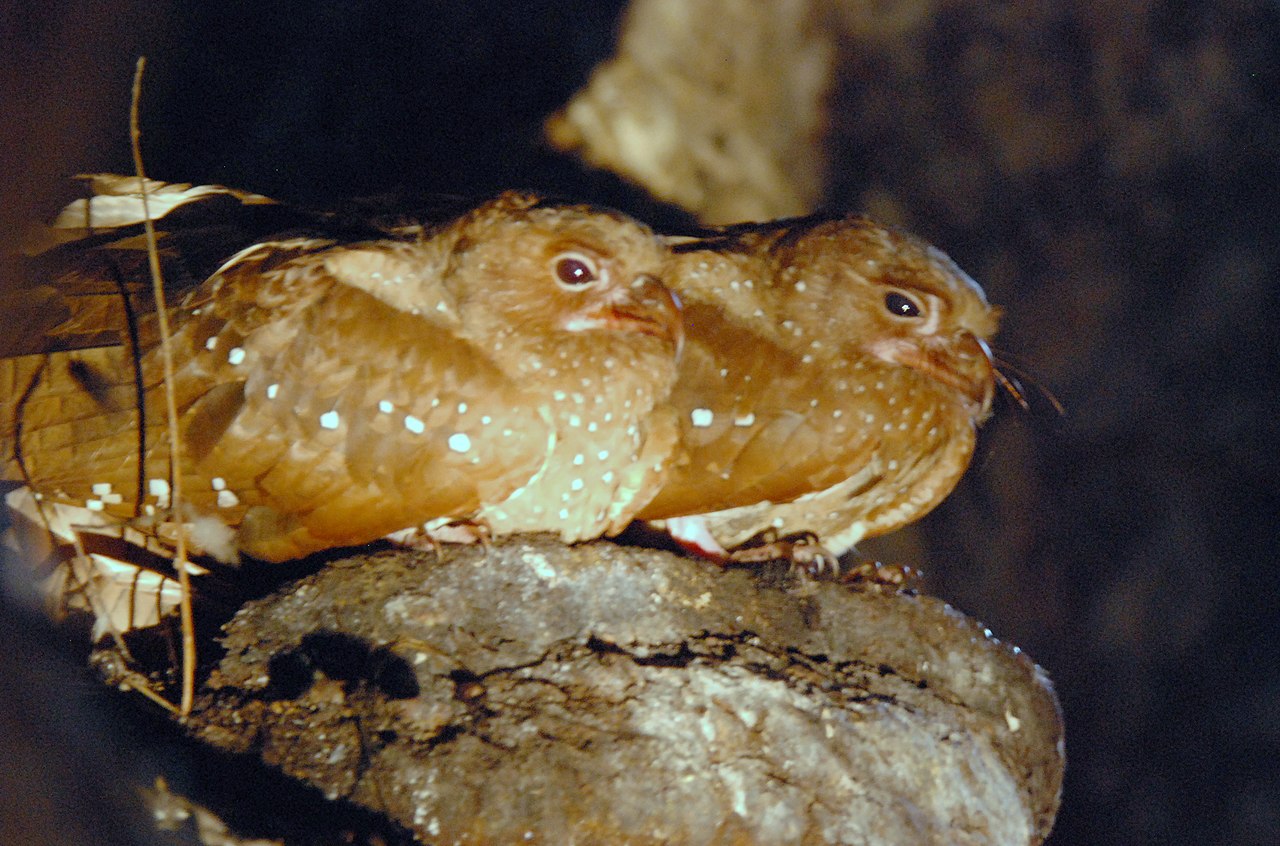
Oilbirds have unique features that make them stand out! They are medium-sized birds, measuring about 20 to 24 inches long. 🐦Their plumage is mostly brown with white spots, helping them blend into their surroundings. They have large, round eyes that are perfect for seeing in the dark. Oilbirds also have a thick, wide bill, which helps them eat their favorite food: fruit! Their wings are long and strong, allowing them to glide gracefully as they fly through caves searching for food. 🌌
Go deeper🐣 Reproduction And Nesting
Oilbirds are very interesting when it comes to raising their young! The breeding season usually occurs between March and July. 🐣After a courtship display, the female lays 1-3 eggs in a cozy nest made of sticks and leaves in the cave. Both parents take turns sitting on the eggs to keep them warm. The baby oilbirds hatch after about 30 days! They are guided by their parents and learn to fly within a few weeks. Once they’re ready, they leave the nest and start searching for food. 🌱
Go deeper🤓 Taxonomy And Classification
The oilbird belongs to its own family, Steatornithidae, and its scientific name is Steatornis caripensis. 🤓It is part of the order Caprimulgiformes, which includes other interesting birds like nightjars. The guácharo is closely related to the Nyctibiidae family, which has similar behaviors. Scientists classify oilbirds as part of the avian class Aves. This means they are warm-blooded and have feathers! In short, the oilbird is a special bird with a unique place in the tree of life. 🌳
Go deeper🕊️ Behavior And Social Structure
Oilbirds are social creatures! They like to live in groups, often roosting together in caves during the day. 🕊️ At night, they fly out to find food, still staying close to their friends. Oilbirds communicate using loud calls, which can be heard echoing in the dark caves. Their social structure helps them stay safe and find food easier, as they can share information about food sources. If one bird finds a good spot to eat, others can follow! 🥳
Go deeper