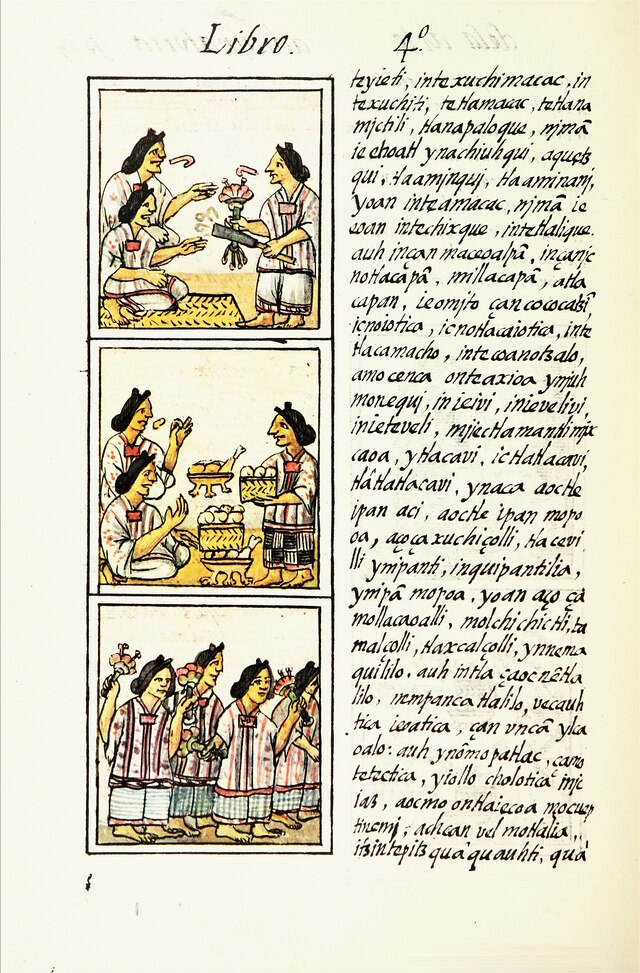
Nahuatl is a historical and contemporary Uto-Aztecan language spoken primarily in Mexico, known for its rich cultural heritage and contributions to various fields, including linguistics and botany.

Set reading age
View for Kids
Easy to read and understand
View for Students
Clear, detailed explanations
View for Scholars
Deep dives and big ideas
Nahuatl is a beautiful language spoken by about 1.5 million people in Mexico! 🌍It's part of the Uto-Aztecan family, which is a group of languages that share common roots. Nahuatl was first spoken by the Aztec Empire around 1345 AD, in places like Tenochtitlan (now Mexico City). 📜The language is known for its unique sounds and words that describe nature. For example, "Xochitl" means flower 🌸, and "Tlaloc" is the rain god! Nahuatl isn’t just a language; it is a key to understanding the rich history and culture of ancient and modern Mexico. 🇲🇽
Nahuatl grammar is quite fun and different! 🎉Unlike English, which has a fixed word order (subject-verb-object), Nahuatl is more flexible! You can put the important words first! For example, "I eat corn" can be said in different ways. 🌽Also, Nahuatl uses prefixes and suffixes to change the meanings of words. This is called agglutination! 🏗️ Also, Nahuatl marks tense (past or present) differently than in English. These special rules make speaking and writing Nahuatl really interesting and unique! 🥳
Nahuatl has been spoken for over 600 years! 🤯The Aztecs used it as their primary language. The Aztec Empire was big, stretching from Mexico City to parts of Central Mexico. When Spanish explorers came in the 1500s, they recorded Nahuatl words and phrases! 📝Some famous words, like “chocolate” 🍫 and “tomato” 🍅, come from Nahuatl! Modern Nahuatl speakers proudly keep their language alive, even with the challenges of living in a world dominated by Spanish. Today, Nahuatl helps us learn about the past and our world’s history! 🌟
Nahuatl isn’t just a language; it’s a treasure of culture! 🎨The Aztecs created wonderful art, poetry, and traditions using it. Many traditional stories and legends are passed down through Nahuatl speakers, keeping history alive! For example, the famous feathered serpent god Quetzalcoatl is celebrated in ceremonies. 🌈Today, music, dance, and festivals in Nahuatl-speaking communities help preserve this rich culture! Learning Nahuatl not only teaches you the language but also connects you to ancient beliefs and practices. It’s like opening a window to a vibrant past! 🌺🇲🇽
Nahuatl isn't just one language; it has many dialects! 🌈Different regions in Mexico speak different versions. For example, the Central Nahuatl is found around Mexico City, while the Huasteca Nahuatl is spoken in the state of San Luis Potosí. Each dialect has its unique twist, like pronunciation and vocabulary. 🤔This means that while speakers can understand each other most of the time, some words might sound different! Exciting, right? So, whether you’re in the mountains or near the coast, Nahuatl connects all these vibrant communities through language! 🌊🏞️
Did you know that Nahuatl has some super cool words? 🌟For example, "aguacate" means avocado and comes straight from Nahuatl! A common greeting is "Cualli tonalli," which means good day! ☀️ The vocabulary is rich, with many words for plants and animals, showing the connection to nature. Did you hear of “coyote”? 🐺Yep, it’s also from Nahuatl! It’s a fun language with over 4,000 words in its modern dictionary! Learning these unique words can help you know about the world and history in surprising ways! 📚
Did you know Nahuatl has influenced many languages, especially Spanish? 🌟Many common words we use today come from Nahuatl! For example, “coyote,” “avocado,” and “chili” are all borrowed words! 🌶️ It’s fascinating how a language can shape others! When Spanish speakers came to Mexico, they loved these unique Nahuatl words and brought them back to Europe! This language influence shows how languages can connect, like bridges that link different cultures together! 🌍🤝
If you want to learn Nahuatl, there are many fun ways! 📚You can find online courses, YouTube videos, and apps that teach you basic words and phrases! Some libraries even have books in Nahuatl or about its culture. 📖You might also find games and activities that make learning fun! 🕹️ Ask your teachers or family if they know of local classes or events where you can practice speaking with others. Surrounding yourself with Nahuatl will make learning it a joyful adventure! 🌟🗣️
Today, Nahuatl is still alive and thriving! 🌱Schools in Mexico are teaching Nahuatl again, helping kids learn their heritage. Some universities also offer classes on the language. 🏫Community groups organize events to encourage speaking and sharing stories! People even make music and poetry in Nahuatl! 🎶Full of hope, many Nahuatl speakers want to keep their language alive for future generations. With these exciting efforts, Nahuatl can continue to blossom and grow like the beautiful flowers it describes! 🌼✨
🌄 Nahuatl is a Uto-Aztecan language spoken primarily in Mexico.
🎉 It has over 1.5 million speakers today, making it one of the most spoken indigenous languages in the Americas.
📜 Nahuatl was the language of the Aztec Empire and is used in many historical texts.
🌍 The language has influenced the English language with words like 'chocolate', 'avocado', and 'tomato'.
🗣️ There are several dialects of Nahuatl, each with its own unique characteristics.
🌿 Nahuatl incorporates a variety of sounds, including some that are uncommon in European languages.
🧓 Many Nahuatl speakers also use Spanish, often mixing both languages in daily conversation.
🔍 Nahuatl is still taught in some schools and revitalization efforts are underway to preserve it.
👥 The language has a rich oral tradition, with poetry and storytelling being significant cultural practices.
📖 Modern Nahuatl has adapted to include vocabulary for contemporary life, including technology and social media.


DIY is a creative community where kids draw, build, explore ideas, and share.
No credit card required