Moray Eel Facts For Kids
Moray eels are elongated, snake-like fish often found in coral reefs, known for their vibrant colors and impressive hunting abilities.
Select reading age

Moray Eel Facts For Kids
Videos & Quizzesincluded
About this topic
Moray eels are fascinating fish found in warm, tropical waters all over the world, especially in the Atlantic, Indian, and Pacific Oceans! 🌊Unlike most eels, moray eels have long bodies that can be up to 13 feet (4 meters) long. They are known for their unique looks, with large mouths that sometimes seem to be smiling! Their skin is usually spotted or striped, helping them blend into the coral reefs. Moray eels live in crevices or holes in the reef, which keep them safe from predators. 🐟
Explore with ChatDinoKey Points
Moray eels are carnivorous, which means they eat other animals!
Did you know that moray eels have a unique method of "smelling" their food?
Most moray eel species are not endangered, but their habitats, like coral reefs, are threatened by pollution and climate change.
Moray eels have a special place in various cultures around the world.
Moray eels prefer warm, shallow waters and are most commonly found in coral reefs.
Moray eels have unique physical features that set them apart from other fish.
Moray eels have an interesting way of reproducing!
Moray eels are mostly solitary creatures, but sometimes they can be found sharing their home with another eel!
Photos of Moray Eel

Skull and pharyngeal jaws of a Gymnothorax miliaris (goldentail moray)

Moray eel jaw anatomy

A moray occupying a dead patch reef, located in Kona, Hawaii

Echidna nebulosa occupying a live coral reef, located in Sabang, Philippines

Muranidae represented on a phylogenetic tree

A representative structure of the subfamily Uropterygiinae

タカマユウツボ Anarchias seychellensis

Moray Eel — photo 8
🦐 Feeding And Diet
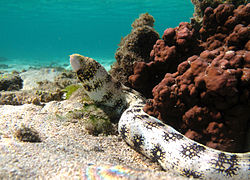
Moray eels are carnivorous, which means they eat other animals! Their diet mainly consists of fish and crustaceans, such as shrimp and crabs. 🦐Moray eels are nocturnal hunters, which means they prefer to hunt at night. They use their keen sense of smell to find prey in the dark. 🦈When they catch their food, their second set of jaws helps hold it while they swallow it whole! Moray eels are also known to have a symbiotic relationship with cleaner fish, which eat parasites off their skin. It's a win-win!
Go deeper🐍 Interesting Facts
Did you know that moray eels have a unique method of "smelling" their food? 🐍They use their tongues to pick up scent particles in the water and send the information to their nostrils! Also, despite their toothy appearance, moray eels are generally not dangerous to humans. In fact, they often prefer to hide rather than confront a threat! 🤫The word "moray" is derived from the Latin term “muraena.” Next time you visit an aquarium, keep an eye out for these colorful eels hiding in their rocky homes! 🐠
Go deeper🌍 Conservation Status
Most moray eel species are not endangered, but their habitats, like coral reefs, are threatened by pollution and climate change. 🌍Overfishing can also impact their populations. To help protect moray eels, we must take care of our oceans! Organizations are working hard to create marine protected areas where these amazing creatures can thrive without fear of extinction. 🌊It's essential to learn and educate others about the importance of keeping our oceans healthy for all marine life!
Go deeper🌐 Cultural Significance
Moray eels have a special place in various cultures around the world. 🌐In some places, they are seen as symbols of strength and longevity. They often appear in folklore and mythology, representing mystery and adaptability. Many traditional fishermen respect moray eels for their beauty and role in the ecosystem, while others include them in art! 🎨The Hawaiian culture views them as guardians of the sea. Thus, moray eels are celebrated in stories and legends across different cultures!
Go deeper🏝️ Habitat And Distribution
Moray eels prefer warm, shallow waters and are most commonly found in coral reefs. 🏝️ They can be found at depths of 2 to about 40 meters (6 to 130 feet) underwater. The Great Barrier Reef in Australia and the Red Sea near Egypt are two famous places where you can spot these amazing eels! 🌏These eels often hide among rocks and coral, using their color patterns to stay safe from bigger fish. Moray eels make their homes in tropical waters, but some species can also be found in more temperate areas.
Go deeper🌬️ Physical Characteristics
Moray eels have unique physical features that set them apart from other fish. Their long, slender bodies are flexible, making it easy for them to slip into tight spaces. They have two sets of jaws: a front jaw and a second set called pharyngeal jaws, which help them catch prey! 🌬️ Their skin is covered in mucus to protect them from parasites and to help them glide through the water. Moray eels come in many colors, including green, brown, and blue. Some types even have bright patterns, like the Giant Moray, which can weigh up to 100 pounds! 💪
Go deeper🌊 Reproduction And Life Cycle
Moray eels have an interesting way of reproducing! They lay thousands of eggs in the ocean, and the baby eels, called larvae, float on the water's surface. 🌊These larvae will eventually drift into coastal waters, where they grow and develop. As they mature, they start to look like adult moray eels. It takes a couple of years for them to fully grow and become adults. 🍼Moray eels don't take care of their young after they hatch, so the baby eels must survive on their own in the wild!
Go deeper🐍 Behavior And Social Structure
Moray eels are mostly solitary creatures, but sometimes they can be found sharing their home with another eel! 🐍They are known for being territorial, meaning they like to keep their space free from others. When feeling threatened, moray eels may show their teeth, but they are not aggressive towards humans unless provoked. They rely on their excellent camouflage to avoid predators. Moray eels can be shy, often peeking out of their hiding spots to observe their surroundings before swimming out to hunt! 👀
Go deeper