All Articles

Mile

Mile Facts For Kids

A mile is a unit of length commonly used to measure distance, especially in the United States and the UK.
🎨 Reading age for 6-8
Background blob
Mile
Mile
Facts for Kids!
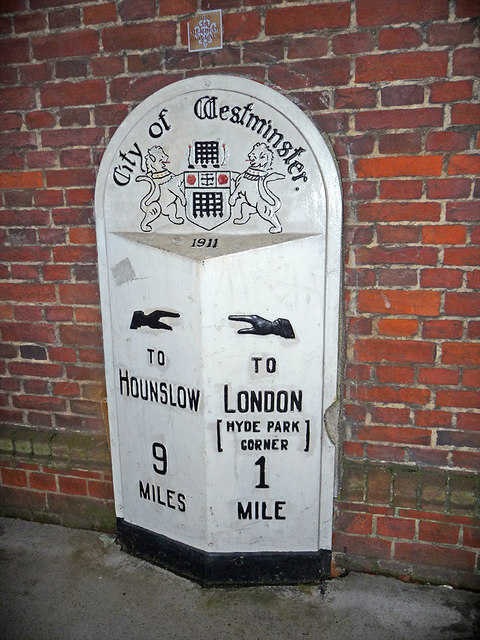
Image by Christine Matthews, licensed under Creative Commons Attribution-Share Alike 2.0

Do more with AI

Introduction

A mile is a unit of measurement used to measure distance. It is about 1.61 kilometers long! 🏃‍♂️ The mile is commonly used in countries like the United States and the United Kingdom. When you run, walk, or drive, you might hear about miles on road signs. For example, if a sign says "5 miles to the city", it means the city is 5 miles away! 🚗Fun fact: The word "mile" comes from a Latin word that means “one thousand paces.” So when you think of a mile, imagine taking lots of steps! 🥾

Images of Mile

The supposed remains of the Golden Milestone, the zero-mile marker of the Roman road network, in the Roman Forum

The supposed remains of the Golden Milestone, the zero-mile marker of the Roman road network, in the Roman Forum

Scalebar on a 16th-century map made by Mercator. The scalebar is expressed in "Hours walking or common Flemish miles", and includes three actual scales: small, medium and big Flemish miles.

Scalebar on a 16th-century map made by Mercator. The scalebar is expressed in "Hours walking or common Flemish miles", and includes three actual scales: small, medium and big Flemish miles.

Various historic miles and leagues from an 1848 German textbook, given in feet, metres, and fractions of a "degree of meridian"

Various historic miles and leagues from an 1848 German textbook, given in feet, metres, and fractions of a "degree of meridian"

Milestone on Mountbellew Bridge, erected c. 1760. Distances are given in Irish miles.Image by MilestoneSociety, licensed under Creative Commons Attribution-Share Alike 2.0

Milestone on Mountbellew Bridge, erected c. 1760. Distances are given in Irish miles.

Edinburgh's "Royal Mile"—running from the castle to Holyrood Abbey—is roughly a Scots mile long.[53]

Edinburgh's "Royal Mile"—running from the castle to Holyrood Abbey—is roughly a Scots mile long.[53]

On the utility of the nautical mile.Each circle shown is a great circle—the analogue of a line in spherical trigonometry—and hence the shortest path connecting two points on the globular surface. Meridians are great circles that pass through the poles.

On the utility of the nautical mile.Each circle shown is a great circle—the analogue of a line in spherical trigonometry—and hence the shortest path connecting two points on the globular surface. Meridians are great circles that pass through the poles.

The supposed remains of the Golden Milestone, the zero-mile marker of the Roman road network, in the Roman Forum

The supposed remains of the Golden Milestone, the zero-mile marker of the Roman road network, in the Roman Forum

Scalebar on a 16th-century map made by Mercator. The scalebar is expressed in "Hours walking or common Flemish miles", and includes three actual scales: small, medium and big Flemish miles.

Scalebar on a 16th-century map made by Mercator. The scalebar is expressed in "Hours walking or common Flemish miles", and includes three actual scales: small, medium and big Flemish miles.

Various historic miles and leagues from an 1848 German textbook, given in feet, metres, and fractions of a "degree of meridian"

Various historic miles and leagues from an 1848 German textbook, given in feet, metres, and fractions of a "degree of meridian"

Milestone on Mountbellew Bridge, erected c. 1760. Distances are given in Irish miles.Image by MilestoneSociety, licensed under Creative Commons Attribution-Share Alike 2.0

Milestone on Mountbellew Bridge, erected c. 1760. Distances are given in Irish miles.

Edinburgh's "Royal Mile"—running from the castle to Holyrood Abbey—is roughly a Scots mile long.[53]Image by Kim Traynor, licensed under Creative Commons Attribution-Share Alike 3.0

Edinburgh's "Royal Mile"—running from the castle to Holyrood Abbey—is roughly a Scots mile long.[53]

On the utility of the nautical mile.Each circle shown is a great circle—the analogue of a line in spherical trigonometry—and hence the shortest path connecting two points on the globular surface. Meridians are great circles that pass through the poles.

On the utility of the nautical mile.Each circle shown is a great circle—the analogue of a line in spherical trigonometry—and hence the shortest path connecting two points on the globular surface. Meridians are great circles that pass through the poles.

Famous Mile Races

There are many famous races where athletes run a mile! 🏃‍♀️ One of the most well-known is the “Mile Run” at the Olympics, where the best runners from around the world compete. The fastest mile ever ran was by Hicham El Guerrouj from Morocco in 1999, finishing in just 3 minutes and 43 seconds! ⏱️ Another popular event is the “Dream Mile” held in New York City, attracting the best high school runners. These events inspire people to run and set their own records! 🏆

History Of The Mile

The mile has a long history that started over 2,000 years ago! 📜The ancient Romans created the "mille passus," which means “a thousand paces.” This was used as a way to measure distances across roads. However, the mile as we know it today was defined in the 16th century and measured 5,280 feet. That’s like stacking 528 pineapples on top of one another! 🍍The mile was used during horse races and also for measuring land. Over the years, people loved running miles and made it a part of many sports!

Mile In Popular Culture

The mile is mentioned in many movies, songs, and books! 🎬One popular song is "The Mile" by the band “The Offspring,” where they sing about the excitement of running. Also, in the movie "The Longest Yard," there's lots of action around running! 📖Additionally, coaches use the idea of running a mile to teach kids about sports and health. The mile has become a symbol of sportsmanship, determination, and fun. Everyone is encouraged to participate, whether in school or at fun runs! 🌈

Fun Facts About The Mile

Here are some fun facts about the mile! 🥳Did you know that the world record for the mile run is held by Hicham El Guerrouj, who ran it in 3:43.13? That’s super fast! 💨In history, horses were also measured in miles! Want to know another fact? The longest race ever held is the "English Mile" which is 1,689 miles long! That's like running across many countries! 🌈Miles are used in many places, so knowing how long a mile is can help you when you travel or have fun! 🌏

Benefits Of Running A Mile

Running a mile is fun and great for your health! 🏅When you run, you exercise your heart, muscles, and lungs, helping them stay strong. Did you know running a mile can burn about 100 calories? 🔥That’s like eating a fun-sized candy bar, but you can enjoy it more if you run! Running with friends also makes it a fun social activity! 😄You can even run races to see who’s the fastest. Whether you run outside in a park or on a track, running a mile keeps you active and helps you feel happy! 🌞

Mile In Education And Science

The mile isn't just about running; it's also taught in schools! 📚Kids learn to measure distances in math class, helping them understand the world better. Scientists also use miles when studying Earth's features, like mountains and oceans. 🏔️ The mile helps students know how far places are and even plan trips. Additionally, when kids run a mile, teachers often use it to show how exercise helps our bodies! 🏃Keeping track of time for running can teach about speed and science too! The mile truly connects learning with fun activities! 😊

Mile Conversion And Equivalents

Converting miles into other units is super important! To help us understand, remember this: 1 mile equals 5,280 feet or 1,760 yards! 📏If you want to know how many kilometers are in a mile, just multiply by 1.61. So, if you have 3 miles, that equals about 4.83 kilometers! 📐Learning how to convert these distances helps us understand maps and travel better! If you see a sign with miles and want to tell a friend in kilometers, you can do that easily!

Mile In Different Systems Of Measurement

The mile belongs to the Imperial and US customary systems of measurement. 🌍In these systems, it is equal to 5,280 feet or 1,760 yards. However, in the metric system, we use kilometers instead. A mile is roughly 1.61 kilometers, which helps us understand how long it is in a different way! 🥁Remember that just like the way we measure weight in pounds and grams, we also have different ways to measure distance. Knowing these differences helps us understand how far we can travel! ✈️

Mile Quiz

Q1
Question 1 of 10

Learn more about Mile

Ready to create?

Make

To create a safe space for kid creators worldwide!

Create

Vibe Coding

Kids GPT

All Tools

Kibu

Learn

Worksheets

Courses

Skills

Resources

SafeTube

Blog

FAQ

Pricing

Account

Log-in

Sign-up

Data Deletion

Company

About

Community Guidelines

Privacy Policy

Terms of Service

2025, URSOR LIMITED. All rights reserved. DIY is in no way affiliated with Minecraft™, Mojang, Microsoft, Roblox™ or YouTube. LEGO® is a trademark of the LEGO® Group which does not sponsor, endorse or authorize this website or event. Made with love in San Francisco.