Messier 67 Facts For Kids
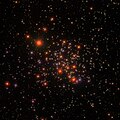
Messier 67 is an open star cluster located in the southern equatorial half of the Cancer constellation, containing around 500 stars and is about 4 billion years old.
Select reading age

Messier 67 Facts For Kids
Videos & Quizzesincluded
About this topic
Messier 67, often called the King Cobra Cluster 🐍 or the Golden Eye Cluster 👁️, is a group of stars located in the constellation Cancer, which means "Crab" in Latin. It is one of the oldest star clusters we know about! This cluster is about 2,500 light-years away from Earth 🌌. Astronomers 🌟 first discovered it in the year 1779 by a French astronomer named Charles Messier. What’s cool is that it has around 500 stars! Messier 67 is a fascinating place for scientists to study how stars grow and change over time.
Explore with ChatDinoKey Points
In Messier 67, notable stars include stars like 61 Cygni and HD 70020.
The stars in Messier 67 are mostly similar to our Sun 🌞, which makes studying them super interesting!
Messier 67 is believed to be around 4 billion years old!
Messier 67 may not have many stories written about it, but it does appear in some star-gazing guides.
Messier 67 is located about 2,500 light-years away from Earth!
Messier 67 was discovered by Charles Messier in 1779, making it one of the first star clusters ever recorded!
Astronomers use powerful telescopes 🔭 to observe Messier 67 and gather information about its stars!
The stars in Messier 67 have many different characteristics!
The future looks bright for Messier 67!
Messier 67 is often compared to other star clusters, like the Pleiades and the Hyades.
Photos of Messier 67

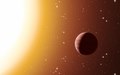
Artistic impression of a exoplanet orbiting a star in Messier 67.
Messier 67 — photo 2
 Image by Created by User:Worldtraveller, licensed under Creative Commons Attribution-Share Alike 3.0
Messier 67 — photo 3
Messier 67 — photo 4
🌟 Notable Stars
In Messier 67, notable stars include stars like 61 Cygni and HD 70020. 🌟HD 70385 is a star with a special feature; it’s much cooler than our Sun, which helps astronomers study how different star types evolve. These stars are intriguing because they provide valuable information about their ages and compositions. With their different colors and brightnesses, they act like shining guides in the night sky, helping scientists understand the life cycle of stars. Exploring these stars helps us learn about our own Sun and other stars in our Universe! 🌌
Go deeper🌞 Star Composition
The stars in Messier 67 are mostly similar to our Sun 🌞, which makes studying them super interesting! The cluster is made up of about 500 stars, many of which are yellow dwarf stars like the Sun. Others are red giants, which are much larger and cooler than the Sun. 🌅These stars all formed around the same time, so they’re like siblings in a big family! Messier 67 also contains some stars that have interesting names, like HD 70385 and HD 70593. Each star has its own brightness and color, helping scientists learn more about how stars behave! ✨
Go deeper🌟 Formation And Age
Messier 67 is believed to be around 4 billion years old! 🌟That’s much older than a person, but not as old as many other star clusters. It was formed from a huge cloud of gas and dust. Over time, gravity pulled this material together, creating stars. This process can take millions of years! 🌌Scientists think that Messier 67 formed when our Earth was just starting to cool down. Because it’s so old, studying this cluster helps us understand how stars live and die. 💫
Go deeper🌟 Cultural References
Messier 67 may not have many stories written about it, but it does appear in some star-gazing guides. 🌟People often reference clusters like Messier 67 when teaching about constellations and the night sky. In movies or cartoons, you might not hear about it directly, but science fiction tales and stories about exploring space often inspire kids to learn more about such star clusters. 🌌Who knows? You might fall in love with stargazing just like many scientists and explorers before you!
Go deeper🌎 Distance From Earth
Messier 67 is located about 2,500 light-years away from Earth! 🌎💫 Imagine traveling that distance; it would take you thousands of years to get there in a spaceship! Light travels really fast—186,282 miles (299,792 kilometers) per second—but even light takes 2,500 years to reach us from this cluster! When you look at Messier 67 in the night sky, you’re seeing it as it was when the dinosaurs roamed the Earth. Isn’t it amazing how far it is, yet we can still learn so much about it? 🌌✨
Go deeper📜 Historical Significance
Messier 67 was discovered by Charles Messier in 1779, making it one of the first star clusters ever recorded! 📜Since then, many astronomers have studied it, gathering important data about how stars form and evolve. Because of its age, it helps scientists understand what happens to star clusters over time. 🌌Messier 67 teaches us how stars interact with each other and how they age similarly or differently. This knowledge is crucial for understanding our Milky Way galaxy and how it was formed! 🌟
Go deeper🔭 Observation And Imaging
Astronomers use powerful telescopes 🔭 to observe Messier 67 and gather information about its stars! They take amazing pictures that show the cluster's stars looking like a sparkling patch in the sky. Through these images, scientists learn about the brightness and colors of the stars, which tell them about the stars’ ages and types. Some famous telescopes, like the Hubble Space Telescope, have helped scientists study Messier 67 in detail. This imaging also helps scientists learn about space better, improving our understanding of the Universe! 🌟
Go deeper🌟 Physical Characteristics
The stars in Messier 67 have many different characteristics! 🌟Most stars in this cluster are about the same age and size, but some are much bigger or smaller than our Sun. About 70% of the stars are similar in size to the Sun, while about 20% are bigger and brighter. The remaining stars are much dimmer than our Sun. This cluster also contains binary stars, which are pairs of stars that orbit each other. Their different colors and brightness levels help scientists understand how stars change over billions of years! 🌌✨
Go deeper🌠 Future Research Directions
The future looks bright for Messier 67! 🌠Astronomers are planning to use new telescopes with advanced technology to study this star cluster even more. They want to explore how the stars in this cluster form and interact with each other over time. As these telescopes become even better, scientists will be able to discover more about the environments in Messier 67! These exciting discoveries will help us learn more about our Universe and how stars live their lives! 🌌💫
Go deeper🌠 Comparison With Other Clusters
Messier 67 is often compared to other star clusters, like the Pleiades and the Hyades. 🌠While the Pleiades are younger and brighter, Messier 67 is much older—about 4 billion years! The Hyades is another cluster that is also older but not as old as Messier 67. These comparisons help scientists understand how different clusters evolve over time. The more we learn about clusters like Messier 67, the more we understand our home galaxy, the Milky Way. Each cluster has its own story! 🌌✨
Go deeper