Menstrual Cycle Facts For Kids
The menstrual cycle is a series of natural changes in hormone production and the structures of the uterus and ovaries that make pregnancy possible.
Select reading age

Menstrual Cycle Facts For Kids
Videos & Quizzesincluded
About this topic
The menstrual cycle is an amazing process that happens in the bodies of people with a uterus, usually starting around age 12! 🩷This cycle typically lasts about 28 days, but it can be shorter or longer for some. During this time, the body prepares for the possibility of pregnancy. If a person doesn't become pregnant, the body sheds the lining of the uterus, which is called menstruation. This is often called their period, and it usually lasts from 3 to 7 days. The cycle includes several important steps that help the body stay healthy! 🌻
Explore with ChatDinoQuick Facts
Key Points
Hormones are chemicals in our bodies that help control lots of important processes, including the menstrual cycle.
Sometimes, people can experience menstrual disorders, which can make their periods irregular or painful.
Menstruation is a natural part of many people’s lives, and it can also be an important indicator of health!
Did you know that every person's menstrual cycle is unique?
The menstrual cycle has four main phases which are: the menstrual phase, follicular phase, ovulation, and luteal phase.
During the menstrual cycle, your body goes through many physical changes!
Many cultures around the world have different traditions and beliefs about menstruation.
There are different products people use during their periods, such as pads, tampons, and menstrual cups.
Did you know that your lifestyle choices can affect your menstrual cycle?
Photos of Menstrual Cycle
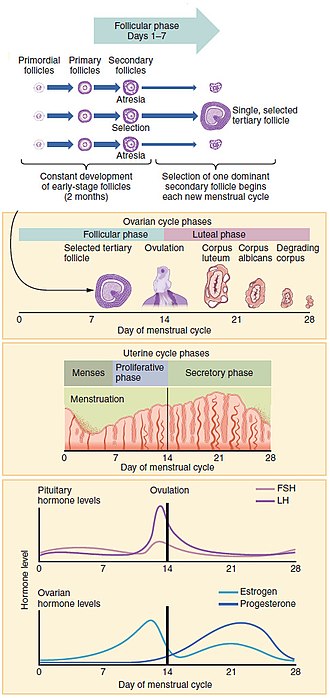
Progression of the menstrual cycle and some of the hormones contributing to it

An ovary about to release an egg

The anatomy of the uterus

During the menstrual cycle, levels of estradiol (an estrogen) vary by 200 percent. Levels of progesterone vary by over 1200 percent.[52]

A human primary ovarian follicle viewed by microscopy. The round oocyte stained red in the center is surrounded by a layer of granulosa cells, which are enveloped by the basement membrane and theca cells. The magnification is around 1000 times. (H&E stain)
🤓 Hormonal Regulation
Hormones are chemicals in our bodies that help control lots of important processes, including the menstrual cycle. The main hormones involved are estrogen and progesterone. 🤓At the beginning of the cycle, estrogen helps to build up the uterine lining. During ovulation, a surge in hormones causes the egg to be released. Afterwards, progesterone helps maintain the uterine lining in case the egg is fertilized. If a pregnancy doesn’t happen, hormone levels drop, and the cycle starts again! These hormonal changes are crucial for the menstrual cycle to work properly! 🌈
Go deeper🥺 Menstrual Disorders
Sometimes, people can experience menstrual disorders, which can make their periods irregular or painful. 🥺Examples include conditions like Polycystic Ovary Syndrome (PCOS) and Endometriosis. PCOS can cause irregular periods and hormone imbalances, while Endometriosis involves tissue similar to the uterus lining growing outside of it, leading to pain. If someone experiences severe pain or unusual cycles, it’s important to talk to a doctor. With help and support, many people can manage these disorders and lead healthy lives! Remember, you’re not alone in this! 🌼
Go deeper🍎 Menstruation And Health
Menstruation is a natural part of many people’s lives, and it can also be an important indicator of health! 🍎Regular periods can mean that the body is healthy, but irregular or painful cycles may signal a need for a doctor’s help. Tracking your cycle can help you notice any changes and understand your body better. Eating nutritious foods, exercising, and managing stress can help maintain a healthy cycle. Remember, it’s always good to talk to adults or healthcare professionals about any concerns regarding menstruation and health! ❤️
Go deeper🌍 Menstrual Cycle Variability
Did you know that every person's menstrual cycle is unique? 🌍Some people have cycles that last 21 days while others might have cycles that last 35 days or more. This is normal! Factors like age, health, and even stress can affect the length of the cycle. Girls often have irregular cycles when they first start menstruating, but they usually become more regular over time. Also, some days can feel different; some may feel tired, and others can feel energetic! Embracing these differences is important for understanding our bodies! ✨
Go deeper🌼 Phases Of The Menstrual Cycle
The menstrual cycle has four main phases which are: the menstrual phase, follicular phase, ovulation, and luteal phase. 🌼The menstrual phase is when menstruation occurs and the body sheds the uterine lining. During the follicular phase, the body prepares for ovulation and small sacs in the ovaries called follicles mature. Then, ovulation occurs when an ovum (egg) is released from the ovary and is ready to meet a sperm. Lastly, in the luteal phase, the body gets ready for pregnancy by thickening the uterine lining again! Each phase plays a key role in a healthy cycle. 🎉
Go deeper🤗 Physical Symptoms And Changes
During the menstrual cycle, your body goes through many physical changes! 🤗Some common symptoms include abdominal cramps, breast tenderness, and mood swings. Many people also experience bloating, fatigue, or headaches. The reasons for these feelings stem from hormonal changes and the shedding of the uterine lining. It’s good to talk about how you feel with someone you trust because it helps us understand that these changes are normal! Activities like gentle exercise and staying hydrated can help ease some of these symptoms. 🚴♀️
Go deeper🌏 Cultural Perspectives On Menstruation
Many cultures around the world have different traditions and beliefs about menstruation. 🌏In some societies, it's celebrated as a sign of growing up and becoming women, while others might consider it a taboo topic! For example, in some parts of India, there are special ceremonies for girls when they first get their periods. On the other hand, some cultures might restrict activities during menstruation. Understanding these perspectives helps us respect and learn from each other, as all cultures have their unique ways of celebrating this important life process! 🎊
Go deeper🌿 Menstrual Products And Sustainability
There are different products people use during their periods, such as pads, tampons, and menstrual cups. 🌿Pads and tampons are disposable, but they can create a lot of waste. Menstrual cups, however, are reusable and can be more environmentally friendly! 🌎Many companies are now focusing on making eco-friendly products to help reduce waste. It's important to find a product that feels comfortable and suits an individual's needs. By choosing sustainable options, we can help take care of our planet while taking care of ourselves! 🌍
Go deeper🏃♀️ Impact Of Lifestyle On The Menstrual Cycle
Did you know that your lifestyle choices can affect your menstrual cycle? 🏃♀️ Things like diet, sleep, and exercise play an important role! Eating healthy foods with lots of fruits and vegetables can help keep your body balanced. Getting enough sleep and staying active can also reduce symptoms during menstruation. On the contrary, stress can lead to irregularities, so finding ways to relax, like reading or spending time with friends, is essential! Every positive change can support a healthy cycle and make you feel better overall! 🌻
Go deeper