Magadha Facts For Kids
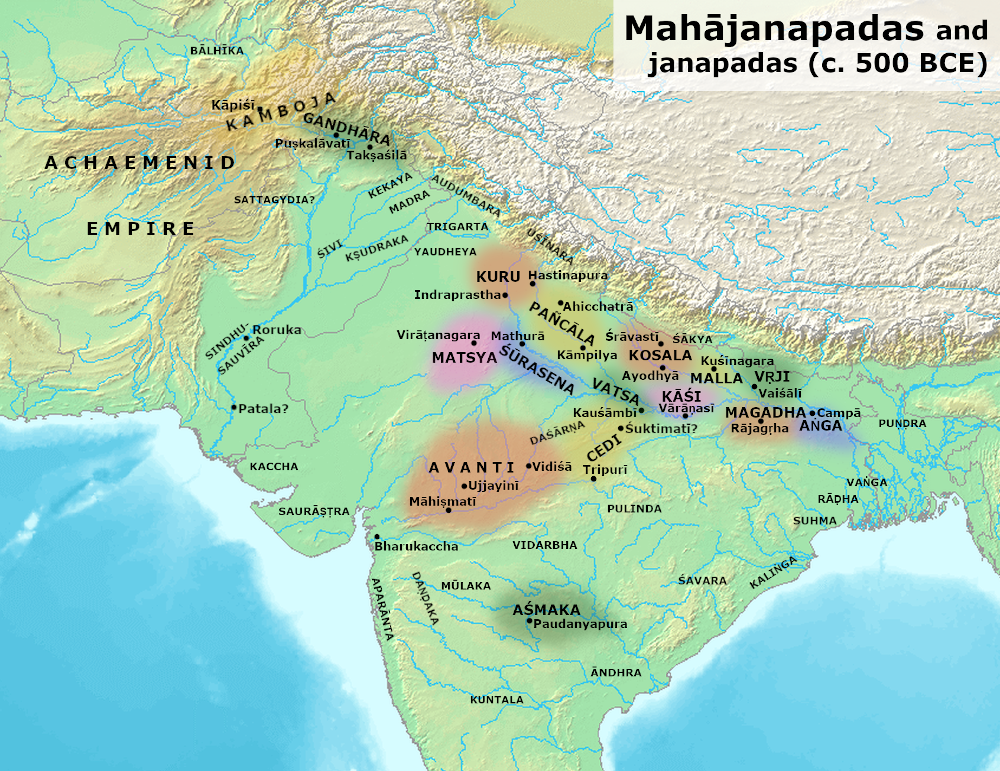
Magadha was a significant region in ancient India known for its rich cultural, political, and historical legacy, particularly as a center for Buddhism and Jainism during the Second Urbanization period.
Select reading age
Magadha Facts For Kids
Videos & Quizzesincluded
About this topic
Magadha was an ancient kingdom in India 🕌, located in the northeastern part of the country. It is famous for being one of the sixteen Mahajanapadas, which were large regions during the Second Urbanization period around 600 BCE. Its capital city, Pataliputra (modern-day Patna), was an important center for trade and culture. There, kings ruled, scholars studied, and people lived together in harmony. The kingdom is known for its contributions to philosophy, art, and science. Magadha was not just a place but a melting pot of fascinating ideas and rich history that shaped ancient India! 🇮🇳✨
Explore with ChatDinoKey Points
The economy of Magadha was thriving, mainly based on agriculture 🌾.
Several influential rulers shaped the history of Magadha 🌟.
Magadha was involved in several significant wars and conflicts throughout its history ⚔️.
The culture of Magadha was rich and diverse 🎨.
Magadha has a long and exciting history!
Magadha was an important center for religion and philosophy 🧘♂️.
Many fascinating archaeological discoveries have been made in Magadha!
Magadha's legacy continues to influence modern India!
Magadha had a strong political system with kings ruling over the kingdom 👑.
Magadha is located in the eastern Ganges Plain, mainly in today's Bihar state 🌿.
Photos of Magadha


Magadha — photo 6

Location of Bihar in India.

Cyclopean Wall of Rajgir which encircled the former capital of Magadha, Rajgir. Among the oldest pieces of cyclopean masonry in the world

Archer type coinage of King Mahasenagupta of the Later Gupta dynasty, c. 6th century CE
🌾 Economy And Trade
The economy of Magadha was thriving, mainly based on agriculture 🌾. Farmers grew rice, wheat, and various fruits. The fertile soil provided plenty of food, enabling people to trade their crops for goods from other regions. Magadha's strategic location along trade routes connected it to the broader world, leading to increased commerce. Markets bustled with traders exchanging spices, textiles, and precious stones 💎. The kingdom also minted its coins, making transactions easier. This well-balanced economy helped the people of Magadha advance in art, literature, and science, making their society flourish.
Go deeper🌟 Influential Rulers
Several influential rulers shaped the history of Magadha 🌟. King Bimbisara (c. 543-491 BCE) was the first and expanded the kingdom through clever alliances. His son, Ajatshatru, was known for his military strategy and grew Magadha’s influence. Later, Chandragupta Maurya established the Maurya Empire and united much of northern India. His grandson, Ashoka (c. 268-232 BCE), is remembered for his efforts in promoting Buddhism and his famous edicts inscribed on rocks across India 📜. These rulers played essential roles in Magadha's political, cultural, and spiritual legacy and contributed to ancient India's rich history.
Go deeper⚔️ Wars And Conflicts
Magadha was involved in several significant wars and conflicts throughout its history ⚔️. King Bimbisara expanded the kingdom by conquering neighboring territories, while his son Ajatshatru fought battles against the Licchavis. The most famous conflict was during the rise of the Maurya Empire, when Chandragupta Maurya defeated the Nanda dynasty, establishing his rule in Magadha. Ashoka, known for his conversion to Buddhism, fought many bloody battles before embracing non-violence and promoting peace. These conflicts shaped Magadha’s power dynamics and political landscape, ultimately making it one of the most influential kingdoms in ancient India.
Go deeper🎨 Culture And Society
The culture of Magadha was rich and diverse 🎨. People from various backgrounds lived there, including farmers, traders, and scholars. The society was well-known for its art, music, and dance. Festivals were lively events where people celebrated with food, games, and performances 🎉. The famous Nalanda University, a suitable place for learning, was in Magadha and attracted students from all over Asia. Writers and poets thrived here, creating inspiring works of literature. The culture of Magadha laid the groundwork for many aspects of Indian heritage we appreciate today!
Go deeper📜 Historical Timeline
Magadha has a long and exciting history! 📜It became an important kingdom around the 6th century BCE. During this time, King Bimbisara was one of its famous rulers who expanded the kingdom's territory. Later, his son, Ajatshatru, ruled and fought against other states. In the 3rd century BCE, Magadha became part of the Maurya Empire, led by Chandragupta Maurya and his grandson, Ashoka the Great. Ashoka is famous for spreading Buddhism, which encouraged peace and kindness 🌼. Through these events, Magadha held a pivotal role in shaping the history of ancient India.
Go deeper🧘♂️ Religion And Philosophy
Magadha was an important center for religion and philosophy 🧘♂️. It was home to many great thinkers like Gautama Buddha, who taught about kindness and compassion. Buddhism flourished in Magadha, with many temples and stupas built to honor the Buddha. The teachings emphasized values like peace and helping others. Jainism, another ancient religion, also found a strong base here with its focus on non-violence and truth. The coexistence of these faiths created a vibrant religious atmosphere, encouraging people to explore different beliefs while promoting harmony and understanding ❤️.
Go deeper🏺 Archaeological Discoveries
Many fascinating archaeological discoveries have been made in Magadha! 🏺Excavations in Pataliputra revealed ancient structures, pottery, and coins that provide insights into life during that time. The ruins of Nalanda University showcase impressive architectural designs, including monasteries and lecture halls. Archaeologists also found Ashoka's edicts carved in stones, which articulate his commitment to peace and compassion 🌍. These discoveries help us understand the beliefs, culture, and daily lives of the people who lived in Magadha, providing a clearer picture of this important ancient kingdom's legacy.
Go deeper🔬 Legacy And Historical Significance
Magadha's legacy continues to influence modern India! 🇮🇳 The kingdom played a vital role in the spread of Buddhism, with many teachings still relevant today. The establishment of Nalanda University created a model for higher education, inspiring institutions around the world. Magadha's rulers and their governance systems influenced Indian politics, teaching the importance of leadership and administration. Additionally, the rich cultural heritage of Magadha has left lasting impacts on art, literature, and philosophy. Today, Magadha's historical significance is celebrated, reminding us of its contributions to shaping ancient civilization.
Go deeper👑 Political Structure And Governance
Magadha had a strong political system with kings ruling over the kingdom 👑. The most important rulers were from the Shishunaga and Maurya dynasties. These kings made laws, collected taxes, and protected their people. They also had advisers and ministers to help them govern. The kingdom was divided into provinces to manage different areas better 📍. Magadha was known for its cavalry and infantry, ensuring a powerful military. With strong leadership and well-organized governance, Magadha flourished and became a significant state during ancient times.
Go deeper🌿 Geographical Location And Resources
Magadha is located in the eastern Ganges Plain, mainly in today's Bihar state 🌿. It is surrounded by the rivers Ganges, Son, and Punpun, which provided fresh water and fertile land for farming. The soil was great for growing rice, peas, and grains 🌾. Magadha's location made it a trade hub, connecting people to regions like Gandhara, Kalinga, and Avanti. Natural resources like iron and forests offered materials for tools and housing 🛠️. Overall, the geography of Magadha helped make it a prosperous and significant place in ancient India!
Go deeper