Letter Of Credit Facts For Kids
A Letter of Credit is a payment mechanism used in international trade to guarantee payment from a bank to an exporter once specific terms are met.

Do more with AI
Introduction
Imagine you're trading baseball cards with a friend. You want to make sure that when you give them your rare card, they will give you their card in return! A Letter of Credit (LOC) works like that but in the world of money and trade. 🌍💵 It helps businesses make sure they will get paid when they sell things to other countries. This special document comes from a bank and tells the seller, “Don't worry! We’ll pay you if the buyer doesn’t.” It helps keep trade fair and safe, making big purchases much easier!
Images of Letter Of Credit

Illustrates the intersection of supply and demand curves as the free market equilibrium

Image 2: The seller consigns the goods to a carrier in exchange for a bill of lading.

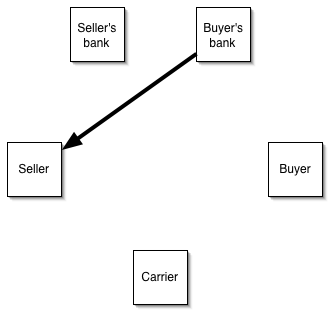
Image 3: The seller provides the bill of lading to the bank in exchange for payment. The seller's bank then provides the bill to buyer's bank, who provides the bill to buyer for presentation.

Image 4: The buyer provides the bill of lading to the carrier and takes delivery of the goods.
How Letters Of Credit Work
When a buyer and a seller agree on a deal, the buyer asks their bank to create a Letter of Credit. 📄💌 Then, the bank sends it to the seller’s bank. This tells the seller, “Don’t worry! You’ll get your money if you send the goods!” When the seller ships the goods, they provide the right documents to their bank. ✅The seller's bank checks everything and sends it to the buyer's bank. If everything looks good, the buyer's bank pays the seller’s bank, and then the seller finally gets their money. Hooray!
Types Of Letters Of Credit
There are different types of Letters of Credit, just like different types of ice cream! 🍦One common type is called a “Revocable Letter of Credit,” which means it can be changed or canceled at any time. Another type is “Irrevocable,” which means once it’s agreed upon, it can’t be changed. There’s also something called “Confirmed” letters, where another bank helps ensure the payment will happen. Lastly, there are “Standby Letters,” used mostly as a backup, like keeping an umbrella for a rainy day. ☔Each type helps in various trading situations!
What Is A Letter Of Credit?
A Letter of Credit is a promise from a bank to pay someone for goods or services. It’s like getting a special pinky promise! 🤞This promise is usually made in international trade, where two people might live in different countries. For example, if a company in the USA wants to buy shoes from a company in Italy, they can use a Letter of Credit. It assures the Italian seller that they will get paid if they send the shoes. That way, both sides can trust each other and make the trade happen smoothly!
Components Of A Letter Of Credit
A Letter of Credit has several important parts, just like a sandwich has bread and filling! 🍞🍗 First, it includes the buyer's name and bank information. Next, it has details about the seller, or the person getting paid. The LOC also describes what goods are being traded, like how many shoes or toys are included! It tells when the payment will be made and how much the cost is. Lastly, it includes instructions on what documents the seller needs to provide to get paid. All these parts work together to keep everything clear and fair!
Benefits Of Using A Letter Of Credit
There are many benefits to using a Letter of Credit! 🎉First, it acts like a safety net for both the buyer and seller. If the buyer doesn’t pay, the bank will! It also helps build trust, which is super important in trade. 🛍️ Furthermore, it allows sellers to receive payments more quickly since banks handle the processing. This makes business deals smoother! Lastly, it helps reduce risks of fraud because everything is documented. So, using a Letter of Credit is a clever way to make sure trading goes well for everyone!
Regulations Governing Letters Of Credit
Different countries have rules to manage how Letters of Credit work. 🏛️ One famous set of rules is called the Uniform Customs and Practice for Documentary Credits (UCP). It was made by the International Chamber of Commerce (ICC) in Paris, France! 🇫🇷 This organization helps ensure that everyone around the world understands how Letters of Credit should be used. These regulations help make trading safer and easier for people. Because of these rules, businesses can trust that their Letters of Credit will work even when trading from far distances!
Risks Associated With Letters Of Credit
Even though Letters of Credit are helpful, there are some risks involved! 😟Sometimes, the buyer or seller might not follow the rules. If the seller doesn’t provide the correct documents, they might not get paid, even if they sent the goods! Also, if a bank goes out of business, the promised payments can be lost. ⚠️ Additionally, currency exchange rates can change the amount that needs to be paid, which can make things confusing. It’s important for everyone involved to be careful and follow the rules to avoid these risks!
Importance Of Letters Of Credit In Trade
Letters of Credit are super important in trade because they help build trust between buyers and sellers! 🤝When a seller knows they will get paid for their goods, they feel safe sending items far away. It helps businesses work together, even if they’re in different countries, like Japan or Brazil! 🌏Plus, Letters of Credit help reduce the risk of losing money. So, they play a big part in making sure that people can trade goods like toys, clothes, and food around the world without worry!
Common Misconceptions About Letters Of Credit
Many people have some misconceptions about Letters of Credit! One common myth is that a Letter of Credit means the buyer always pays! 🚫But remember, it’s the bank that guarantees payment. Another misconception is that a Letter of Credit guarantees the quality of goods. Even if the payment goes through, the goods still may not be what was expected! 😲Lastly, people think letters of credit are only for giant businesses, but even small companies can use them. Understanding these myths can help everyone have better knowledge of Letters of Credit! 🧠✨
Letter Of Credit Quiz
Learn more about Letter Of Credit
