Leafcutter Bee Facts For Kids
Leafcutter bees are solitary, effective pollinators known for their unique behavior of cutting leaves to construct nests.
Select reading age

Leafcutter Bee Facts For Kids
Videos & Quizzesincluded
About this topic
Leafcutter bees are fascinating insects, famous for their unique way of building nests! 🐝These tiny builders can be found all over the world, especially in North America and South America. They are usually around 1 to 2 centimeters long and often have shiny bodies with black and yellow stripes. Leafcutter bees get their name because they cut leaves to make their nests cozy! These bees are very important for our environment as they help pollinate flowers, allowing plants to grow and produce fruits. 🌼🍎
Explore with ChatDinoKey Points
Leafcutter bees are great foragers and primarily feed on nectar and pollen from flowers.
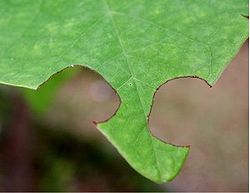
Leafcutter bees have strong jaws that help them cut leaves and flower petals.
Leafcutter bees are not currently considered endangered, but they face threats like habitat loss and pesticide use.
Did you know that leafcutter bees are super strong for their size?
Leafcutter bees are found in diverse habitats, from gardens to forests!
Leafcutter bees have an interesting life cycle!
Unlike honeybees, leafcutter bees are solitary creatures, meaning they like to live alone.
Leafcutter bees play a crucial role in our ecosystem!
Photos of Leafcutter Bee

Leafcutter Bee — photo 1

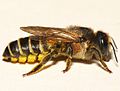
Leafcutter bee, garden, Stuttgart, Germany. Thanks to the members of Entomologie.de for the identification.
Leafcutter Bee — photo 3

Leafcutter Bee — photo 4

Leafcutter Bee — photo 5

Leafcutter Bee — photo 6

Leafcutter Bee — photo 7
Leafcutter Bee — photo 8
🌻 Diet And Foraging
Leafcutter bees are great foragers and primarily feed on nectar and pollen from flowers. 🌻They mainly visit blooming bushes and flowering trees like clovers, sunflowers, and alfalfa. Once they collect pollen and nectar, they take it back to their nests. The bees eat pollen for protein, which helps them stay strong, while nectar is their energy source. 🌼Pollen is also essential for baby bees (larvae) as it helps them grow big and healthy before entering the next stage of life!
Go deeper🪴 Biology And Anatomy
Leafcutter bees have strong jaws that help them cut leaves and flower petals. 🪴Their bodies are covered with tiny hairs that collect pollen, which they use to feed their babies. They have two pairs of wings and six legs, making them agile flyers. Leafcutter bees also have a special way of carrying pollen on their hind legs, forming little "pollen baskets." They are quite different from honeybees, as they do not live in big hives; instead, they create individual nests, usually in hollow tubes or the ground. 🐝✨
Go deeper🌱 Conservation Status
Leafcutter bees are not currently considered endangered, but they face threats like habitat loss and pesticide use. 🌱Many species of bees are struggling due to the destruction of their natural homes, like woods and meadows. To help protect them, we can plant flowers in our gardens and avoid using harmful chemicals. 🌻Additionally, many people are educating themselves on bee conservation! By creating safe environments and supporting local beekeepers, we can ensure species like the leafcutter bee continue to thrive for years to come. 🐝🌈
Go deeper💪 Fun Facts And Myths
Did you know that leafcutter bees are super strong for their size? 💪They can carry up to three times their weight in pollen and leaves! Another fun fact is that these bees are great at recognizing colors, which helps them find the best flowers. 🌈Many people think all bees can sting, but leafcutter bees are gentle and rarely sting unless threatened. Additionally, some cultures believe that leafcutter bees bring good luck because they help flowers bloom, and plenty of blooms mean good fortune! 🍀✨
Go deeper🌳 Habitat And Distribution
Leafcutter bees are found in diverse habitats, from gardens to forests! 🌳They prefer warm climates but can be spotted in cooler regions too. Some common places to find them include North America, South America, and even parts of Europe and Asia. Leafcutter bees like areas with plenty of flowers since they need lots of pollen. You’ll often see them buzzing around gardens or parks during the spring and summer when flowers are blooming! 🌼🌺
Go deeper🐣 Reproduction And Life Cycle
Leafcutter bees have an interesting life cycle! 🐣After mating in late spring or early summer, female bees search for the perfect location to build their nests. They create small chambers and lay eggs inside, along with pollen and nectar for the larvae to eat. The eggs hatch in a few weeks, and baby bees (larvae) grow by munching on the stored food. After a few months, they become pupae and eventually emerge as adult bees in spring to start the cycle all over again! 🌱🐝
Go deeper🏠 Behavior And Social Structure
Unlike honeybees, leafcutter bees are solitary creatures, meaning they like to live alone. 🏠Each female bee builds and tends to her own nest. They cut leaves into small pieces and use them to line their nest chambers. After laying eggs, they fill the chambers with pollen for their young. Male leafcutter bees don't help raise the young; they focus on mating! Sometimes, you might find several nests close together, but each bee works independently, creating their own home. 🐝💜
Go deeper🌍 Ecological Role And Importance
Leafcutter bees play a crucial role in our ecosystem! 🌍They are excellent pollinators, helping many plants produce fruits and seeds. Just like honeybees, they carry pollen from one flower to another, making it easier for plants to grow. This helps ensure we have food to eat, like fruits and vegetables. 🍏🥕 Without these busy bees, many plants wouldn't thrive, and our environment would be less colorful and vibrant! So, the next time you see a buzzing bee, remember how important it is to nature! 🌼❤️
Go deeper