Leafcutter Ant Facts For Kids
Leafcutter ants are highly social insects known for their remarkable behavior of cutting and transporting leaves to cultivate fungus, which serves as their primary food source.
Select reading age
Leafcutter Ant Facts For Kids
Videos & Quizzesincluded
About this topic
Leafcutter ants are fascinating insects found mainly in the Americas. 🌎These tiny gardeners can be spotted in tropical and subtropical regions, from Texas down to Argentina. With over 47 different species, leafcutter ants are known for their unique habit of cutting leaves to feed their fungus farms! 🍃🐜 These hardworking ants usually carry pieces of leaves that are much larger than themselves. They are social insects living in large colonies that can number in the millions. Leafcutter ants help keep their ecosystems healthy, and they have some pretty impressive teamwork skills! 💪✨
Explore with ChatDinoKey Points
Leafcutter ants are like little farmers!
Leafcutter ants play a very important role in their ecosystems!
Leafcutter ants are small but have some cool ways to defend themselves!
Leafcutter ants are known for their strong jaws that they use to cut through tough leaves.
Leafcutter ants are generally common, and most species are not at risk.
Leafcutter ants live in warm, humid places like rainforests and savannas.
Foraging for food is a big job for leafcutter ants!
Leafcutter ants are super social!
Photos of Leafcutter Ant

Atta colombica, queen with larvae and workers on substrate

Leafcutter ant Atta cephalotes

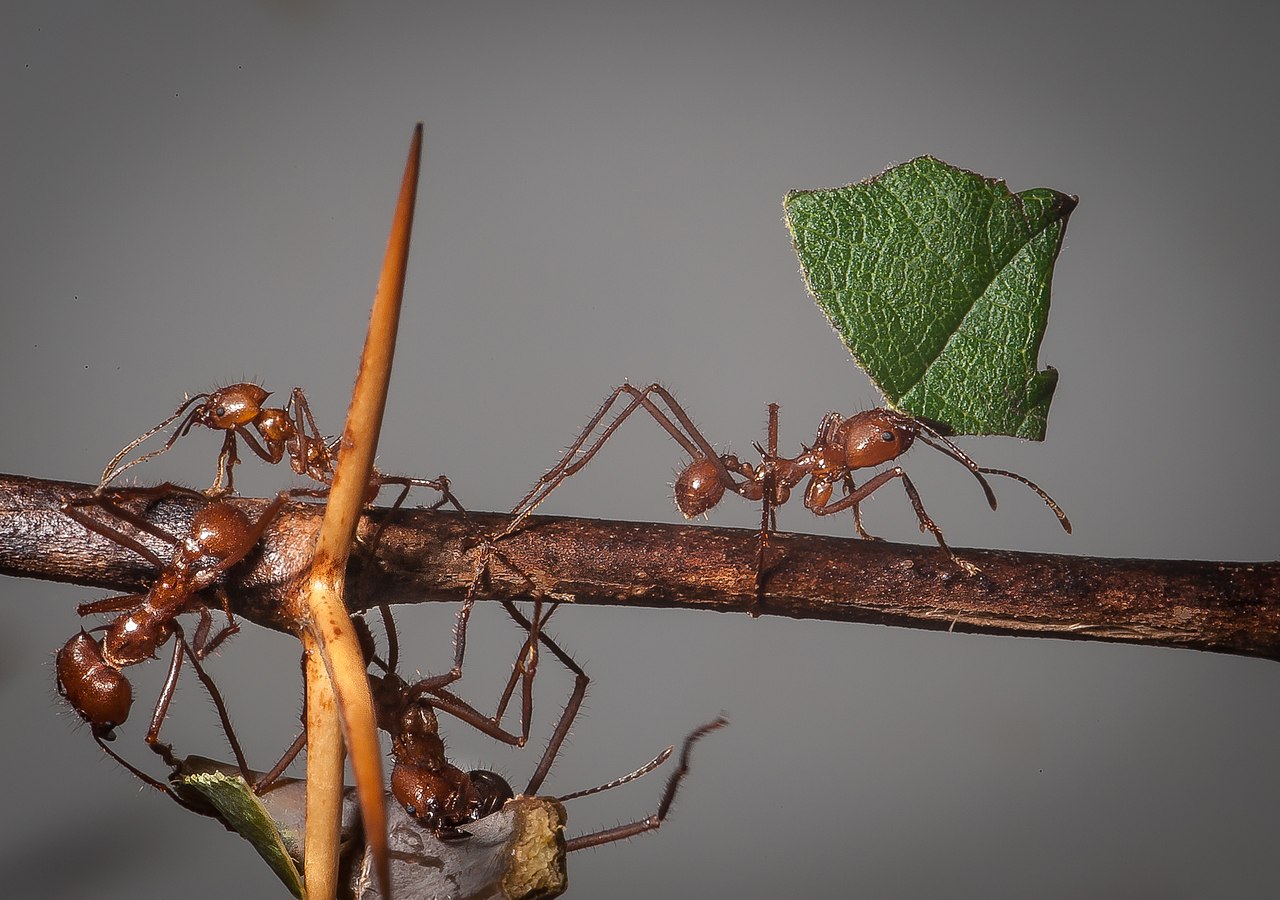
Workers of Atta colombica at work

Leafcutter ant in Costa Rica
🌱 Fungus Farming
Leafcutter ants are like little farmers! 🌱They don't eat the leaves they collect; instead, they use them to grow fungus. The ants cut bits of leaves and bring them back to their underground gardens. Once there, they chew the leaves until they become a mushy paste. 💧This paste is perfect for growing the fungus! The ants take care of the fungus by keeping it clean and providing it with nutrients. 🍄The fungus is their main food source, and it’s a great example of teamwork between the ants and their crops. It's a special relationship that helps both thrive!
Go deeper🌍 Ecological Impact
Leafcutter ants play a very important role in their ecosystems! 🌍They help break down leaves and plant material, turning them into nutrient-rich soil. This soil benefits plants by making them healthier and helping them grow. 🌿Their fungus farming also has a huge impact, as they create food sources for other animals that rely on the fungus. Additionally, by harvesting leaves, they help manage plant growth, preventing one type from dominating an area. This diversity keeps the environment balanced, showing how even small creatures can make a big difference!
Go deeper🕷️ Defense Mechanisms
Leafcutter ants are small but have some cool ways to defend themselves! 🕷️ Soldier ants have big jaws (called mandibles) that help protect the colony from predators, like lizards or other insects. 🦖They stand guard at the entrance of their nest, ready to fight to keep their home safe. One clever tactic they use is forming a barricade with their bodies to block intruders. 🔒Also, some species of leafcutter ants secrete a substance that smells bad to scare off enemies. They are always on alert and work as a team to ensure that their colony remains secure!
Go deeper🦷 Biology And Anatomy
Leafcutter ants are known for their strong jaws that they use to cut through tough leaves. 🦷Their bodies are divided into three parts: the head, thorax, and abdomen. The head contains large mandibles (jaws) that help them carry leaves. 🏋️♀️ They also have a pair of compound eyes that help them see what's around them. Most leafcutter ants are about 1 to 3 centimeters long, but their size can vary. Their coloring is usually a mix of brown and green, which helps them camouflage in their environment. 🎨Did you know they have tiny hairs on their bodies that can detect smells? This helps them communicate with each other!
Go deeper✅ Conservation Status
Leafcutter ants are generally common, and most species are not at risk. ✅However, some habitats where they live are being threatened by human activity, such as deforestation and urban development. 🌳🏙️ Protecting their natural homes is important so that these amazing insects can continue their unique fungus farming and ecological contributions. Many scientists are studying their behavior and habitats to better understand how to help them. 🧑🔬 Conservation efforts include planting more trees and protecting rainforests, which will help leafcutter ants maintain their populations for years to come! 🛡️
Go deeper🌴 Habitat And Distribution
Leafcutter ants live in warm, humid places like rainforests and savannas. 🌴☀️ You can find them in countries like Brazil, Colombia, and Ecuador. They make their homes underground, creating complex tunnel systems that can be hundreds of feet deep! 🏞️ In these subterranean cities, they store leaves and cultivate their special fungus, which they eat. The warm climate is perfect for growing both the fungus and the ants! In fact, their colonies can house millions of ants working together, creating a bustling underground community! 🐜🏠
Go deeper🌿 Foraging And Food Sources
Foraging for food is a big job for leafcutter ants! 🌿When they go out to find leaves, they are incredibly organized. Workers take turns exploring for new leaves, focusing on specific plants like clover and wildflowers. 🍀Once they find a good spot, they cut pieces of leaves and carry them back to the colony. It can take many ants to move one big leaf, showcasing their teamwork! They also harvest other plants and fungi. The workers have strong senses that help them find food quickly. 🍽️ Each day, leafcutter ants can carry many times their own body weight in leaves!
Go deeper🤝 Social Structure And Behavior
Leafcutter ants are super social! 🤝They live in huge colonies with a well-organized social structure. There are three main groups: queen ants, worker ants, and soldier ants. The queen is the colony's leader and lays all the eggs. 👑Worker ants are responsible for gathering leaves and taking care of the young ants. Soldier ants have large jaws and protect the colony from dangers. 🛡️ Each ant has a specific job, showing excellent teamwork! They communicate through pheromones (special smells) to tell others where food is or if there’s danger nearby. Together, they build an amazing community!
Go deeper