Lanthanum Facts For Kids
Lanthanum is a rare earth metal known for its various applications in industries such as electronics, glass manufacturing, and energy storage.
Select reading age
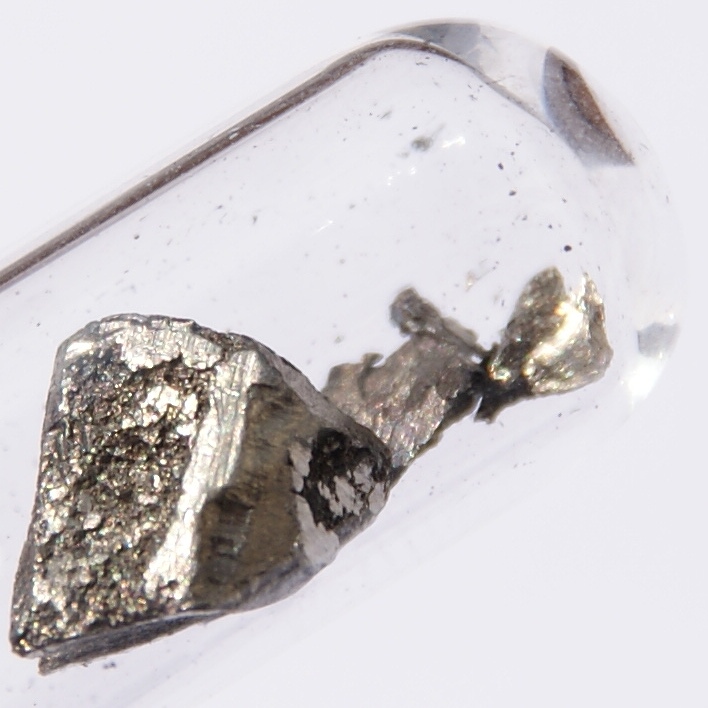
Lanthanum Facts For Kids
Videos & Quizzesincluded
About this topic
Lanthanum is a shiny, silver-white metal that belongs to the rare earth elements group 🌌. It was discovered in 1839 by a Swedish chemist named Johan Gadolin. Lanthanum is used in many cool things, such as cameras and televisions 📺. It helps make better lenses and improves the image quality! Lanthanum is represented by the symbol La and has the atomic number 57 📊. This means it has 57 protons in its nucleus. It can be found in nature, mainly in a mineral called monazite, which is mostly made up of phosphate.
Explore with ChatDinoKey Points
Lanthanum doesn't play a big role in the human body like common elements, but it is fascinating!
Lanthanum has some interesting chemical properties!
Lanthanum is a solid metal at room temperature 🌡️.
While lanthanum is not highly toxic, it's still important to handle it safely ⚠️.
Lanthanum is used in many amazing ways!
The story of lanthanum started in the 19th century!
Lanthanum is extracted mainly from a mineral known as monazite, which contains many rare earth elements 🏞️.
Lanthanum has several isotopes, which are forms of lanthanum with different numbers of neutrons 🌌.
Photos of Lanthanum

Excerpt from the chart of nuclides showing stable isotopes (black) from barium ( Z = 56 ) to neodymium ( Z = 60 )

Carl Gustaf Mosander, the scientist who discovered lanthanum as well as terbium and erbium

LaB6 hot cathode

Hexagonal crystal structure.

Production of Lanthanum from Monazite sand
🌱 Biological Role
Lanthanum doesn't play a big role in the human body like common elements, but it is fascinating! 🌱Scientists study how it might affect cells and bodily functions. In very small amounts, some researchers believe lanthanum could help in medical tests and treatments for certain conditions. However, it’s not essential for life like oxygen or carbon 🌬️. Animals have been shown to absorb lanthanum when they come into contact with it, but we still need to learn more about its overall effects on living organisms.
Go deeper🔧 Chemical Properties
Lanthanum has some interesting chemical properties! It reacts easily with oxygen and moisture, forming a white oxide coating. This means it can rust like iron 🔧! Lanthanum can also react with acids, releasing hydrogen gas 💨. In its pure form, lanthanum is soft and can be cut with a knife. Its atomic structure shows that lanthanum has three main electrons in its outer shell, making it a good conductor of electricity. This property is useful in many electronics, helping them to work better.
Go deeper🌡️ Physical Properties
Lanthanum is a solid metal at room temperature 🌡️. It has a melting point of about 920°C (1,688°F), which means it’s quite heat-resistant. When you look at it, lanthanum has a shiny, silver color that makes it very reflective 🌟. It's not very dense, meaning it isn't as heavy as some other metals. The density of lanthanum is about 6.15 grams per cubic centimeter, which is lighter than iron! This makes it easy to shape and use in different products, like tools and electronic devices.
Go deeper⚠️ Safety And Handling
While lanthanum is not highly toxic, it's still important to handle it safely ⚠️. People working with lanthanum in labs should wear gloves, goggles, and masks to protect themselves from dust and particles. Avoid breathing in lanthanum dust, as it can cause irritation. It's also a good idea to store lanthanum in a dry place since it reacts with moisture. By being careful, we can safely enjoy the benefits of lanthanum in our lives! 🌟
Go deeper📸 Applications And Uses
Lanthanum is used in many amazing ways! One of its most important uses is in making high-quality camera lenses, helping to create clear and sharp pictures 📸. It's also found in some types of batteries used in electric cars 🚗. Lanthanum is important in creating glass that helps to magnify images, such as in microscopes 🔬. In addition, lanthanum is used in catalysts for refining oil, which helps convert crude oil into gasoline! This shows how lanthanum helps with technology and everyday life.
Go deeper🏞️ History And Discovery
The story of lanthanum started in the 19th century! In 1839, Johan Gadolin found it while studying a mineral called gadolinite 🏞️. Lanthanum was the first element discovered in the rare earth family. Later, in 1842, another chemist, Robert Bunsen, helped to separate lanthanum from other elements. The name "lanthanum" comes from the Greek word "lanthanein," which means "to be hidden," because it was hard to find 😊. Lanthanum does not exist as a free element in nature, which makes its discovery even more special!
Go deeper🏞️ Extraction And Processing
Lanthanum is extracted mainly from a mineral known as monazite, which contains many rare earth elements 🏞️. The process of extracting lanthanum usually involves crushing the ore and using chemical methods like acid leaching. Once it's separated from other elements, lanthanum is processed into a purer form that can be used in various applications. It's important to carefully control this process to ensure high-quality lanthanum is produced 🎉.
Go deeper🌌 Isotopes And Nuclear Properties
Lanthanum has several isotopes, which are forms of lanthanum with different numbers of neutrons 🌌. The most stable one is lanthanum-138, which is the most commonly found isotope in nature. Isotopes like lanthanum-137 can also be created in labs and are sometimes used in scientific research. Lanthanum doesn’t have any known nuclear properties that are used in nuclear reactors, but it does play a role in making certain types of specialized lasers 🔬.
Go deeper