Krakatoa Facts For Kids
Krakatoa is a caldera in the Sunda Strait between Java and Sumatra, Indonesia, known for its catastrophic eruptions and the formation of a new volcanic island.
Select reading age

Krakatoa Facts For Kids
Videos & Quizzesincluded
About this topic
Krakatoa, also called Krakatau, is a famous volcano located in the Sunda Strait, between the islands of Java and Sumatra in Indonesia. 🇮🇩 It is known for its shape, which looks like a giant bowl. The volcano rises about 813 meters (2,671 feet) above sea level! 🌋Krakatoa is special because it has a caldera, which is a big hole formed when a volcano explodes. This volcano is not just a mountain; it is an important part of our planet!
Explore with ChatDinoKey Points
After the 1883 eruption, Krakatoa had a huge impact on the climate.
The 1883 eruption of Krakatoa was a tremendous event!
Krakatoa's geological history is fascinating!
After the eruption of 1883, life slowly returned to Krakatoa!
Krakatoa is not only a natural wonder but also an important part of Indonesian culture!
Krakatoa is surrounded by other exciting volcanoes in the region!
Many brave tourists visit Krakatoa each year!
Scientists closely monitor Krakatoa because it is still an active volcano!
Krakatoa has taught scientists a lot about volcanoes!
Photos of Krakatoa

The Sunda Strait
![Simon Winchester maintains that the 1680 eruption was depicted in this eighteenth-century Dutch etching.[23]](https://upload.wikimedia.org/wikipedia/commons/thumb/5/5a/AMH-8034-KB_View_of_Gunung_Api.jpg/960px-AMH-8034-KB_View_of_Gunung_Api.jpg)
Simon Winchester maintains that the 1680 eruption was depicted in this eighteenth-century Dutch etching.[23]

Krakatoa — photo 3

Krakatoa — photo 4

Two-thirds of the original Krakatoa Island was obliterated by the 1883 eruption.
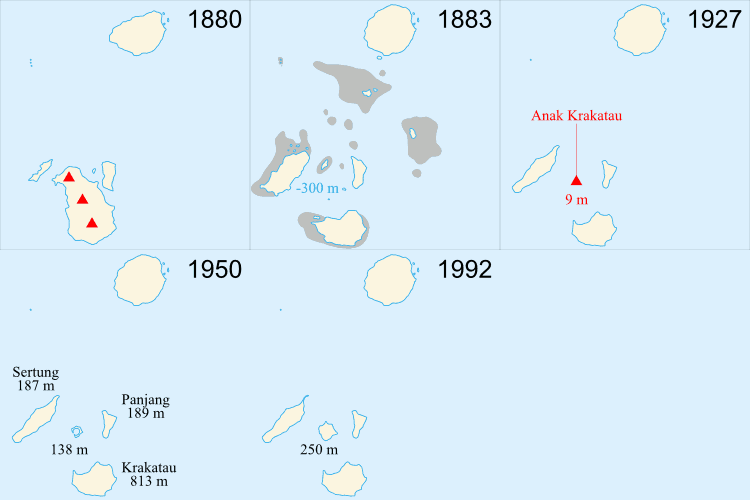
Evolution of the Krakatoa archipelago from 1880 to 2018. Note the continuing growth of Anak Krakatoa ("Child of Krakatoa") after 1927.
![In 2004, an astronomer suggested that the blood-red sky shown in Edvard Munch's famous 1893 painting The Scream depicts the sky over Norway after the eruption.[43]](https://upload.wikimedia.org/wikipedia/commons/thumb/f/f4/The_Scream.jpg/960px-The_Scream.jpg)
In 2004, an astronomer suggested that the blood-red sky shown in Edvard Munch's famous 1893 painting The Scream depicts the sky over Norway after the eruption.[43]

Krakatoa featured in 100-rupiah banknote
🌡️ Impact On Climate
After the 1883 eruption, Krakatoa had a huge impact on the climate. 🌡️ Volcanic ash and gases filled the air, which changed weather patterns in different places. 🌦️ The world experienced cooler temperatures for years afterward. In fact, 1884 was one of the coolest years on record! People around the globe saw beautiful sunsets and colorful skies because of the ash particles. 🌅This effect lasted for several years! Krakatoa showed us how a single volcano can change the entire Earth's climate!
Go deeper🎉 The 1883 Eruption
The 1883 eruption of Krakatoa was a tremendous event! 🎉It started on August 26 and lasted until August 27, causing massive explosions heard over 3,000 miles away! 🌊The eruption created giant waves called tsunamis that reached nearby shores, destroying towns and causing thousands of deaths. During this eruption, some of the loudest sounds ever recorded were made! Boom! 💥The skies turned dark and ash spread far and wide, affecting the world’s weather. It was a truly unforgettable moment in history!
Go deeper📜 Geological History
Krakatoa's geological history is fascinating! 📜It began to form about 1,000,000 years ago, with many eruptions over the years. The last major eruption was in 1883, which was one of the most powerful in history! Used to be three peaks before the big explosion made the island smaller. 🌎The caldera we see today formed from the volcano collapsing after huge explosions mixed with water. This made Krakatoa one of the most studied volcanoes in the world!
Go deeper🐤 Ecological Recovery
After the eruption of 1883, life slowly returned to Krakatoa! 🐤Within only a few years, plants began to grow again. 🌱Birds and other animals returned to the island, making it a pretty special place! Scientists studied the recovery closely. They learned how nature can heal! 🌼Over the years, new species of plants and animals evolved, turning Krakatoa into a rich ecosystem. This is a great example of how life can bounce back even after disaster!
Go deeper🎨 Cultural Significance
Krakatoa is not only a natural wonder but also an important part of Indonesian culture! 🎨Many stories, songs, and traditions involve the volcano. The locals respect Krakatoa and consider it sacred. People from nearby communities tell legends about the volcano, and some festivals celebrate its beauty! 🌺Visitors to Indonesia often learn about Krakatoa's culture and history, showing how nature and human stories connect deeply across generations.
Go deeper🌍 Related Volcanoes In The Region
Krakatoa is surrounded by other exciting volcanoes in the region! 🌍Mount Merapi, located in Central Java, is one of the most active volcanoes in Indonesia! 🌋Mount Sinabung and Mount Rinjani can also be found nearby. All these volcanoes belong to the Pacific Ring of Fire, where many eruptions and earthquakes happen! This area is home to over 130 active volcanoes. It’s fascinating to learn how they all connect and shape the landscape together.
Go deeper🗺️ Tourism And Visitor Information
Many brave tourists visit Krakatoa each year! 🗺️ The trips offer beautiful views and learning opportunities about the volcano's history. 🌄Visitors can take boat tours to see the island up close and even hike around! There are safe spots to observe the volcano and displays of its story and importance. 🚤Make sure to check local guides and stay safe, as Krakatoa can be unpredictable! Visiting helps people appreciate this natural wonder and understand its amazing history.
Go deeper🧑🔬 Volcanic Activity And Monitoring
Scientists closely monitor Krakatoa because it is still an active volcano! 🧑🔬 They use cool tools like seismographs to measure earthquakes and gas instruments to check for volcanic gases. 🌋These help them predict eruptions to keep people safe. The Indonesian government has a dedicated team that watches Krakatoa, and they share important information with the public. Monitoring volcanoes like Krakatoa helps make sure people stay aware and can act quickly in emergencies! ⏳
Go deeper🧬 Scientific Studies And Discoveries
Krakatoa has taught scientists a lot about volcanoes! 🧬They study how eruptions affect the environment and how life returns afterward. The 1883 eruption helped scientists understand volcanic ash and climate change. They also learn how earthquakes and eruptions can occur in similar regions. 🌌With ongoing missions, researchers continue exploring Krakatoa to discover new things. They dig into history, science, and nature, and take notes! 📚Every eruption and recovery gives them new knowledge, making Krakatoa a real scientific treasure!
Go deeper