Kori Bustard Facts For Kids
The kori bustard is a large, majestic bird native to Africa, known for its impressive size and ground-dwelling behavior.
Select reading age

Kori Bustard Facts For Kids
Videos & Quizzesincluded
About this topic
The Kori Bustard is a big bird that can be found in Africa, especially in southern and eastern regions like South Africa, Botswana, and Tanzania. 🦩They are known for their impressive size; males can weigh up to 40 pounds (18 kg) and can grow to be as tall as 3.3 feet (1 meter)! The Kori Bustard is also the heaviest flying bird in the world! They have a distinctive long neck and a large, feathery body. These birds are often seen walking gracefully across the grasslands, and they are known for their beautiful plumage, which includes shades of brown, white, and gray. 🌾
Explore with ChatDinoKey Points
Did you know that the Kori Bustard is also known for its loud, booming call?
The Kori Bustard is related to other bustards and birds in the family Otididae.
Kori Bustards are fascinating creatures!
The Kori Bustard is currently listed as “Near Threatened” by the International Union for Conservation of Nature (IUCN).
In some African cultures, Kori Bustards are seen as symbols of strength and pride.
Kori Bustards primarily live in dry savannas, grasslands, and open woodlands across southern and eastern Africa.
Kori Bustards have some pretty cool features!
When it’s time to have babies, Kori Bustards put on an impressive show!
Photos of Kori Bustard

A C. G. Finch-Davies illustration (1912)

A kori bustard is tall enough to feed from shrubs and small trees from the ground.

A kori bustard in Kgalagadi Transfrontier Park

A. k. struthiunculus in Amboseli, Kenya

A close-up of the plumage of a captive male

Ardeotis kori kori flying near Windhoek, Namibia. They are arguably the largest or one of the largest extant flying animals.

Female of the nominate race near Etosha National Park, Namibia

A kori bustard taking a dust or sand bath
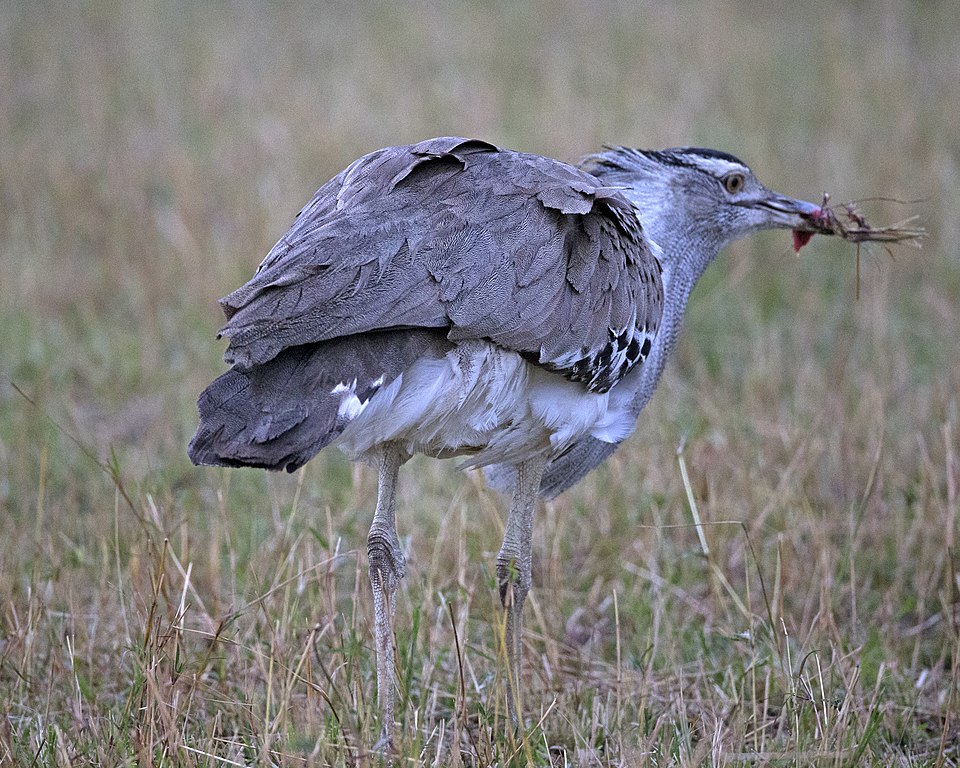
A kori bustard feeding in grassy area
🎶 Fun Facts
Did you know that the Kori Bustard is also known for its loud, booming call? It can be heard from quite a distance! 🎶They can even run fast when they need to escape danger, reaching speeds of up to 30 miles per hour (48 km/h)! The Kori Bustard is a protective parent and takes care of its chicks diligently. Although they are heavy, Kori Bustards can fly! Their strong wings help them soar gracefully. 🕊️ Now that’s a bird that knows how to impress!
Go deeper🌳 Related Species
The Kori Bustard is related to other bustards and birds in the family Otididae. 🌳Some of its cousins include the Great Bustard from Europe and the African Bustard. Bustards are generally large, long-necked birds that share similar habitats. Many species of bustards are known for their impressive courtship displays and can also be found in grasslands. Just like the Kori Bustard, these birds are critically important for their ecosystems and face similar environmental challenges. 🦩
Go deeper🍃 Behavior And Diet
Kori Bustards are fascinating creatures! They are usually solitary or found in small groups, roaming around on the ground. 🍃They love to eat insects, grass seeds, flowers, and small animals! Their long necks and beaks make it easy for them to forage the ground for food. Kori Bustards can even chase after prey like lizards. When they scare away predators, they puff up their feathers to look bigger 🌬️. They can also sit silently for a long time, waiting for their next meal to come by!
Go deeper🌱 Conservation Status
The Kori Bustard is currently listed as “Near Threatened” by the International Union for Conservation of Nature (IUCN). 🌱This means they are not yet endangered but could be in danger in the future. Their main threats include habitat loss from farming and hunting. Organizations are working to protect their habitats and educate people about these amazing birds. If we take care of the environment and support conservation efforts, we can help ensure Kori Bustards continue to thrive! 💚
Go deeper🦸 Cultural Significance
In some African cultures, Kori Bustards are seen as symbols of strength and pride. 🦸They often appear in local folklore and stories. Many communities enjoy watching Kori Bustards in their natural habitats, helping to inspire a love for wildlife among people. The birds are also significant in ecotourism, where nature lovers travel to see them, boosting local economies. Their unique appearance and intriguing behavior make them memorable to those who get to know them! 🎨
Go deeper🌍 Habitat And Distribution
Kori Bustards primarily live in dry savannas, grasslands, and open woodlands across southern and eastern Africa. 🌍They enjoy regions where the grass is long but sparse trees provide shade. These birds can be found in countries like Namibia, Kenya, and Zambia. They prefer warmer climates and can sometimes be seen wandering in fields and near roads. Kori Bustards are not very good at staying in one place for long; they move around a lot to find food and avoid danger. 🔍
Go deeper🐦 Physical Characteristics
Kori Bustards have some pretty cool features! Their large bodies are covered in feathers that can blend in with their surroundings, helping them hide from predators. 🐦Males are usually bigger than females and have unique markings, like a black and white pattern on their wings. Their beaks are long and pointed, which helps them find food underground. Kori Bustards can also soar high in the sky, spreading their impressive wingspan of about 8.2 feet (2.5 meters) when they fly! The females are generally smaller, and they don’t have as much color as the males. 💚
Go deeper🕺 Breeding And Reproduction
When it’s time to have babies, Kori Bustards put on an impressive show! Males perform a fancy dance, puffing their chests and spreading their wings to attract females. 🕺After a successful courtship, the female builds a nest on the ground using grass and leaves. She lays 1 to 3 eggs, and both parents help take care of the chicks after they hatch! 🐣The chicks are able to walk and search for food almost right away. They stay with their parents for a while until they can live on their own.
Go deeper