Koala Facts For Kids
Koalas are iconic Australian marsupials known for their distinctive appearance, unique dietary habits, and predominantly tree-dwelling lifestyle.
Select reading age
Koala Facts For Kids
Videos & Quizzesincluded
About this topic
The koala is a cute marsupial 🐨 native to Australia! These furry animals are famous for their round faces and big ears. Koalas can be found in forests and woodlands, mainly in the eastern and southeastern regions of Australia. They spend most of their time in eucalyptus trees 🌳 and are often seen sleeping for up to 18 hours a day! Koalas do not drink much water, as they get their hydration from eucalyptus leaves. Sadly, their populations are threatened due to habitat loss.
Explore with ChatDinoKey Points
Did you know that a koala's fingerprints are so similar to human fingerprints that they can confuse crime scene investigators?
Koalas live in specific areas of Australia, including states like Queensland, New South Wales, Victoria, and South Australia.
The koala is currently classified as "vulnerable" due to habitat loss, bushfires, and disease.
Koalas face several threats to their survival, primarily due to human activities.
Koalas hold a special place in Australian culture.
Koalas have a unique diet consisting almost entirely of eucalyptus leaves.
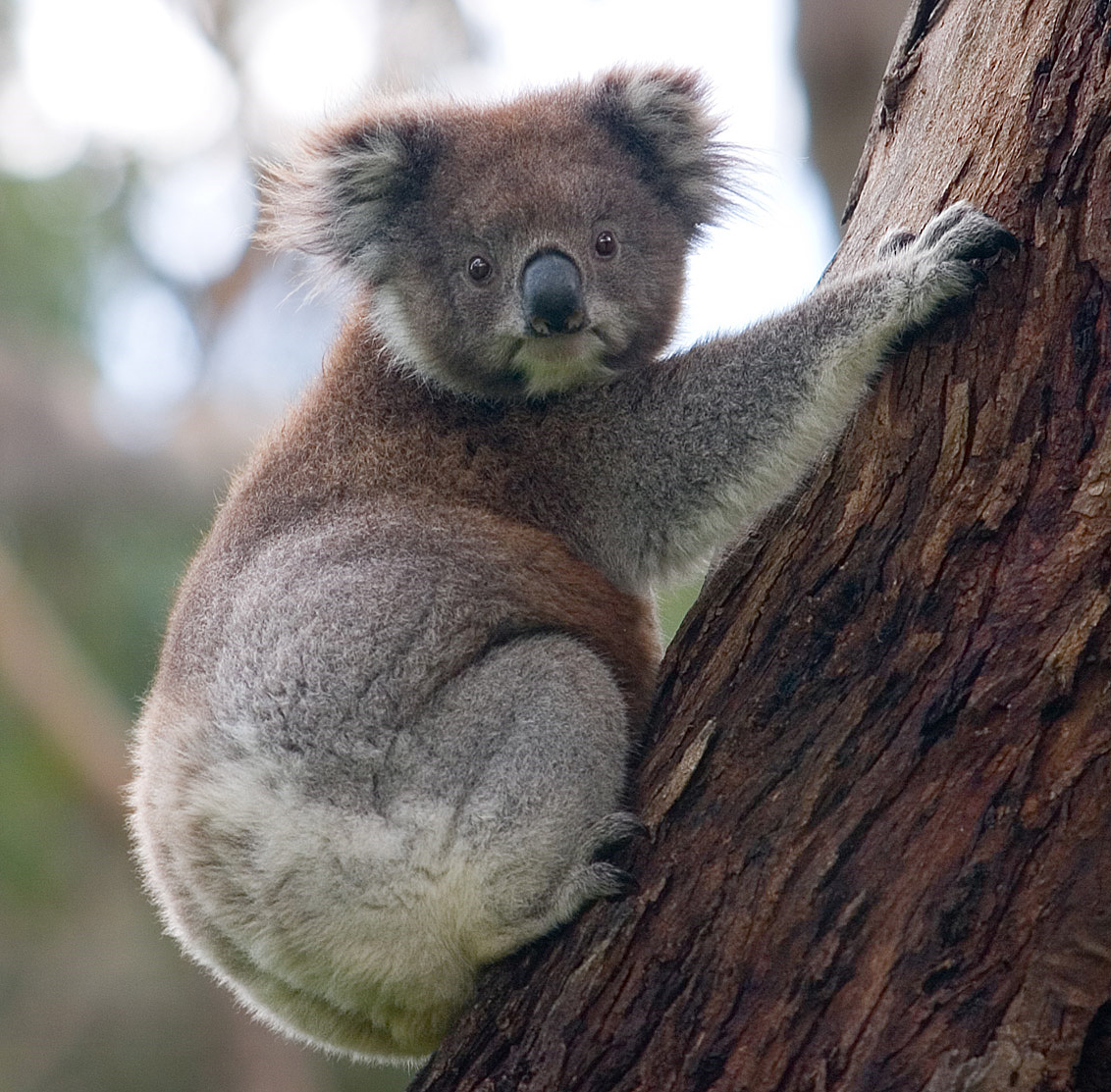
Koalas have a plump body, round ears, and a big nose, which gives them an adorable look.
Koalas usually mate in the breeding season, which occurs from September to February.
Koalas are generally solitary creatures, meaning they like to live alone.
Photos of Koala


Reconstructions of the ancient koalas Nimiokoala (larger), and Litokoala (smaller), from the Miocene Riversleigh Fauna

Mounted skeleton

Teeth of a koala, from left to right: molars, premolars (dark), diastema, canines, incisors

Koala with joey in a tree in South Australia


Koala — photo 7

Scent gland on the chest of an adult male. Lone Pine Koala Sanctuary

A young joey, preserved at Port Macquarie Koala Hospital
🕵️♂️ Fun Facts
Did you know that a koala's fingerprints are so similar to human fingerprints that they can confuse crime scene investigators? 🕵️♂️ Koalas can sleep up to 18-22 hours a day—talk about a sleepyhead! While most marsupials have developed pouch, koala mothers have a pocket-shaped pouch. 👜Young koalas, also known as joeys, stay in their mother's pouch for about six months! Koalas are also nocturnal, which means they are active at night and sleep all day long. Isn't that fascinating? 🎉
Go deeper🌿 Habitat And Range
Koalas live in specific areas of Australia, including states like Queensland, New South Wales, Victoria, and South Australia. They prefer eucalyptus forests 🌿 since their main food source is eucalyptus leaves. There are over 700 species of eucalyptus, but koalas mainly eat leaves from just a few types. As they love warm and temperate climates, they thrive in regions with plenty of trees. In the wild, they make homes high up in the trees, where they can stay safe from predators.
Go deeper🌍 Conservation Status
The koala is currently classified as "vulnerable" due to habitat loss, bushfires, and disease. 🌍The population has decreased significantly in the past few decades. Organizations like the Australian Koala Foundation work hard to protect koala habitats and raise awareness about these charming animals. It's important for everyone to work together to conserve areas where koalas live, so future generations can enjoy them too!
Go deeper🌳 Threats To Survival
Koalas face several threats to their survival, primarily due to human activities. 🌳Urban development leads to habitat destruction, making it difficult for koalas to find food and shelter. Climate change causes severe droughts and bushfires, which can decimate koala populations. Additionally, diseases like chlamydia can endanger their health and reproduction. To ensure their survival, it’s vital to protect their habitats and promote conservation efforts.
Go deeper🌟 Cultural Significance
Koalas hold a special place in Australian culture. 🇦🇺 They are an iconic symbol of Australia and attract many tourists each year who wish to see them up close. Koalas appear in art, stories, and even cartoons! Their unique and lovable appearance has made them a favorite among children and adults alike. Efforts to protect koalas also highlight the importance of conserving nature and caring for wildlife.
Go deeper🍃 Diet And Feeding Habits
Koalas have a unique diet consisting almost entirely of eucalyptus leaves. 🍃These leaves are tough and low in nutrition, so koalas must eat a lot—up to 2.5 pounds (1 kg) a day! Koalas have a special stomach that helps them break down the toxic substances and extract nutrients from the leaves. Their diets vary depending on the types of eucalyptus trees in their habitat. Unlike many animals, koalas eat at night and rest during the hot days.
Go deeper🐾 Physical Characteristics
Koalas have a plump body, round ears, and a big nose, which gives them an adorable look. 🐾Adults typically weigh between 15 to 30 pounds (7 to 14 kg) and can be about 2 to 3 feet (60 to 90 cm) long. Their thick gray fur keeps them warm and helps camouflage them in the trees. They have sharp claws that help them climb easily. Koalas have keen eyesight and a strong sense of smell, allowing them to find food and mates.
Go deeper🗓️ Reproduction And Lifespan
Koalas usually mate in the breeding season, which occurs from September to February. 🗓️ After mating, female koalas give birth to a tiny, helpless joey after about 35 days. The joey then crawls into its mother's pouch, where it will stay and grow for about six months. After leaving the pouch, the young koala stays close to its mother for several more months. In the wild, koalas can live up to 10 to 18 years, while those in captivity may live even longer!
Go deeper🤼♂️ Behavior And Social Structure
Koalas are generally solitary creatures, meaning they like to live alone. However, male koalas can be territorial and may fight to defend their area. 🤼♂️ They are known for their loud calls, especially during mating season, which can be heard from far away! Koalas communicate using different sounds, like grunts or bellowing! While they might not play together like some animals, they occasionally share trees and can be found resting close to each other.
Go deeper