Khitan People Facts For Kids
The Khitan people were a historical nomadic group from Northeast Asia, known for their unique culture, founding the Liao Dynasty, and their skilled horse riding and herding practices.
Select reading age
Khitan People Facts For Kids
Videos & Quizzesincluded
About this topic
The Khitan people were a group of nomadic folks from Northeast Asia! 🌏They lived from the 4th century onward and roamed areas that are now parts of Mongolia, Northeast China, and the Russian Far East. They were known for their horse-riding skills and had a strong culture. The Khitan people created a famous empire called the Liao Dynasty, which lasted over 200 years! 🏇Their story is filled with adventures, battles, and impressive achievements that have left an impact on history. Let’s learn more about the Khitan people and their incredible journey through time! 📜
Explore with ChatDinoKey Points
Khitan society was organized into tribes, and they lived in yurts, which are round tents made from felt.
The Khitan people followed a mix of beliefs, including shamanism.
The Khitan economy was based on animal herding and trade.
The Khitan people have left a significant legacy in the region.
In 907 AD, the Khitan established the Liao Dynasty, becoming a powerful state in Northeast Asia.
The Khitan people established themselves in Northeast Asia around the 4th century.
The Khitan language belonged to the Mongolic language family.
Today, historians and archaeologists study the Khitan people to unravel their fascinating past.
The Khitan people interacted with various cultures, including the Chinese, Jurchens, and Tibetans.
Photos of Khitan People

Khitan horsemen

Khitan People — photo 2

Khitans eating. Tomb mural, Chifeng city, Inner Mongolia

Liao dynasty tomb relief of Khitans and their baggage cart

Liao dynasty in 1025

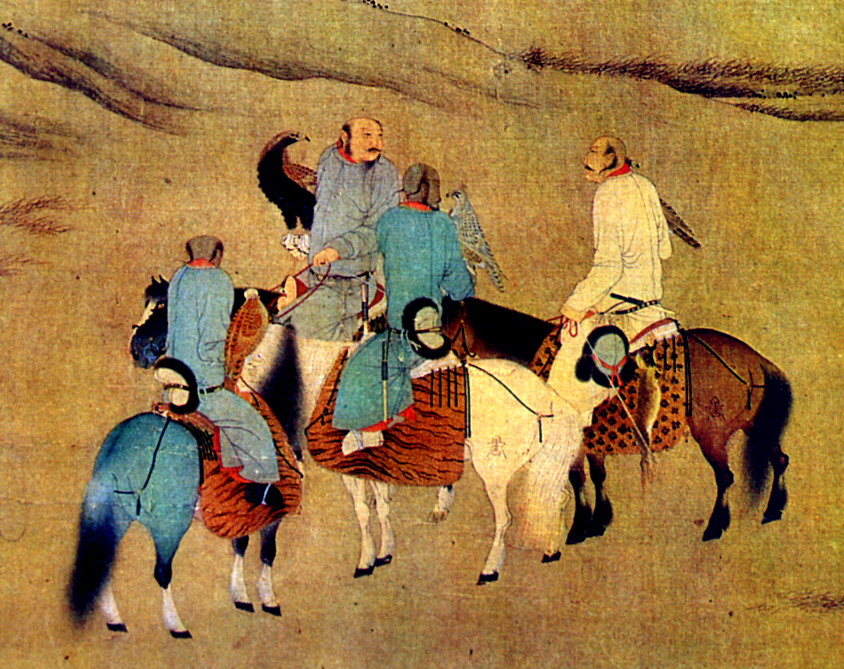
Khitan falconers in a painting by Chen Juzhong, early 13th c.

Depiction of Yelü Bei

The Liao dynasty in 1111 AD.

The Qara Khitai empire in 1169 at its greatest extent
🏕 Society And Culture
Khitan society was organized into tribes, and they lived in yurts, which are round tents made from felt. 🏕Their culture was rich with traditions, music, and storytelling. They honored their ancestors and celebrated festivals related to the seasons. The Khitan were also skilled horsemen and hunters, often pursuing wild animals for food and clothing. Their clothes were made from animal hides, which kept them warm in cold weather. They invented unique art forms, especially in metalwork and textiles, showcasing their talent and creativity! 🎨
Go deeper🌌 Religion And Beliefs
The Khitan people followed a mix of beliefs, including shamanism. 🌌They believed in spirits found in nature, like trees, mountains, and water. Shamans, or spiritual leaders, connected with these spirits to bring good fortune and protection. The Khitan also had connections with Buddhism, which started spreading in Northeast Asia. They built temples and engaged in rituals to honor their gods and ancestors, showing their respect and devotion. This blend of beliefs made their spiritual lives rich and colorful! 🌈
Go deeper🐏 Economy And Lifestyle
The Khitan economy was based on animal herding and trade. They raised cattle, sheep, and horses and often moved their camps to find better pastures. 🐏This nomadic lifestyle helped them adapt to the changing seasons. They traded goods like furs, silk, and metals with neighboring tribes and regions, developing important trade routes. As the Liao Dynasty grew powerful, they controlled much of Northeast Asia, which boosted their economy. 🍂Their way of life combined hard work, bravery, and cleverness, making them successful nomads!
Go deeper🌍 Legacy And Descendants
The Khitan people have left a significant legacy in the region. Their empire influenced the languages, cultures, and societies of Northeast Asia. 🌍After the fall of the Liao Dynasty, many Khitan people integrated into other cultures, especially the Jurchens, who later formed the Jin Dynasty. Some descendants still celebrate Khitan traditions today. The impact of the Khitan can be seen in art, language, and even place names in those regions! 🎉Their story remains a vital part of Asian history! 📖
Go deeper🌟 Khitan State And Politics
In 907 AD, the Khitan established the Liao Dynasty, becoming a powerful state in Northeast Asia. 🌟This dynasty was ruled by emperors who controlled large territories through military strength and clever governance. The Khitan developed a unique system of administration that combined their nomadic traditions with settled life practices. They built cities and palaces, and their capital city was called Nanjing, now in modern-day China. Their powerful state lasted until 1125 AD, being a key player in the historical politics of the region! 🏯
Go deeper🐎 Origins And Early History
The Khitan people established themselves in Northeast Asia around the 4th century. They are believed to have descended from earlier tribes that lived in the region, such as the Mongolic tribes. Their early society was based on nomadic life, moving from place to place to find food and good pasture for their animals. They relied on horses for travel and hunting, which made them excellent riders. 🐎Over time, they grew stronger and larger in number, eventually forming the Liao Dynasty in 907 AD. This marked the start of a powerful empire that influenced neighboring regions! ⚔️
Go deeper✍️ Language And Writing System
The Khitan language belonged to the Mongolic language family. They had their own scripts, known as the Khitan scripts, created around the 10th century. ✍️ These scripts were a mix of Chinese characters and their own symbols. The scripts were used for writing important documents, such as laws and poems. However, most of the Khitan language is still a mystery today, and only a few people can read it! 📚It is fascinating how they used their writing system to communicate and preserve their history!
Go deeper🔍 Modern Interpretations And Studies
Today, historians and archaeologists study the Khitan people to unravel their fascinating past. 🔍They search for artifacts, texts, and evidence of their daily life. Universities and museums create exhibits about the Khitan, making it accessible to everyone! Researchers are learning about their language, culture, and trade systems, piecing together how they lived and thrived. Many students and adults enjoy discovering the Khitan’s rich history, ensuring it is not forgotten! 📅Learning about the Khitan helps us understand the diverse world we live in today!
Go deeper🤝 Interactions With Neighboring Cultures
The Khitan people interacted with various cultures, including the Chinese, Jurchens, and Tibetans. 🤝They learned from these neighboring groups, adopting elements of their customs and trades. For example, the Khitan used Chinese agricultural techniques to grow crops while maintaining their nomadic lifestyle. At times, they formed alliances for protection against common enemies. However, they also had conflicts, leading to battles to secure territory and resources. These interactions helped shape their identity and influenced the cultures around them! ⚔️
Go deeper