Kazakhstan Facts For Kids
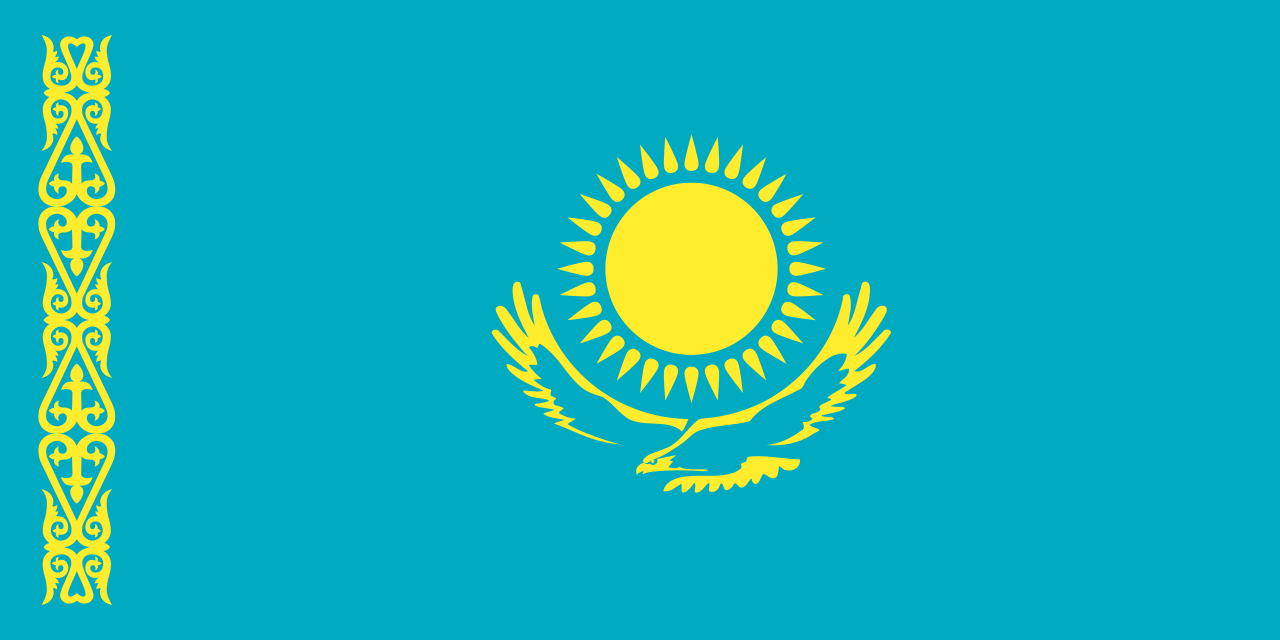
Kazakhstan is a large country between Europe and Asia, known for wide open spaces and many different peoples, showing how big the world can be.
About this topic
Quick Facts
Key Points
Photos of Kazakhstan

A-Studio was created in 1982 in Almaty, then called Alma-Ata, hence called "Alma-Ata Studio".

The largest extent of Xiongnu's influence in the 2nd century BC

Вид на Чарынский каньон (Республика Казахстан)

Abylai Khan as depicted by the artist, portrait on the obverse of the 100 tenge banknote

GDP per capita development in Kazakhstan since 1973

Kazakhstan Republican Guard

Kazakh National University of Arts
📘 Where It Is And What The Weather Is Like
The country has an extreme continental climate, which means summers can be very hot and winters very cold. The capital, Astana, is one of the coldest capitals in the world. Rain and snow are not the same everywhere: some places are fairly dry, and winters are often especially dry.
🔎 Natural Resources And How People Make Money
There are refineries in several cities where oil is turned into fuel and products. Money from energy and mining makes up a large part of Kazakhstan’s industry and has brought investment from other countries. The government has also worked to be more open about how resource money is managed.
🧭 Early Years: The Kazakh Khanate
Under strong leaders such as Kasym Khan, the Khanate grew across the steppe and became powerful. Later, when Kasym’s sons divided the land, the people split into three groups often called the Great, Middle, and Little Hordes. These changes shaped how the Kazakh lands were organized for a long time.
💡 Independence And New Beginnings
This time was a big turning point. People and leaders worked to create new schools, businesses, and connections with other countries. The move away from the Soviet system took time and many new ideas were tried as Kazakhstan found its own path.
🌟 Government And Leaders
Oil became very important and helped the economy grow. In 1997 the capital moved from Almaty to Astana (it was briefly renamed Nur-Sultan). Leaders and elections have often stayed close to the government’s plans, and in 2019 a new president, Kassym-Jomart Tokayev, took office and later led some important security choices.
🧩 Energy And The Future
The plan also sets prices to help wind, small hydro, and biogas projects get started. Leaders expect the switch will create new jobs and help the economy grow, while keeping oil as one part of the country’s energy mix.
🧠 Take the Quiz about Kazakhstan
Frequently asked questions
Where is Kazakhstan located and what sea does it touch?
Kazakhstan is a very large country between Europe and Asia. It is landlocked, but it has a long shore on the Caspian Sea, and it borders Russia, China, Kyrgyzstan, Uzbekistan, and Turkmenistan.
What are the capital and biggest city of Kazakhstan?
The capital is Astana, a modern city with tall buildings, and Almaty is the biggest city and a center for culture and business.
What is the Kazakh steppe like?
Kazakhstan lies mostly on a huge grassy plain called the steppe, a flat land that stretches for miles and was long used by people who raised animals and rode horses.
What was the Kazakh Khanate?
In the 1400s, after the Golden Horde broke apart, Janibek Khan and Kerei Khan helped form the Kazakh Khanate, a land ruled by a khan, like a king. The Khanate brought many nomadic groups together and helped build the first steps of a Kazakh state.
When did Kazakhstan gain independence?
Independence came at the end of 1991 when Kazakhstan said it would be its own country. On December 16, 1991 Kazakhstan declared full independence from the Soviet Union.
What is the Green Economy Plan about?
The Green Economy Plan started in 2013 to use more clean energy. It aims for up to half of the country’s energy to come from renewables by 2050 and includes wind, solar, small hydro, and biogas, with prices to help these projects start.