All Articles

Iodine

Iodine Facts For Kids

Iodine is a vital trace element that supports thyroid function and is crucial for metabolic health.
🎨 Reading age for 6-8
Background blob
Iodine
Iodine
Facts for Kids!
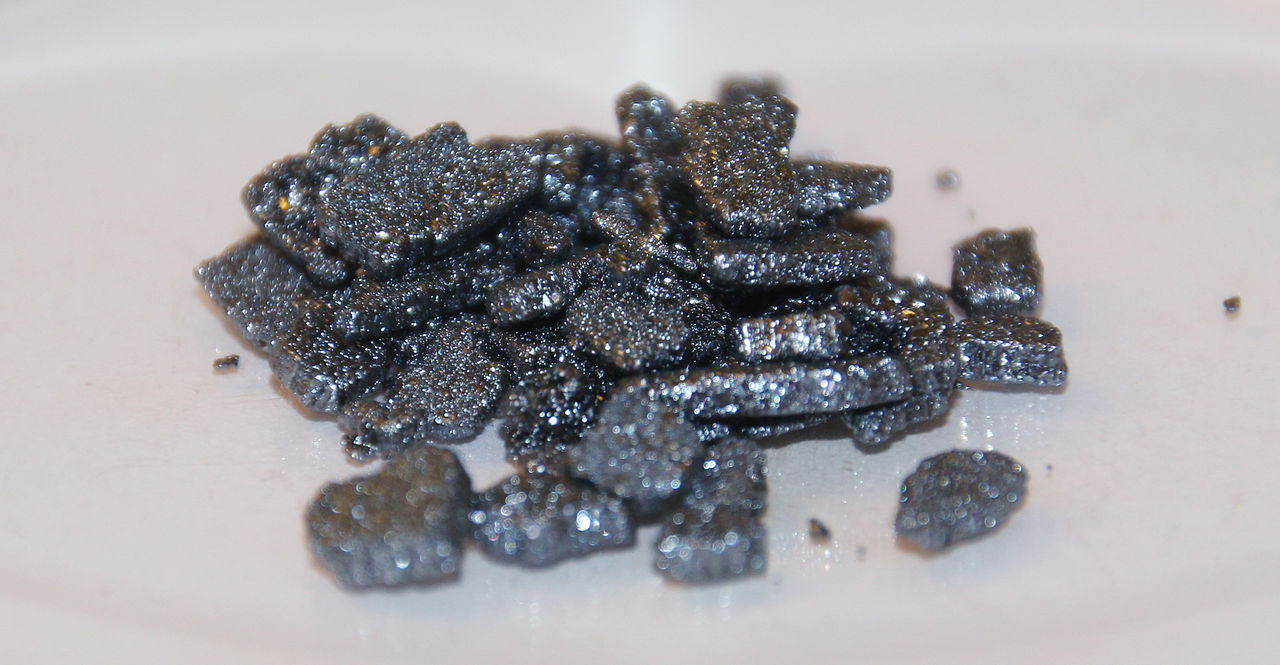
Image by LHcheM, licensed under Creative Commons Attribution-Share Alike 3.0

Do more with AI

Introduction

Iodine is a tasty and important element found in nature! 🌍It is a dark purple-black solid that turns into a gas when heated. Iodine is a non-metal, and it has the chemical symbol "I." On the periodic table, it is located in group 17, which is known as the halogens. You can often find iodine in places like oceans, saltwater, and some foods. It helps our bodies stay healthy, particularly our thyroid glands, which help control how we grow and energy levels. Isn't it cool that something so tiny can have such big effects? 🍏

Images of Iodine

Iodine crystals sublimating into a purple gasImage by Jurii, licensed under Creative Commons Attribution 3.0

Iodine crystals sublimating into a purple gas

Iodine vapour in a flask, demonstrating its characteristic rich purple colourImage by Matias Molnar, licensed under Creative Commons Attribution-Share Alike 3.0

Iodine vapour in a flask, demonstrating its characteristic rich purple colour

Structure of solid iodine

Structure of solid iodine

I2•PPh3 charge-transfer complexes in CH2Cl2. From left to right: (1) I2 dissolved in dichloromethane – no CT complex. (2) A few seconds after excess PPh3 was added – CT complex is forming. (3) One minute later after excess PPh3 was added, the CT complex [Ph3PI]+I− has been formed. (4) Immediately after excess I2 was added, which contains [Ph3PI]+[I3]−.[47]Image by LHcheM, licensed under Creative Commons Attribution-Share Alike 3.0

I2•PPh3 charge-transfer complexes in CH2Cl2. From left to right: (1) I2 dissolved in dichloromethane – no CT complex. (2) A few seconds after excess PPh3 was added – CT complex is forming. (3) One minute later after excess PPh3 was added, the CT complex [Ph3PI]+I− has been formed. (4) Immediately after excess I2 was added, which contains [Ph3PI]+[I3]−.[47]

Iodine monochlorideImage by W. Oelen, licensed under Creative Commons Attribution-Share Alike 3.0

Iodine monochloride

Structure of iodine pentoxide

Structure of iodine pentoxide

Structure of the oxidising agent 2-iodoxybenzoic acid

Structure of the oxidising agent 2-iodoxybenzoic acid

Diatrizoic acid, an iodine-containing radiocontrast agentImage by JaGa, licensed under Creative Commons Attribution-Share Alike 3.0

Diatrizoic acid, an iodine-containing radiocontrast agent

Testing a seed for starch with a solution of iodineImage by Biology Big Brother from Eukaryotic Cell, Organism, licensed under Creative Commons Attribution 2.0

Testing a seed for starch with a solution of iodine

Iodine crystals sublimating into a purple gasImage by Jurii, licensed under Creative Commons Attribution 3.0

Iodine crystals sublimating into a purple gas

Iodine vapour in a flask, demonstrating its characteristic rich purple colourImage by Matias Molnar, licensed under Creative Commons Attribution-Share Alike 3.0

Iodine vapour in a flask, demonstrating its characteristic rich purple colour

Structure of solid iodine

Structure of solid iodine

I2•PPh3 charge-transfer complexes in CH2Cl2. From left to right: (1) I2 dissolved in dichloromethane – no CT complex. (2) A few seconds after excess PPh3 was added – CT complex is forming. (3) One minute later after excess PPh3 was added, the CT complex [Ph3PI]+I− has been formed. (4) Immediately after excess I2 was added, which contains [Ph3PI]+[I3]−.[47]Image by LHcheM, licensed under Creative Commons Attribution-Share Alike 3.0

I2•PPh3 charge-transfer complexes in CH2Cl2. From left to right: (1) I2 dissolved in dichloromethane – no CT complex. (2) A few seconds after excess PPh3 was added – CT complex is forming. (3) One minute later after excess PPh3 was added, the CT complex [Ph3PI]+I− has been formed. (4) Immediately after excess I2 was added, which contains [Ph3PI]+[I3]−.[47]

Iodine monochlorideImage by W. Oelen, licensed under Creative Commons Attribution-Share Alike 3.0

Iodine monochloride

Structure of iodine pentoxide

Structure of iodine pentoxide

Structure of the oxidising agent 2-iodoxybenzoic acid

Structure of the oxidising agent 2-iodoxybenzoic acid

Diatrizoic acid, an iodine-containing radiocontrast agentImage by JaGa, licensed under Creative Commons Attribution-Share Alike 3.0

Diatrizoic acid, an iodine-containing radiocontrast agent

Testing a seed for starch with a solution of iodineImage by Biology Big Brother from Eukaryotic Cell, Organism, licensed under Creative Commons Attribution 2.0

Testing a seed for starch with a solution of iodine

Fun Facts About Iodine

Did you know that iodine can create a colorful art display? 🎨When you place iodine crystals on paper and heat them, they sublime and leave beautiful purple patterns! Also, iodine is essential for the production of something called thyroid hormones, which help keep your energy levels balanced. ⚡️ Iodine is often used in laboratories not just for testing, but also for growing crystals! And here's a cool fact: some animals, like sea turtles, can sense iodine in the ocean and use it to find food. 🐢Iodine is truly fascinating!

Iodine Sources In Diet

You need iodine to stay healthy and strong! 💪Some foods are great sources of iodine, like fish (especially cod), dairy products, eggs, and seaweed. 🐠Milk, yogurt, and cheese contain iodine because cows eat iodine-rich grass. If you enjoy sushi, you might be eating seaweed—a fantastic source of iodine! Iodized salt is also a common way to get enough iodine in your diet. So, remember to sprinkle some iodized salt on your meals to nourish your thyroid and help your body!

History Of Iodine Discovery

Iodine was discovered in 1811 by a French chemist named Bernard Courtois! 🇫🇷 He accidentally found it while working with seaweed that was burned to make salt. While collecting the smoke, he saw purple vapor and realized it formed crystals as it cooled. Courtois took the crystals to his friend, another chemist named Jean-Baptiste Dumas. They worked together to study this new element and named it "iodine," which comes from the Greek word "iodes," meaning violet. 🌈Iodine quickly became important for science and medicine, and today we know its many uses!

Chemical Properties Of Iodine

Iodine is quite unique in its chemical properties! 🧪It is a solid at room temperature but can sublimate into a gas, which means it changes from a solid to a gas without becoming a liquid. Iodine has a high melting point of 113.7°C (236.7°F) and is known for its beautiful purple color. When iodine is mixed with alcohol, it becomes a brown liquid called tincture of iodine, commonly used for cleaning cuts. 👍Iodine can also react with metals, forming compounds. Its ability to gain or share electrons makes it an important element in many chemical reactions!

Biological Importance Of Iodine

Iodine plays a crucial role in keeping our bodies healthy! 🥦It helps our thyroid gland produce hormones that control how we grow and how our bodies use energy. If our bodies don’t get enough iodine, it can lead to health problems like goiter, which is an enlarged thyroid gland. 🌟Around the world, it is especially important for pregnant women and children because it supports brain development and growth. Remember to include iodine in your diet to keep your body running nicely!

Iodine In Industry And Applications

Iodine is useful not just in our bodies but also in industry! 🏭It is commonly used in photography for developing films. Iodine can also be found in antiseptics, which help prevent infections in cuts and wounds. Plus, it’s used in some medical imaging tests to help doctors see inside our bodies better. 🩻Many scientists use iodine in laboratories for various chemical reactions, and it’s even used in some fertilizers to help plants grow. Iodine is truly a superstar in many fields!

Iodine Deficiency And Health Effects

When our bodies don't get enough iodine, we can experience iodine deficiency! 🚨This can lead to serious health problems. One big issue is goiter, where the thyroid gland gets larger because it is trying hard to produce hormones without enough iodine. 🌋Iodine deficiency can also cause mental challenges and developmental delays in babies and young children. That’s why many governments add iodine to salt or recommend iodine-rich foods to keep everyone healthy and strong. It’s super important to get enough iodine in our diets!

Iodine Testing And Measurement Methods

Measuring iodine is important for scientists and health professionals! 📏One common method is using titration, where a liquid containing iodine is slowly added to a solution until a color change shows the right amount. Another way is using colorimetry, which measures how much light a solution absorbs. This helps identify the concentration of iodine in water, food, and other samples. 🥤They also use test kits that change color when iodine is present, helping people know if they have enough iodine in their diet!

Iodine Quiz

Q1
Question 1 of 10

Learn more about Iodine

Ready to create?

Make

To create a safe space for kid creators worldwide!

Create

Vibe Coding

Kids GPT

All Tools

Kibu

Resources

Worksheets

SafeTube

Blog

FAQ

Account

Pricing

Log-in

Sign-up

Data Deletion

Company

About

Community Guidelines

Privacy Policy

Terms of Service

2025, URSOR LIMITED. All rights reserved. DIY is in no way affiliated with Minecraft™, Mojang, Microsoft, Roblox™ or YouTube. LEGO® is a trademark of the LEGO® Group which does not sponsor, endorse or authorize this website or event. Made with love in San Francisco.