Invar Facts For Kids
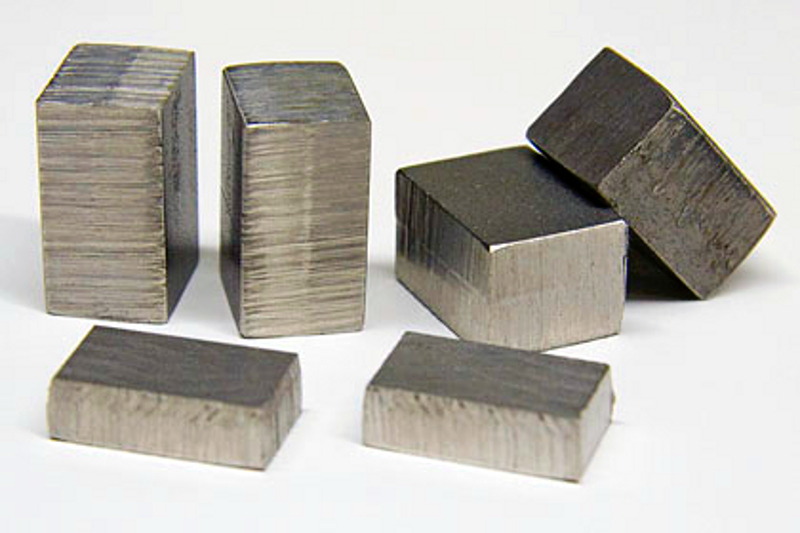
Invar is a nickel-iron alloy characterized by its unique property of minimal thermal expansion, making it ideal for precision instruments and applications requiring dimensional stability.
Select reading age
Invar Facts For Kids
Videos & Quizzesincluded
About this topic
Invar is a special metal alloy made mostly of iron (64%) and nickel (36%) 🌟. It was discovered by scientists in 1896 and is famous for expanding and contracting very little when temperatures change. This means it stays the same size in hot or cold conditions! Invar is mainly used in very precise instruments, like clocks and measuring tools, where tiny changes can make a big difference. People in many countries use Invar, especially in places like the United States and Europe, for things that need to work perfectly! ⚙️
Explore with ChatDinoKey Points
Invar was first created by a French scientist named Charles Édouard Guillaume 🔍.
Did you know that Invar is used in super-telescope designs?
Scientists and engineers are always looking for ways to improve Invar and its uses!
One of the coolest things about Invar is its low thermal expansion.
Invar is made mostly from iron, which is abundant in the Earth, meaning there is plenty to work with!
Invar is used in a wide range of tools and technologies!
To create Invar, the materials (iron and nickel) are melted together at very high temperatures, around 1,300 degrees Celsius (2,372 degrees Fahrenheit).
Invar is different from many other metals because it has a very low thermal expansion.
Photos of Invar

The coefficient of thermal expansion of nickel/iron alloys is plotted here against the nickel percentage (on a mass basis) in the alloy. The sharp minimum occurs at the Invar ratio of 36% Ni.
🔍 History Of Invar
Invar was first created by a French scientist named Charles Édouard Guillaume 🔍. He discovered this unique alloy while trying to find materials that wouldn’t change size with temperature. The name "Invar" comes from "invariable," meaning it doesn’t change! In 1920, Guillaume won a Nobel Prize for his work with Invar. This discovery helped improve tools like barometers, which measure air pressure, and helped scientists keep time more accurately. Today, Invar is still important in many areas of science and engineering! 🏆
Go deeper🔭 Interesting Facts
Did you know that Invar is used in super-telescope designs? 🔭It helps astronomers gather clear images from the universe! Invar creates less noise, keeping measurements quiet and stable. Also, the first clocks made with this alloy were so well made that they were used in laboratories around the world! 🕰️ Fun fact: While Invar is serious about precision, its name sounds like "in variable," which is a fun way to remember that it hardly changes with temperature! Invar is truly a remarkable metal! 🌟
Go deeper🔬 Future Developments
Scientists and engineers are always looking for ways to improve Invar and its uses! 🔬They are researching new manufacturing techniques that can make the alloy even more precise and less expensive. Innovations in 3D printing technology may allow for better designs and applications in medicine and aerospace! Additionally, new alloy combinations could enhance Invar’s properties, leading to new, exciting uses. As technology evolves, we can expect to see Invar contributing to new discoveries and inventions, making our world more efficient and advanced! 🚀
Go deeper😲 Properties Of Invar
One of the coolest things about Invar is its low thermal expansion. This means when it gets hot or cold, it doesn’t stretch or shrink much, only about 1/10th the amount of regular metals! 😲Its density is around 8.19 grams per cubic centimeter, making it heavier than many other metals. Invar also has good strength and is resistant to rust. The metal remains magnetic, even at low temperatures, allowing it to be used in a variety of scientific applications. With these special properties, scientists can create amazing things using Invar! 🛠️
Go deeper🌍 Environmental Impact
Invar is made mostly from iron, which is abundant in the Earth, meaning there is plenty to work with! However, mining for metals can still impact the environment. 🌍It's essential for companies to follow eco-friendly practices. Luckily, Invar itself is a strong and durable alloy, which means it can be used for a long time, reducing the need for replacements. Reusing and recycling Invar after its life cycle can also limit waste. Companies are exploring better ways to manufacture and recycle Invar to lower its environmental impact! ♻️
Go deeper🕰️ Applications Of Invar
Invar is used in a wide range of tools and technologies! 🕰️ For example, it is used in precision clocks that need to keep accurate time, like watches and chronometers. It’s also important in measuring devices, like those that help scientists explore space! For instance, the Hubble Space Telescope has parts made from Invar. Other uses include creating molds for manufacturing, as well as in the aerospace and automotive industries. Wherever precision matters, you'll likely find Invar making things work better and more accurately! 🚀
Go deeper🔥 Manufacturing Processes
To create Invar, the materials (iron and nickel) are melted together at very high temperatures, around 1,300 degrees Celsius (2,372 degrees Fahrenheit). 🔥The molten metal is poured into molds and cooled to form bars and sheets. Once cooled, the Invar is often shaped into different forms using processes like forging or machining. Special care is taken to keep the temperature steady, as temperature changes can affect its incredible properties. After manufacturing, Invar is tested to ensure it meets the high standards needed for precision applications! ⚙️
Go deeper🌡️ Comparison With Other Alloys
Invar is different from many other metals because it has a very low thermal expansion. For example, aluminum expands much more when heated! 🌡️ While steel can be strong and tough, it doesn’t have the same dimensional stability that Invar does. Other alloys, like brass, are used for things like musical instruments but can change size with heat. Invar’s unique combination of properties makes it special for tasks where accuracy is super important, like in scientific instruments and aerospace applications! So, it stands out among many metals! 🌟
Go deeper