Inca Calendar Facts For Kids
The Inca people's clever calendar tracked the sun, moon, and stars to know the best times for planting crops, festivals, and honoring gods in their mountain home.

About this topic
The Incas called their land Tawantinsuyu, which means 'four together.' They watched the sun, moon, and stars closely to make their calendar. Because farming was so important in the rugged mountains, the calendar guided their busy lives. It connected their everyday work with special religious days.
Quick Facts
Key Points
Photos of Inca Calendar

Camelids were a vital resource in Tahuantinsuyo. The Inca state ensured a supply of both meat and fiber from these animals.

Stela in Tiwanaku's Kalasasaya temple

The four suyus or quarters of the empire

The Inca Empire's expansion according to John Howland Rowe in his "absolute chronology", developed in 1944–1945.
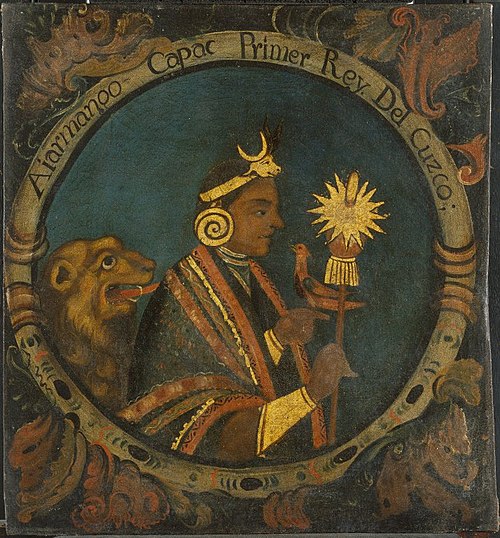
Manco Capac, First Inca, 1 of 14 Portraits of Inca Kings, Probably mid-18th century. Oil on canvas. Brooklyn Museum
📘 The Four Regions Of Tawantinsuyu
Chinchaysuyu was the busiest in the north, with lots of people and cities. Antisuyu stretched to the east with thick jungles. Kuntisuyu hugged the southern coast, and Qullasuyu was the biggest, covering wide high plains in the south. The calendar worked the same in all suyus, so everyone planted and celebrated together.
🔎 Inca Gods And The Three Worlds
Inti, the sun god, was super important because the sun powered their calendar. His sister Mama Killa was the moon goddess. Pachamama, the earth mother, helped crops grow. The Incas held festivals for these gods at special times in the calendar to keep the worlds in balance.
🧭 Inca Farming And The Calendar
Potatoes were their main food—over 200 kinds! Corn and coca plants were special and sacred. Places like Moray had round terraces to test new crops. The calendar matched seasons perfectly, so farmers knew when to work hard and when to rest.
💡 Herding Camelids
The Inca also knew wild camelids called vicuñas and guanacos. They hunted vicuñas in big group chases called drives, then let most go free so the herds could keep growing. Guanacos supplied extra meat for special times. But fresh meat was rare—a treat saved for soldiers or big celebrations. Herding helped the Inca live high in the Andes.
🌟 Inca Architecture
The famous city of Machu Picchu shows off Inca genius, high on mountain cliffs. Stones were shaped with simple stone hammers and sand for polishing. Ideas came from older places like Pucara and Tiwanaku. Even explorer Francisco Pizarro was amazed by the smooth, beautiful walls.
Inca homes, temples, and roads used this style everywhere, from cities to farms. It connected their huge empire.
🧠 Take the Quiz about Inca Calendar
Frequently asked questions
What was the Inca calendar used for?
The Inca calendar helped them know when to plant crops, celebrate festivals, and honor their gods. It guided their busy lives because farming was so important in the rugged mountains.
What does Tawantinsuyu mean?
Tawantinsuyu means 'four together.' It was the name for the Inca land.
What are the four suyus of Tawantinsuyu?
The four suyus are Chinchaysuyu in the north, Antisuyu to the east with jungles, Kuntisuyu on the southern coast, and Qullasuyu with wide high plains in the south. The calendar worked the same in all suyus.
Who was the top Inca god?
Viracocha was the top god who created everything. He made the three worlds: Hanan Pacha, Kay Pacha, and Uku Pacha.
How did the Incas farm on mountains?
They built amazing terraces on steep mountainsides like giant steps for crops. They also made sunken gardens and raised fields to trap sun and water, and the calendar told them the best times to plant and harvest.
What animals did the Incas herd?
The Incas herded llamas and alpacas, which gave wool, milk, meat, and carried loads. They also knew wild vicuñas and guanacos for wool and meat.