Holothuroidea Facts For Kids
Holothuroidea, commonly known as sea cucumbers, are soft-bodied marine creatures that play a vital role in ocean ecosystems by recycling nutrients.
Select reading age

Holothuroidea Facts For Kids
Videos & Quizzesincluded
About this topic
Sea cucumbers are interesting creatures found on the ocean floor! 🌊They belong to a group called echinoderms, which also includes starfish and sea urchins. 🌟The class they belong to is called Holothuroidea. These squishy animals can be as small as a few centimeters or grow up to 2 meters long! They have soft bodies and come in many colors like brown, green, and purple. Sea cucumbers are known for their unique way of moving; they crawl along the seabed using tiny tube-like feet called tube feet. They help keep the ocean clean! 🌍
Explore with ChatDinoKey Points
Sea cucumbers are scavengers, which means they eat dead plants and animals that sink to the ocean floor.
Did you know that some sea cucumbers can eject their intestines when threatened?
Many sea cucumber species are currently considered endangered or vulnerable!
Sea cucumbers can reproduce in two ways: by releasing eggs and sperm into the water or by cloning themselves!
Sea cucumbers play a vital role in our oceans!
Sea cucumbers have several predators to watch out for!
Sea cucumbers live mainly on the ocean floor!
Sea cucumbers have soft, leathery bodies that are usually cylindrical or elongated in shape.
Sea cucumbers are classified under the phylum Echinodermata in the class Holothuroidea.
In many countries, sea cucumbers are considered a delicacy and are eaten as food!
Photos of Holothuroidea

Thelenota ananas, a giant sea cucumber from the Indo-Pacific tropics

Sea cucumber : a - Tentacles, b - Cloaca, c - Ambulacral feet on the ventral side, d - Papillae on the back

Holothuroidea — photo 3

Holothuroidea — photo 4

Holothuroidea — photo 5
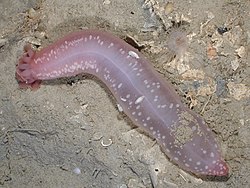
Holothuroidea — photo 6

Holothuroidea — photo 7

Holothuroidea — photo 8
🐟 Feeding And Diet
Sea cucumbers are scavengers, which means they eat dead plants and animals that sink to the ocean floor. 🐟They have a special way of feeding: they suck in sand and mud through their mouths! 🌪️ As the sand passes through their bodies, they absorb tiny bits of food like bacteria and organic matter. This process helps clean the ocean floor, making sea cucumbers nature’s cleaners! 🧼Some sea cucumbers can eat algae, too. Isn’t it amazing how these creatures help our oceans stay healthy? 🌊
Go deeper🦠 Interesting Facts
Did you know that some sea cucumbers can eject their intestines when threatened? 🦠This strange defense trick confuses predators! They can then regenerate new intestines later. Sea cucumbers “walk” using tube feet under their bodies! 🚶They also breathe through their rear ends! 🌬️ Sea cucumbers benefit our oceans tremendously, providing habitats for tiny creatures by creating homes in the sand after they dig around. 🌊Lastly, some sea cucumbers can live for over ten years! They truly are unique ocean dwellers! 🌟
Go deeper📉 Conservation Status
Many sea cucumber species are currently considered endangered or vulnerable! 📉This is due to overfishing and the destruction of their habitats. 🌊As more people eat sea cucumbers, it’s crucial to protect them and allow their populations to grow. Organizations around the world are working to promote sustainable fishing practices and protect these amazing creatures. 🌏By learning more about sea cucumbers, we can help keep them safe for future generations! It’s important for everyone to take care of our oceans! 🐠
Go deeper🐣 Reproductive Biology
Sea cucumbers can reproduce in two ways: by releasing eggs and sperm into the water or by cloning themselves! 🐣Most sea cucumbers produce eggs and sperm in massive quantities; some can release over 15 million eggs at a time! 🦠After fertilization happens in the water, baby sea cucumbers, called larvae, float and swim around until they eventually sink to the ocean floor. 🔄Some varieties can also clone themselves by splitting apart! This means they can create a new sea cucumber without needing a mate. That’s pretty special! 🌟
Go deeper🌊 Ecological Importance
Sea cucumbers play a vital role in our oceans! 🌊They help recycle nutrients by breaking down dead material on the ocean floor. When they eat sand, they filter out harmful particles, helping to keep the ocean clean! 🌍Sea cucumbers are also a food source for many animals like fish, crabs, and sea turtles. 🐢By supporting these other species, sea cucumbers help maintain a balanced ecosystem in the ocean. This means everything in their environment stays healthy, and that’s essential for all ocean life!
Go deeper🦈 Predators And Threats
Sea cucumbers have several predators to watch out for! 🦈Fish, sea stars, and even sea turtles like to eat them. These animals have sharp teeth or bodies that help them capture their meals! However, sea cucumbers also have some great defenses; when scared, they can expel their organs to confuse predators! 😱They can then slowly regenerate the lost parts. Sadly, human activities like pollution and overfishing are threats to sea cucumbers. Some species are now in danger because people want to catch them for food. 🚫
Go deeper🌊 Habitat And Distribution
Sea cucumbers live mainly on the ocean floor! 🌊They can be found in many places, from tropical coral reefs to the deep sea. 🏝️ They are very good at hiding in the sand or among rocks. You can find them in oceans all around the world—like the Atlantic Ocean, Pacific Ocean, and Indian Ocean! 🌍Some sea cucumbers prefer shallow water, while others live in deeper places where light barely reaches. That’s why they have adapted to live in such a variety of environments!
Go deeper🌊 Physical Characteristics
Sea cucumbers have soft, leathery bodies that are usually cylindrical or elongated in shape. 🌊They can be different colors such as black, red, or pink! Their skin is covered with tiny bumps called tubercles, which can feel a bit like a rubber ball when touched. Some sea cucumbers can even change their shape and color! 🌈They have a mouth on one end surrounded by tentacle-like structures, which help them grab food. Most of them can also grow back their body parts if they lose them—how cool is that? 🌟
Go deeper🦠 Classification And Taxonomy
Sea cucumbers are classified under the phylum Echinodermata in the class Holothuroidea. 🦠The word "holothuroidea" comes from Greek words meaning "sac" and "like." They are divided into several families, like Holothuriidae and Cucumariidae. 🌈These families include many different types of sea cucumbers, with around 1,250 species known worldwide! Scientists study sea cucumbers to understand more about our oceans and how these creatures fit into their environments. With such a variety of shapes and colors, they are fascinating to learn about! 📚
Go deeper🍽️ Human Uses And Economic Importance
In many countries, sea cucumbers are considered a delicacy and are eaten as food! 🍽️ They are especially popular in East and Southeast Asia, where people enjoy dishes made from them. They are often dried and sold in markets for cooking. 🌏Besides food, sea cucumbers are used in traditional medicine to treat various ailments. Some people believe they can help heal wounds or improve health. This makes sea cucumbers essential for local economies, providing jobs and food for many communities around the world! 💰
Go deeper