Hoary Bat Facts For Kids
The hoary bat (Lasiurus cinereus) is a large, migratory bat species known for its distinctive frosted fur and nocturnal feeding habits.
Select reading age
Hoary Bat Facts For Kids
Videos & Quizzesincluded
About this topic
The hoary bat 🦇 is a fascinating mammal that belongs to the family Vespertilionidae. These bats are known for their beautiful, frosty-looking fur that looks like it is sprinkled with snow! They are found mainly in North America, from Alaska down to Mexico. Hoary bats are larger than many other bats, with a wingspan of about 15 inches (38 cm) long. They usually fly high in the sky🌌, making them a bit tricky to spot. They are nocturnal, which means they are active during the night and sleep during the day, roosting in trees, hanging upside-down!
Explore with ChatDinoKey Points
Did you know that hoary bats can travel over 1,000 miles (1,600 km) during migration?
Hoary bats are currently not endangered, but they are still protected under U.S. law.
Hoary bats are insect-eaters, also known as insectivores!
Hoary bats love to live in many different places!
Hoary bats are unique and beautiful creatures!
During the summer months, male and female hoary bats come together to mate.
Hoary bats are mostly solitary, which means they like to be alone, but sometimes they gather with others.
Hoary bats face various threats in the wild, including habitat loss due to deforestation and climate change.
Photos of Hoary Bat


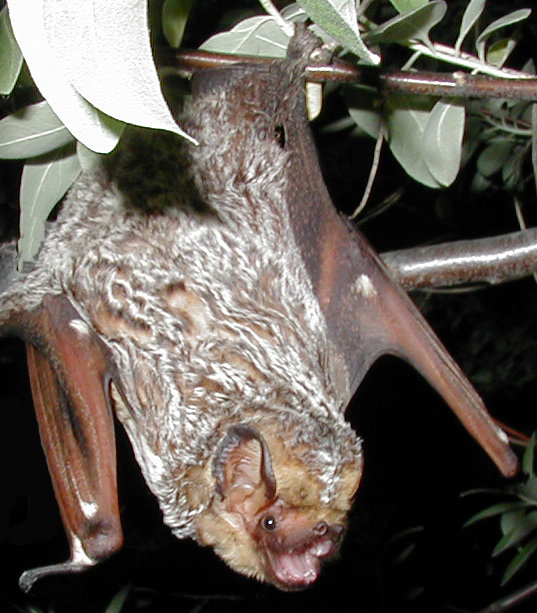
Juvenile male hoary bat on a tree, frosted "hoary" dorsal coloration visible
🌎 Interesting Facts
Did you know that hoary bats can travel over 1,000 miles (1,600 km) during migration? 🌎That's quite a journey! They are also one of the largest bats in North America, weighing around 0.5 to 1 ounce (14 to 28 grams). Hoary bats are known for their strong sense of smell, which helps them find food quickly! They sometimes even hunt in groups, making it easier to catch plenty of insects! Last but not least, their scientific name is Lasiurus cinereus, which means "ash-colored," referring to their beautiful frosty fur! 🐾
Go deeper🌱 Conservation Status
Hoary bats are currently not endangered, but they are still protected under U.S. law. 🌱However, their population is believed to be declining due to several threats. Scientists and conservationists keep an eye on their numbers to make sure they don’t disappear. Organizations work hard to protect their habitats by promoting forest conservation and reducing pollution to ensure that hoary bats can thrive in their natural homes! Keeping our environment clean helps keep them safe!
Go deeper🐜 Diet And Feeding Habits
Hoary bats are insect-eaters, also known as insectivores! 🐜They love to snack on beetles, moths, and other flying insects, catching them while swooping through the air. 🦋They can eat as much as half of their body weight in insects in just one night! Hoary bats use a special skill called echolocation to find their food. They make noises that bounce off insects, helping them locate their meals. When they detect their favorite insects, they swoop down with their sharp claws to catch them mid-flight. Yum!
Go deeper🏞️ Habitat And Distribution
Hoary bats love to live in many different places! 🏞️ They mainly prefer forests and woodlands, especially areas with tall trees. You can find them across North America, from Canada's cold forests to the warm deserts of Mexico. During the summer 🌞, they roost in trees, where they hang out and sleep, while in winter, they migrate to warmer areas. Additionally, hoary bats can also be found in mountain ranges, rural areas, and sometimes near water bodies. They enjoy flying high above the ground, searching for food!
Go deeper🐻❄️ Physical Characteristics
Hoary bats are unique and beautiful creatures! Their fur is a mix of brown, gray, and white, giving it a frosted appearance that helps them blend into the tree bark. 🐻❄️ They have a rounded head, large ears, and a wingspan of up to 15 inches! Their body size is about 5-7 inches long. One cool feature is their fluffy fur, which keeps them warm while flying. They have strong, long wings that help them glide smoothly through the air. Their big, bright eyes help them see in the dark, which is super important for hunting at night. 🌙
Go deeper🐾 Reproduction And Life Cycle
During the summer months, male and female hoary bats come together to mate. After mating, the female bat will carry her baby 🐾 for about 50 to 60 days before giving birth to one pup! The pups are born in late spring or early summer and are very tiny, weighing only about 0.5 ounces (14 grams). The mother takes care of her baby and feeds it with her milk until it's strong enough to fly. 🎈By autumn, the young bats learn to hunt and are ready to start flying and living on their own.
Go deeper🦇 Behavior And Social Structure
Hoary bats are mostly solitary, which means they like to be alone, but sometimes they gather with others. 🦇They may roost in small groups, especially during the mating season, and then go their own way after breeding. These bats are very active at night, flying up to 10 miles (16 km) in search of food! Hoary bats are great flyers; they can reach speeds of about 20 miles per hour (32 km/h) while hunting for insects. They communicate using a variety of sounds, especially during breeding, to find each other in the dark!
Go deeper🌍 Threats And Conservation Efforts
Hoary bats face various threats in the wild, including habitat loss due to deforestation and climate change. 🌍Wind turbines are also a danger, as many hoary bats get injured or killed when flying close to them. To protect these amazing bats, people are working on ways to reduce the risks from wind turbines and create more wildlife-friendly spaces. Conservation programs are pushing for reforestation 🪴 and habitat protection to give hoary bats safe places to live and thrive. Education about these bats helps everyone understand their importance in nature!
Go deeper