Histone Facts For Kids
Histones are important basic proteins found in eukaryotic cell nuclei that help package DNA and regulate gene expression.
Select reading age
Histone Facts For Kids
Videos & Quizzesincluded
About this topic
Histones are special proteins found in the nuclei of eukaryotic cells. This means they live inside the control center of cells that have a nucleus, like human, plant, and animal cells! 🧬Histones help DNA, the blueprint of life, coil up and stay organized, much like how a string of yarn can get tangled if left out. Histones help keep DNA neat and tidy so that it can fit into the tiny nuclei! They are super important for our bodies because they help in DNA packaging and with the instructions our cells need to grow and function. 🌱
Explore with ChatDinoKey Points
Histones have a unique shape making them very special.
Sometimes, if histones aren’t working correctly, it can lead to problems.
Did you know that our environment can impact how our genes work?
There are five main types of histones: H1, H2A, H2B, H3, and H4!
Histones are not just found in humans; they have been around for a long time!
Histones not only hold DNA together, but they also help control which genes are turned on or off!
Imagine if DNA was a huge ball of yarn!
Scientists use various cool techniques to study histones!
Histones can wear "tags" called post-translational modifications, helping cells communicate what to do!
Photos of Histone

Histone heterooctamer (H3,H4,H2A,H2B) + DNA fragment, frog

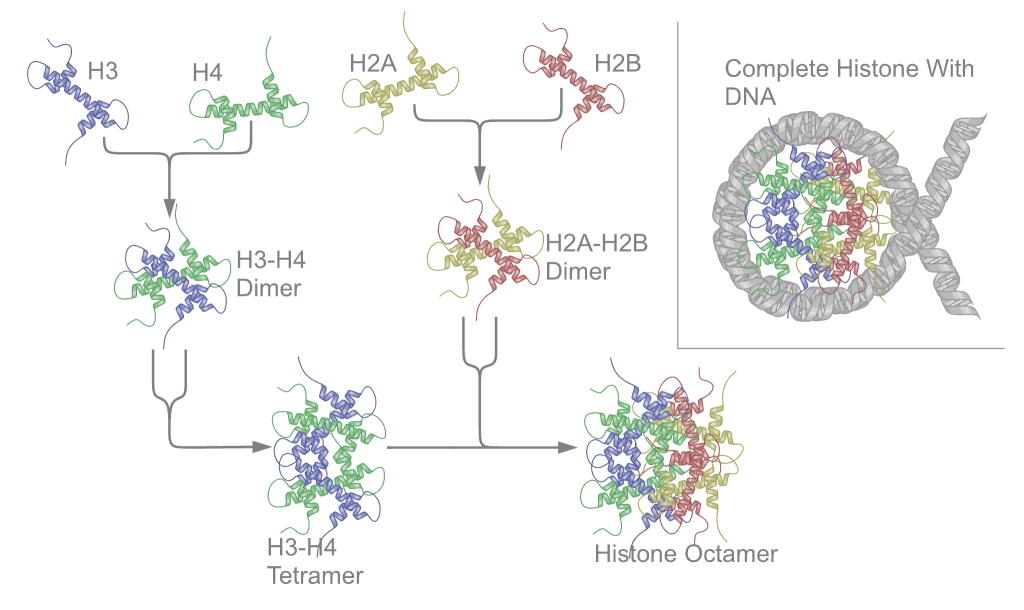
Steps in nucleosome assembly

Basic units of chromatin structure

Histone tails and their function in chromatin formation

Schematic representation of histone modifications. Based on Rodriguez-Paredes and Esteller, Nature, 2011.

🧪 Structure Of Histones
Histones have a unique shape making them very special. They are composed of long chains of amino acids, the building blocks of proteins! 🧪Histones are known for having lots of two particular amino acids: lysine and arginine. These amino acids are "basic", helping histones to stick to the DNA, which is slightly negative, like magnets! 💡Often, histones come together to form structures called "nucleosomes," which look like beads on a string when DNA wraps around them, giving DNA a compact form inside the nucleus.
Go deeper🏥 Histone-related Diseases
Sometimes, if histones aren’t working correctly, it can lead to problems. 🏥For example, some diseases like cancer have been linked to faulty histone function. When histones don’t regulate genes properly, it may cause cells to grow out of control! Other conditions like Alzheimer's can also be affected by changes in histone function. Scientists are currently studying these connections to better understand these diseases and look for treatments! Every day, they’re learning more about how histones can impact our health.
Go deeper🌍 Histones And Epigenetics
Did you know that our environment can impact how our genes work? 🌍This is a field called epigenetics! Histones play a crucial role in this phenomenon. They can change based on experiences, diet, or stress. For example, if we eat healthy foods, certain histone modifications may occur, helping the body to turn on good genes! 🥦These changes are like notes written in pencil: they can be changed, allowing genes to be expressed differently without altering the actual DNA sequence!
Go deeper😲 Histone Types And Variants
There are five main types of histones: H1, H2A, H2B, H3, and H4! 😲Each type has its own job in how DNA is packed and regulated. H2A and H2B work together as a pair, as do H3 and H4, to form the core of the nucleosome. H1 acts like a clasp to keep the DNA tightly wrapped. 💪Additionally, there are variants of these histones that can change slightly, helping cells adapt to different situations. This means that our body can change how DNA is organized based on what we need!
Go deeper🌌 Evolution Of Histone Proteins
Histones are not just found in humans; they have been around for a long time! 🌌Scientists believe that histones appeared over 1 billion years ago in the early ancestors of our cells. Histones have evolved over time, helping to change how DNA is structured and regulated in different species. 🦉For example, different types of plants and animals have slightly different histones! This evolution shows how important they are for life, allowing cells to adapt to their environments while keeping DNA safe and organized over millions of years!
Go deeper📅 Role Of Histones In Gene Regulation
Histones not only hold DNA together, but they also help control which genes are turned on or off! 📅This is important because some genes help us grow, while others might help our body fight off germs. Histones can change how tightly DNA is wrapped around them. Tight wrapping can hide a gene, while loose wrapping lets that gene be read easily. 🕵️♀️ This process is a bit like turning a light switch on or off, helping cells do different jobs based on what they need at different times!
Go deeper🎠 Function Of Histones In Dna Packaging
Imagine if DNA was a huge ball of yarn! 🎠It would be hard to keep it neat and tidy. That’s where histones come in! They help package the long strands of DNA tightly and efficiently so that they fit inside tiny nuclei of cells. When DNA wraps around histones, it forms nucleosomes, making a nifty structure called chromatin. 🌀This helps organize the DNA and protects it from damage. When cells need to read the instructions on the DNA, they can uncoil and use it. Histones ensure everything is in just the right place!
Go deeper🔬 Experimental Techniques In Histone Research
Scientists use various cool techniques to study histones! 🔬One popular method is called chromatin immunoprecipitation (ChIP), which helps researchers see how histones interact with DNA. They can mark certain histones and then pull them out of the cell to study them! By using special dyes and techniques, researchers can see when histones are modified and understand their roles better. 🧑🔬 This research is helping scientists figure out the mysteries of DNA packaging and regulation.
Go deeper🎨 Post-translational Modifications Of Histones
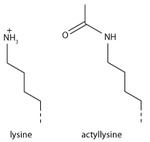
Histones can wear "tags" called post-translational modifications, helping cells communicate what to do! 🎨These modifications are chemical changes that occur after the histones are made. Some tags can make DNA more loose so that genes can be expressed, while others help keep DNA tightly packed away. Some common tags include adding groups like methyl or acetyl! 🧩Each tag sends a different signal to the cell, working like a secret code to help regulate genetic information.
Go deeper