Harlem Facts For Kids
Harlem is a lively New York City neighborhood famous for its music, art, yummy soul food, and strong community that shaped the city's culture and equality.

About this topic
Today, Harlem buzzes with energy. You can find colorful street art, tasty soul food restaurants, and historic buildings that tell stories of the past. It's a spot where important ideas about culture and equality took root. Harlem shows how one neighborhood can shape a whole city!
Quick Facts
Key Points
Photos of Harlem
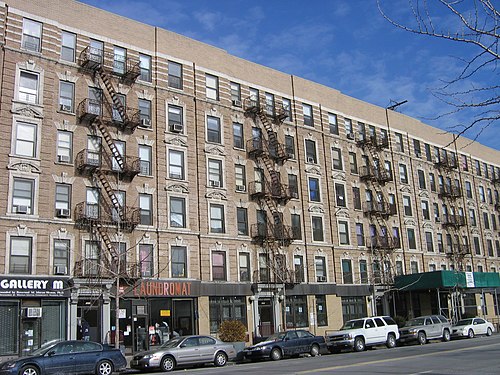
Apartment building in Central Harlem

Abyssinian Baptist Church, Harlem

Black Ivory in Harlem 2017

New York Public Library, Schomburg Center for Research in Black Culture

Three Harlem Women, ca. 1930

St. Andrew's Episcopal Church

The Apollo Theater on 125th Street in November 2006

St Martin's Episcopal Church, at Lenox Avenue and 122nd Street
📘 Where Is Harlem?
Sometimes people talk about Greater Harlem, which stretches farther—west and north to 155th Street, east toward the East River, and south past Central Park to places like Martin Luther King Jr. Boulevard. But the heart of Harlem is that central spot. It's easy to explore by walking or riding the subway!
🔎 Harlem's History
During the American Revolution, the British damaged many buildings, but people rebuilt. After the Civil War in the late 1800s, railroads and trains brought a building boom. By the early 1900s, Great Migration brought Black families from the South seeking better lives. Harlem's population shifted—mostly Jewish and Italian before, then mostly Black by the 1930s.
Tough times came with the Great Depression in the 1930s, bringing job losses and poverty. Later, rent strikes in the 1960s fought for better homes. Through ups and downs, Harlem stayed a key center for Black culture and ideas.
🧭 The Harlem Renaissance
After World War I, Black artists and thinkers created the "New Negro" movement. They celebrated their heritage with pride. Famous poets like Langston Hughes wrote about dreams and daily life. Musicians played jazz in clubs, filling the air with swing and soul.
This time made Harlem world-famous. It inspired people everywhere to value Black culture and fight for equality. Writers, dancers, and singers turned neighborhood streets into stages of creativity!
💡 Music And Arts
Today, Harlem loves hip-hop and R&B. Dances like the Harlem Shake and Chicken Noodle Soup started on these streets, getting kids moving with fun steps. Famous artists from Harlem, such as Doug E. Fresh and Kurtis Blow, helped invent hip-hop beats. Groups like Frankie Lymon & The Teenagers sang sweet soul songs that still touch hearts.
Classical music thrives too, with groups like the Harlem Quartet playing beautiful strings for all to enjoy. Arts here connect past and present, filling the air with joy.
🌟 Famous Landmarks And Places
Hamilton Grange honors Alexander Hamilton, who built his home here. Now a park, it shows early American life. The Abyssinian Baptist Church, one of the oldest Black churches in New York, brings people together for worship and community events.
Don't miss Marcus Garvey Park with its tall Fire Watchtower, built long ago to spot fires. These landmarks, protected as historic sites, let visitors walk through Harlem's rich past while enjoying parks and culture today.
🧩 Education
Charter schools are popular here too. These special public schools, chosen by lottery, focus on strong skills. About one in three Harlem students attends one, giving more learning choices.
Colleges like City College of New York sit in Harlem, training grown-ups in health, medicine, and more. Education builds bright futures, connecting school with big dreams right in the neighborhood.
🗺️ Transportation
Buses like the M1, M2, M3, M4, and Bx19 weave through streets, perfect for short trips to parks or shops. Soon, the Second Avenue Subway will add new stops in East Harlem at 106th, 116th, and 125th Streets.
These rides make Harlem connected and fun to explore, zipping kids and families everywhere safely.
🔬 Harlem Today
Gentrification is happening, which means new people are moving in, fixing up old buildings, and opening trendy stores and cafes. This brings more jobs and fresh energy, but it also changes who lives there. In 1990, most people in Harlem were Black, but by 2010, the Black population dropped to about half, while more White families moved in.
Still, Harlem keeps its rich culture with jazz music, street art, and community events that welcome everyone.
🧠 Take the Quiz about Harlem
Frequently asked questions
Where is Harlem located?
Harlem is a lively neighborhood in northern Upper Manhattan, part of New York City. Its main borders are the Hudson River to the west, the Harlem River and 155th Street to the north, Fifth Avenue to the east, and 110th Street to the south. It's easy to explore by walking or riding the subway!
What is the Harlem Renaissance?
The Harlem Renaissance was a magical burst of African American art, music, writing, and ideas in the 1920s and 1930s, centered in Central and West Harlem. Famous poets like Langston Hughes wrote about dreams, and musicians played jazz in clubs. It made Harlem world-famous and inspired people to value Black culture.
Who lived in Harlem long ago?
Long before cities, the land was home to Lenape people like the Wecquaesgeek. Then Dutch settlers arrived in the 1600s and named it after a town called Haarlem in the Netherlands. In the early 1900s, the Great Migration brought Black families from the South.
What famous music started in Harlem?
In the 1920s, stride piano was born in Harlem, mixing fast rhythms from ragtime with new jazz styles. Today, Harlem loves hip-hop and R&B, with dances like the Harlem Shake and Chicken Noodle Soup. Famous artists like Doug E. Fresh helped invent hip-hop beats.
What is the Apollo Theater?
The Apollo Theater is a star landmark in Harlem since 1914. It has launched singers like Ella Fitzgerald and James Brown with exciting talent shows called Amateur Nights. It's a special spot that tells Harlem's story.
How do you get around Harlem?
Subways like the 2 and 3 trains zoom along Lenox Avenue, and the A, B, C, and D trains run on Eighth Avenue. Buses like the M1, M2, M3, M4, and Bx19 are perfect for short trips. These rides make Harlem fun and easy to explore!